
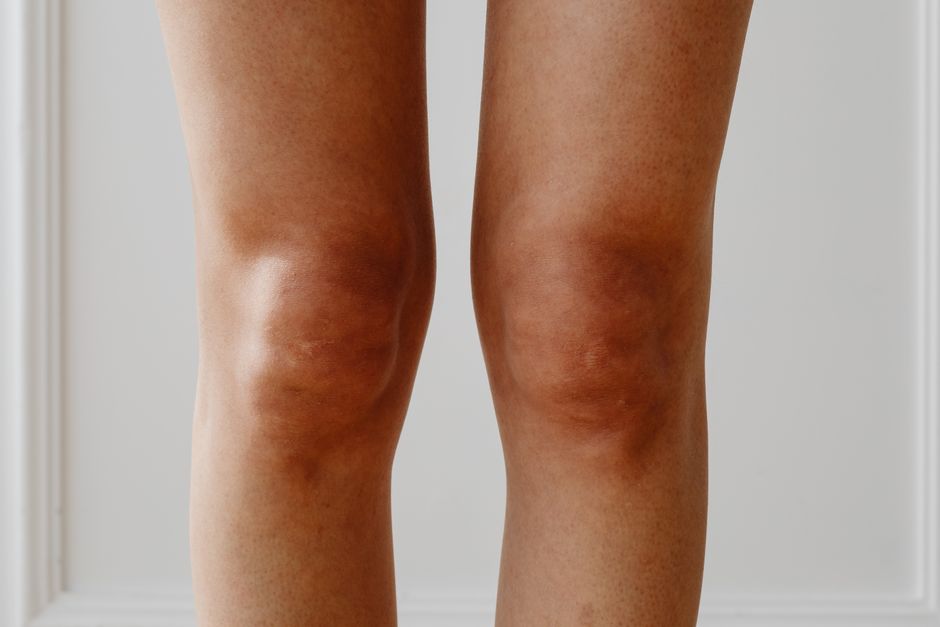
You can sometimes pop your knee safely by moving it through a slow, controlled range of motion that lets trapped gas release on its own. You should not force it, and you should never have someone else push or pull the joint to make it crack. The bigger question is why you feel the need to pop it at all. A single painless pop is usually harmless. A pop that comes with pain, swelling, locking, or instability is a signal to stop and get the knee checked.
What Actually Happens When Your Knee Pops?
Most painless knee popping comes from gas. Your joints are wrapped in a capsule filled with synovial fluid, the slick liquid that lubricates the surfaces where bones meet. That fluid holds dissolved gases, mainly carbon dioxide, nitrogen, and oxygen. When you stretch or bend the joint, the pressure inside the capsule changes and those gases can form a bubble that collapses. That collapse is the pop you hear.
This is the same mechanism behind cracking your knuckles. It is not bones grinding together. It is not “realigning” anything. After a pop, the gas needs time to redissolve, which is why you usually cannot crack the same joint again right away.
A second common source is tissue movement. Tendons and ligaments can snap across bony bumps as the knee bends and straightens. The sound is often a click or a snap rather than a deep pop. This is frequently harmless too, especially if it has been happening for years without pain.
A third source is different, and it matters. If the pop comes from a structure that is torn, catching, or shifting out of place, the sound is a symptom, not a release. That is the version worth paying attention to.
How To Pop Your Knee Safely And When To Worry
Safe popping means you are not the one forcing it. The joint releases on its own, or you guide it gently and it lets go without resistance.
Here is what that looks like in practice:
- Sit or lie down so the leg is fully supported. A dangling leg is harder to control.
- Bend and straighten the knee slowly through its full comfortable range. Move at the speed of a slow breath, not fast.
- Try a gentle heel slide. Lie on your back, slide your heel toward your buttocks, then slide it back out. Repeat a few times.
- Rotate the lower leg slightly inward and outward while the knee is bent. Small movements, no force.
- Stop the moment you feel a sharp sensation or the joint resists. A pop that requires effort is not a safe pop.
What you should not do is just as important. Do not grab your kneecap and push it side to side to make it crack. Do not have a friend pull or twist your leg. Do not sit on your heel and drop your weight onto a bent knee to force a release. Do not use a foam roller or your hands to press directly on the kneecap.
If the pop will not come, that is information. A joint that feels stuck and will not release is different from one that simply has nothing to release. Forcing a stuck knee is how people turn a mild problem into a real injury.
Why Does My Knee Feel Like It Needs To Pop?
The urge to pop a knee usually comes from pressure or tightness, not from a joint that is actually out of place. Several things create that feeling.
Swelling is a common cause. When the knee holds extra fluid, the capsule stretches and the joint feels full and stiff. Movement may produce a pop as the pressure shifts. The popping is a side effect of the swelling, not a fix for it.
Muscle tightness around the joint plays a role too. Tight quadriceps, hamstrings, or calf muscles change how the kneecap tracks as the knee bends. That altered tracking can create clicking and a sense that something needs to move back into place.
Long periods without movement also build up that pressure sensation. Knees that stay bent for hours, at a desk or on a couch, often pop when you finally straighten them. That is normal and not a sign of damage.
Here is a point worth holding onto: the relief you feel after popping is usually brief. If the underlying tightness or swelling is still there, the feeling comes back. Chasing the pop over and over does not address what created it.





When Is Knee Popping A Real Warning Sign?
Painless popping on its own is not a reason to seek care. Popping combined with certain other signs is. Seek medical evaluation if you notice any of the following:
- Pain at the moment of the pop or pain that lingers afterward
- Swelling that appears within hours of an injury
- The knee locking, catching, or getting stuck in a bent position
- A feeling that the knee is giving way or cannot bear your weight
- A pop you felt during a sudden twist, landing, or change of direction, especially in sports
- Redness, warmth, or fever along with the knee symptoms
That last combination matters because infection in a joint is a medical emergency, not something to watch at home. It is uncommon, but it needs urgent care when it happens.
A pop during a twisting injury is a specific concern. Sudden twists are a known mechanism for tears of the anterior cruciate ligament and for meniscus tears. If a pop happened during that kind of movement and the knee swelled or felt unstable afterward, that is a reason to be seen rather than to wait and see.
What Causes A Knee To Pop Without Pain?
Painless popping is common and usually not a sign of disease. Gas release, tendon movement over bone, and the kneecap shifting slightly in its groove can all produce sound without any tissue damage.
Some people simply have joints that pop more than others. Loose connective tissue, a naturally shallow groove for the kneecap, or a history of heavy training can all make a knee noisier. Sound alone does not predict whether a knee is healthy or damaged.
This is where a lot of people get misled. A loud pop is not automatically worse than a quiet one, and a quiet knee is not automatically healthier than a noisy one. What matters is whether the popping comes with pain, swelling, locking, or instability. Those are the features clinicians actually use, not the volume of the sound.
One clarification worth making: you cannot “realign” your knee by popping it. The kneecap sits in a groove and moves within it during normal bending. A pop does not shift it back into a better position. If the kneecap is genuinely tracking poorly, that is a movement and muscle issue, not something a crack fixes.
How To Reduce Knee Popping And Protect The Joint
If the popping bothers you or comes with mild discomfort, the useful steps are about the muscles around the knee, not the sound itself.
Strengthening the quadriceps and hamstrings helps control how the kneecap moves. Straight-leg raises, wall sits, and controlled step-ups are common starting points. A physical therapist can tailor these to your knee, which matters if you have an existing injury.
Improving flexibility in the calves, hamstrings, and quadriceps can reduce the tightness that drives the urge to pop. Regular gentle movement throughout the day also keeps the joint from stiffening up.
If swelling is part of the picture, that is the thing to address. Elevation, ice in the early period after an injury, and relative rest are standard first steps. Persistent swelling that does not improve needs a medical look, because it points to something ongoing inside the joint.
Be cautious about the supplements and devices marketed for joint “realignment” or “cracking.” No clinical evidence currently confirms that these change how a knee tracks or prevent injury. The evidence for exercise-based strengthening is far stronger.
Frequently Asked Questions
Is it bad to pop your knee?
Popping your knee is not harmful if it happens on its own and does not cause pain. It becomes a problem when you force it or when the pop comes with pain, swelling, locking, or instability.
Why does my knee pop every time I bend it?
Frequent popping is often gas moving in the joint fluid or a tendon snapping over bone, and both are usually harmless. If it is new, painful, or joined by swelling, it should be evaluated.
Can popping your knee cause arthritis?
No evidence shows that cracking a joint causes arthritis. Research on knuckle cracking has not found a link to arthritis, though that work was done on hands rather than knees.
Should I worry if my knee popped during a twist?
Yes, that situation deserves medical attention. A pop during a sudden twist, especially with swelling or a feeling of instability, is a common pattern in ligament and meniscus injuries.
