
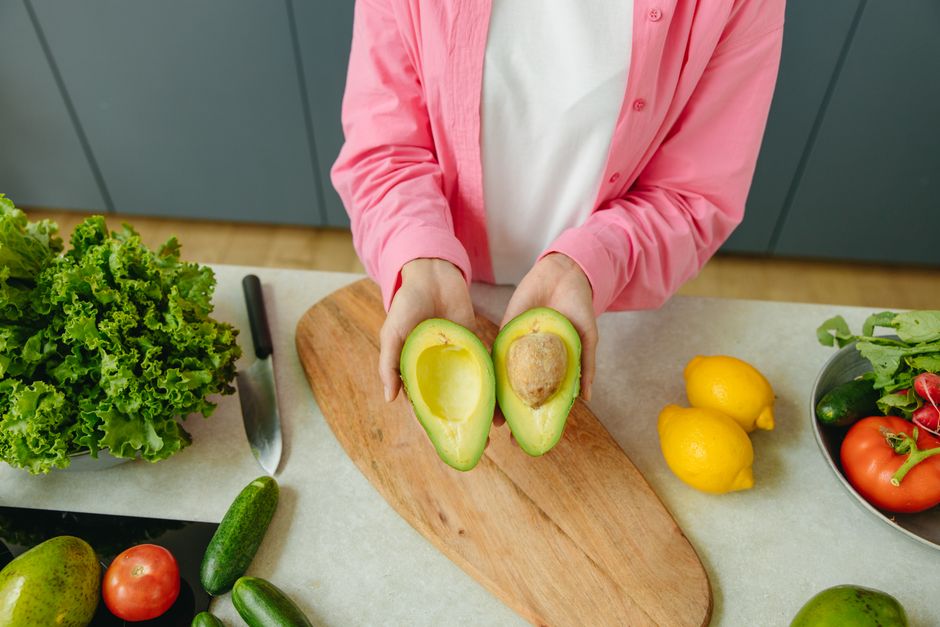
An avocado softens when its own enzymes break down the fruit’s cell walls, and you can speed that up by adding a natural source of ethylene gas or applying gentle warmth. The fastest reliable method is a paper bag. Put the avocado inside with a ripe banana or apple, fold the top, and leave it on the counter. A firm avocado usually softens in one to three days this way, compared with five to seven days left out on its own.
Why Does An Avocado Get Soft When It Ripens?
An avocado is a climacteric fruit. That means it keeps ripening after it is picked, and its ripening is driven by a plant hormone called ethylene.
Ethylene triggers enzymes in the fruit that break down pectin, the glue-like substance holding plant cells together. As pectin breaks down, the cells separate and the flesh goes from rock-hard to creamy. This is a normal biological process, not spoilage. The same hormone drives ripening in bananas, apples, tomatoes, and peaches.
One detail surprises many people. An avocado will not ripen while it is still attached to the tree. It only begins the process after harvest. That is why the avocados sold in stores are almost always firm, and why you are usually the one who has to finish the job at home.
Temperature matters here too. Ethylene production and enzyme activity both speed up as the fruit gets warmer, up to a point. This is the basis for every practical trick that follows.
What Is The Fastest Way To Ripen An Avocado?
Trapping ethylene around the fruit is the single most effective thing you can do. A paper bag does this well. It holds the gas close to the avocado while still letting a little air move through.
Here is the method:
- Place the avocado in a clean paper bag.
- Add one ripe banana or one ripe apple. Both release ethylene.
- Fold the top of the bag closed, but do not seal it airtight.
- Leave it at room temperature, out of direct sun.
- Check once a day by pressing gently near the stem.
A ripe banana is the strongest partner here because it produces a lot of ethylene. A ripe apple works too. An unripe banana will not help much, since it is not releasing much gas yet.
If you do not have a paper bag, a bowl covered loosely with a plate or a clean cloth will trap some gas as well. A plastic bag can work, but it traps moisture along with the ethylene, which raises the risk of mold. If you use plastic, leave it partly open.
Expect one to three days with this setup for a firm avocado. The exact time depends on how mature the fruit was when picked and how warm your kitchen is.
Does Warmth Speed Up Avocado Ripening?
Yes, within limits. Ethylene activity increases as temperature rises, so a slightly warm spot ripens an avocado faster than a cold one.
Room temperature is the practical target for most kitchens. A spot near, but not on, a warm appliance can shave time off the process. Do not put the avocado in direct sunlight or in a hot car. High heat can damage the fruit and encourage rot before it ripens evenly.
Cold does the opposite. The refrigerator slows ripening down sharply. This is useful once the avocado is already ripe, because cold storage can hold it for several days. It is not useful for a hard avocado you want to eat tonight.
A common mistake is buying hard avocados and putting them straight into the fridge. They may sit there for a week and barely change. Ripen them on the counter first, then move them to the cold.





Do The Oven, Microwave, Or Boiling Water Work?
These methods soften the flesh, but they do not ripen the avocado. That distinction matters.
Ripening is a chemical change driven by enzymes. It develops flavor, changes color, and produces the creamy texture people expect. Heat softens tissue by a different route. It cooks the fruit.
Some people wrap an avocado in foil and warm it in a low oven for a short time. Others microwave it briefly. Both approaches can make a hard avocado feel softer, and both can make it taste cooked, slightly bitter, or uneven. The center may still be firm while the outer flesh turns mushy.
If you plan to blend the avocado into a smoothie, soup, or sauce, a brief warm-up may be acceptable. If you want slices for toast or a salad, it usually disappoints. There is no established method that ripens an avocado in minutes without cooking it.
How Can You Tell When An Avocado Is Ready?
Gentle pressure near the stem is the most reliable test. Cup the avocado in your palm and press with your thumb just below where the stem was attached.
Use this rough guide:
- Hard with no give: not ripe, needs more time.
- Slight give when pressed: ripe and ready to eat.
- Soft all over, dents easily: overripe, best for mashing or baking.
Color is a weaker signal. Hass avocados darken as they ripen, from green toward near-black, but the change varies between individual fruits. A dark avocado can still be hard, and a green one can sometimes be ready. Trust your hand more than your eyes.
Another check is the stem. If the small stem cap comes off easily and you see green underneath, the avocado is likely ripe. If you see brown, it is probably past its best.
What Speeds Up Ripening That You Should Avoid?
Some popular shortcuts do more harm than good.
Storing avocados in an airtight plastic bag for days traps moisture and can grow mold before the fruit ripens. Sealing them in a container with no airflow has the same problem.
Pressing or squeezing the avocado repeatedly to check it causes bruising. Bruised spots ripen unevenly and turn brown. Check once a day, gently.
Leaving avocados in a hot car or on a sunny windowsill can push them past ripe into spoiled in a short time, especially in summer.
Cutting a hard avocado open to speed things up does not work. Once the fruit is cut, ethylene escapes and the exposed flesh browns quickly. A cut avocado will not ripen properly.
How Do You Store Avocados So They Ripen On Schedule?
Think of it as controlling two things: ethylene exposure and temperature.
For a hard avocado you want soon, keep it at room temperature, ideally in a paper bag with a ripe banana or apple. Check daily.
For a ripe avocado you are not ready to eat, move it to the refrigerator. Cold slows further ripening and can keep it usable for several more days.
For avocados you want to ripen one at a time, keep them apart. Avocados release ethylene themselves, so a group of them ripens faster together than alone. If you buy a bag of five, separating them gives you more control over timing.
If you have more ripe avocados than you can use, mash the flesh with a little lemon or lime juice and freeze it in a sealed container. The juice adds acid, which slows browning. Frozen mashed avocado works well in sauces and smoothies, though the texture changes and it is not ideal for slicing.
Why Do Some Avocados Ripen Faster Than Others?
Not every avocado responds the same way, and the reasons are mostly about the fruit itself.
Maturity at harvest is a major factor. An avocado picked at a more advanced stage ripens faster than one picked early. You cannot tell this from the outside, which is why two avocados from the same bin can behave differently.
Variety matters too. Hass avocados, the most common type in US stores, tend to ripen within a fairly predictable window. Larger, smoother-skinned varieties such as Florida avocados can behave differently and often have a different fat and water content.
Storage history before you bought it also plays a role. An avocado that spent time in cold shipping may take longer to start ripening once it warms up.
This is why the one-to-three-day estimate is a range, not a guarantee. Check daily and use the squeeze test rather than the calendar.
Frequently Asked Questions
How long does it take to soften an avocado in a paper bag?
A firm avocado typically softens in one to three days in a paper bag with a ripe banana or apple at room temperature. Check it once a day with a gentle press near the stem.
Can you ripen an avocado in the microwave?
A microwave softens the flesh by cooking it, but it does not ripen the fruit or develop its flavor. It can work for blending into a sauce, but it usually ruins the texture for slicing.
Does putting an avocado in rice or flour really work?
Burying an avocado in rice or flour can trap some ethylene and may speed ripening slightly, but the effect is weaker than a paper bag with a ripe banana. It also risks leaving a starchy mess on the skin.
How do you ripen an avocado in one day?
There is no reliable way to fully ripen a hard avocado in a single day. A paper bag with a ripe banana in a warm room is the fastest common method, and it still usually needs at least a day.
