
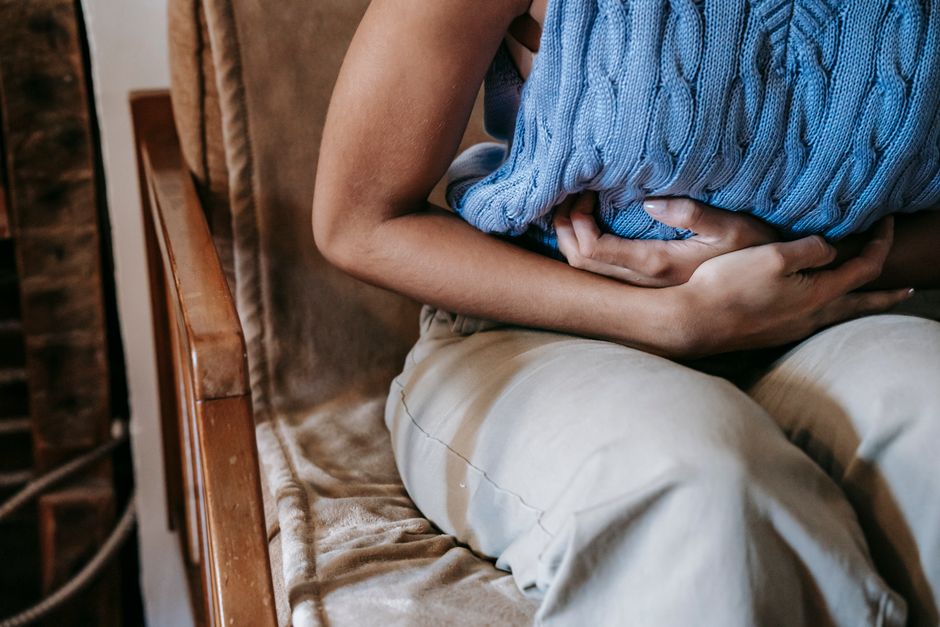
Stomach pain at night can make sleep feel impossible. The right sleeping position can reduce pressure on your abdomen and ease discomfort. For most types of stomach pain, sleeping on your left side with your knees bent toward your chest is the best starting position. If that does not help, elevating your upper body with extra pillows can prevent acid from moving up into your throat. The position that works depends on what is causing the pain, so knowing the source matters before you settle in for the night.
Why does stomach pain get worse at night?
Lying down changes how your digestive system works. When you are upright, gravity helps keep stomach acid where it belongs and helps food move through your intestines. When you lie flat, that advantage disappears.
Several common conditions flare up at night for specific reasons. Acid reflux and GERD worsen when lying down because the valve between your stomach and esophagus relaxes, allowing acid to travel upward. Gas and bloating can feel more intense because gas pools in parts of the intestine that are not being actively moved along. Peptic ulcers often hurt more at night when the stomach is empty and acid has no food to digest.
Your body also slows digestion during sleep. The muscles that move food through your intestines become less active, which can leave gas and partially digested food sitting in place longer than it would during the day.
What is the best sleeping position for stomach pain?
Sleeping on your left side is the most consistently recommended position for stomach discomfort. This position uses your anatomy to your advantage. Your stomach sits on the left side of your body. When you lie on your left side, the junction between your stomach and esophagus sits above the level of stomach acid, which helps keep acid from flowing backward.
Bend your knees toward your chest in a slightly curled position. This takes tension off your abdominal muscles and gives your intestines more room to move gas along naturally.
Sleeping on your back can work for some people, especially if you elevate your head and shoulders. But sleeping flat on your back often worsens acid reflux because your stomach and esophagus are at the same level, making it easier for acid to travel upward.
Sleeping on your right side is generally the worst choice for stomach pain. Research has shown that right-side sleeping relaxes the lower esophageal sphincter more than left-side sleeping, which allows more acid to escape the stomach. Right-side sleeping also makes it harder for food and gas to move from the stomach into the intestines.
How can pillows and elevation help with stomach pain at night?
Elevation is one of the most effective physical changes you can make. Raising your head and upper chest about 6 to 8 inches above your stomach keeps acid from moving upward while you sleep. A wedge pillow works better than stacking regular pillows because it lifts your whole upper body at a consistent angle. Regular pillows tend to bend your neck and slump your shoulders, which can actually increase pressure on your stomach.
Do not just prop your head up. The elevation needs to start at your lower back or waist to work properly. Your entire torso from the waist up should be on an incline.
For gas pain, placing a thin pillow under your knees while you lie on your back can help. This gently tilts your pelvis and reduces tension in your lower abdominal muscles. Some people find that lying on their left side with a pillow pressed against their abdomen gives them a sense of support that reduces the urge to tense up against the pain.





What should you do before bed to reduce stomach pain?
What you do in the hours before bed matters as much as the position you choose. Give your stomach time to empty before you lie down. Most people need at least 2 to 3 hours between their last meal and bedtime. Lying down with a full stomach puts direct pressure on the lower esophageal sphincter and slows the entire digestive process.
Choose smaller meals in the evening. A large meal stretches your stomach and increases acid production. A lighter dinner reduces the volume of food your digestive system needs to process while you sleep.
Some foods are more likely to trigger nighttime discomfort. Fatty foods delay stomach emptying. Spicy foods increase acid production. Carbonated drinks add gas to your digestive tract. Caffeine relaxes the lower esophageal sphincter and stimulates acid secretion. Alcohol does the same thing while also interfering with sleep quality.
If you take medication for your stomach condition, timing matters. Some acid-reducing medications work best when taken 30 to 60 minutes before a meal. Others are designed to be taken at bedtime. Follow the instructions on your specific medication rather than assuming one timing works for all.
How To Sleep With Stomach Pain Positions And Tips: a quick guide
The following table summarizes the most useful positions based on the type of stomach pain you are experiencing.
| Type of pain | Best position | Why it helps |
|---|---|---|
| Acid reflux or heartburn | Left side with head elevated 6–8 inches | Keeps acid below the esophageal junction |
| Gas or bloating | Left side with knees drawn toward chest | Uses gravity to move gas through the colon |
| Ulcer pain | Back with upper body elevated | Reduces acid pooling in an empty stomach |
| Menstrual cramps | Fetal position on either side | Reduces tension in abdominal muscles |
| Constipation | Left side with knees high toward chest | Aligns the colon for easier gas and stool movement |
When should stomach pain at night be a medical emergency?
Most nighttime stomach pain is not an emergency. But some symptoms require immediate medical attention. Do not try to sleep through these warning signs.
Seek emergency care if your stomach pain is severe enough that you cannot stand up straight, if the pain is sharp and suddenly intense, or if it radiates to your chest, back, or shoulder. Pain accompanied by fever, vomiting that will not stop, blood in your vomit or stool, yellowing of your skin or eyes, or difficulty breathing requires immediate evaluation.
For women, sudden severe abdominal pain can indicate an ectopic pregnancy, ovarian torsion, or a ruptured cyst. For anyone over 50, severe upper abdominal pain that radiates to the back can signal a heart attack or a pancreatic issue.
If you have been diagnosed with a condition like gallstones, pancreatitis, or inflammatory bowel disease, and your nighttime pain is worse than your usual symptoms, contact your doctor before trying to manage it with position changes alone.
Nighttime pain that wakes you from sleep repeatedly over several weeks deserves a medical workup even if the pain is not severe. This pattern is associated with peptic ulcers and other conditions that benefit from early treatment.
Can over-the-counter remedies help you sleep with stomach pain?
Some over-the-counter options can help with specific types of nighttime stomach pain. Antacids neutralize acid already in your stomach and work within minutes. They are appropriate for occasional heartburn but not for frequent symptoms. Simethicone products help break up gas bubbles in your digestive tract and can reduce bloating-related discomfort.
For acid reflux that happens more than twice a week, histamine blockers like famotidine can reduce acid production for several hours. Taking one before bed can help prevent nighttime reflux in people who need it. Proton pump inhibitors like omeprazole are more potent but work best when taken daily for a full course rather than as a one-time nighttime fix.
Do not take pain relievers like ibuprofen, naproxen, or aspirin for stomach pain unless a doctor has told you to. These NSAIDs can irritate the stomach lining and make ulcer pain significantly worse. Acetaminophen is gentler on the stomach but does nothing for inflammation.
No over-the-counter product has been proven to cure the underlying cause of recurring stomach pain. These products manage symptoms. If you need them more than a few times per week, you need a medical evaluation, not a stronger dose.
What habits make nighttime stomach pain worse without you realizing it?
Some common habits directly interfere with your ability to sleep comfortably with stomach pain. Eating late is the most obvious one, but other habits are less visible.
Tight clothing around your waist increases intra-abdominal pressure. This pressure pushes stomach contents upward and can trigger reflux even in people who do not usually have heartburn. Change into loose sleepwear before bed.
Exercising vigorously within 2 hours of bedtime diverts blood flow away from your digestive system and can leave food sitting in your stomach longer. Light walking after dinner actually supports digestion, but intense workouts do not.
Smoking relaxes the lower esophageal sphincter for hours after each cigarette. If you smoke and have nighttime stomach pain, the last cigarette of the day may be contributing more than you realize.
Stress and anxiety increase stomach acid production and make your digestive tract more sensitive to pain signals. If your stomach pain is worse on high-stress days, addressing the stress is part of addressing the pain.
Frequently Asked Questions
Is it better to sleep on your left or right side for stomach pain?
Left side is better for most types of stomach pain because it keeps stomach acid below the esophageal junction and uses gravity to help food and gas move through the digestive tract. Right-side sleeping relaxes the valve between the stomach and esophagus, which can worsen reflux.
How long should I wait after eating before lying down?
Wait at least 2 to 3 hours after a meal before lying down to sleep. This gives your stomach time to empty partially and reduces the pressure that triggers acid reflux.
Can a wedge pillow really help with stomach pain at night?
A wedge pillow that raises your upper body 6 to 8 inches can significantly reduce acid reflux symptoms at night. The elevation must start at your waist rather than just your head for it to work properly.
When should I go to the emergency room for stomach pain at night?
Go to the emergency room if the pain is severe enough to prevent you from standing straight, if it is sudden and sharp, or if it comes with fever, vomiting, blood in vomit or stool, or difficulty breathing. Nighttime pain that wakes you repeatedly over weeks also needs medical evaluation.
