
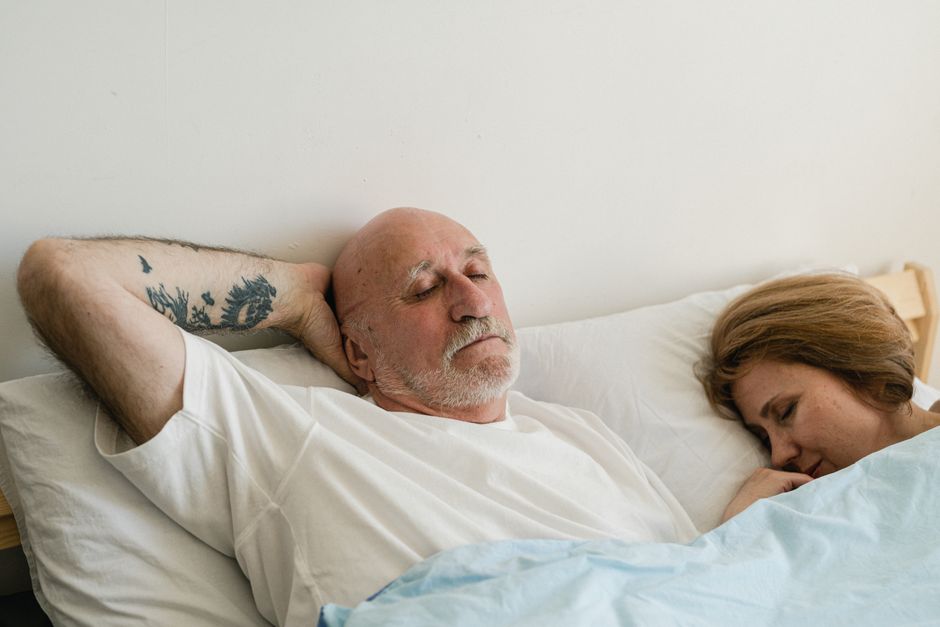
If you have a slipped disc, the position that usually helps most is lying on your back with a pillow under your knees, or on your side with a pillow between your knees. Both keep your spine closer to its natural curve and take pressure off the injured disc. Sleeping on your stomach tends to make things worse because it arches the lower back and twists the neck.
“Slipped disc” is the everyday name for what doctors call a herniated or prolapsed disc. The soft, gel-like center of a spinal disc pushes out through a tear in its tougher outer ring. When that bulge presses on a nearby nerve, you get the sharp, shooting pain that can make sleep feel impossible. The right position won’t heal the disc, but it can quiet the nerve irritation enough to let you rest.
What Is a Slipped Disc and Why Does It Hurt More at Night?
A spinal disc is a cushion that sits between your vertebrae, the bones of your spine. Each disc has a soft inner core and a tough outer shell. A herniated disc happens when the inner material leaks out and presses against a nerve root. That pressure is what causes pain, numbness, or tingling, often down an arm or a leg.
Pain often feels worse at night for a few reasons. When you lie down, the discs absorb fluid and swell slightly, which can increase pressure on a nerve. The positions you hold for hours can also stretch or compress irritated tissue. And without daytime distractions, pain signals simply feel louder.
Where your herniated disc is matters for which position works best. Most herniations happen in the lower back (lumbar spine), and a smaller number occur in the neck (cervical spine). The pillow strategies differ depending on which area is affected.
What Are the Best Sleeping Positions for a Slipped Disc?
The goal of any position is to keep your spine in a neutral line, meaning your neck, mid-back, and lower back stay in their natural curves without twisting or arching. Three positions do this best.
On Your Back With a Pillow Under Your Knees
This is the most reliable position for a lower-back disc problem. Lying flat on your back can pull your lower spine into an arch, which increases pressure on the discs. Placing a pillow under your knees lifts your legs slightly and flattens that arch, taking load off the lower back.
Keep your head pillow low to medium. A pillow that is too thick pushes your chin toward your chest and strains the neck. If you have a cervical disc issue, a thinner pillow or a contour pillow that supports the natural neck curve may work better.
On Your Side With a Pillow Between Your Knees
Side sleeping is a good option for both neck and lower-back problems. The key is the pillow between your knees. Without it, your top leg drops forward and rotates your pelvis, which twists the lower spine. A pillow keeps your hips, pelvis, and spine stacked in a straight line.
Choose the side that hurts less. Many people with a herniated disc find relief lying on the side opposite the painful leg, but this varies from person to person. If one side clearly feels better, use it.
On Your Back in a Slightly Reclined Position
Some people get more relief lying on their back with the upper body slightly raised, similar to a recliner. This can reduce pressure on certain nerve roots. A wedge pillow under the upper back and shoulders, with a pillow under the knees, can create this angle. Keep the bend gentle. Too much elevation can slide you forward and strain the lower back.
Why Is Stomach Sleeping Bad for a Slipped Disc?
Stomach sleeping forces your lower back to arch and your neck to twist to one side for hours. That combination increases pressure on the discs and can aggravate a herniated disc in either the lower back or neck. It is the position most likely to leave you sore in the morning.
If you cannot sleep any other way, a few adjustments can reduce the strain. Place a thin pillow under your lower belly to lessen the arch, and use a very flat pillow under your head, or none at all, so your neck stays closer to neutral. Even with these fixes, stomach sleeping is a compromise, not an ideal position.





What Pillows and Mattress Help Most?
Support matters as much as position. The right setup keeps your spine neutral and reduces the pressure points that wake you up.
- Knee pillow: A firm pillow between the knees for side sleepers, or under the knees for back sleepers. A contour knee pillow holds its shape better than a soft one.
- Head pillow: Medium loft for back sleepers, higher for side sleepers so your neck stays level with your spine, and thin for stomach sleepers.
- Mattress: Medium-firm tends to support the spine best. A mattress that is too soft lets your hips sink and your spine curve. One that is too firm can create pressure points.
- Body pillow: Useful for side sleepers who want to support the knees and hips at the same time.
There is no single mattress or pillow that is proven to treat a herniated disc. These are comfort and alignment measures. They can help you sleep, but they do not change the underlying disc problem.
How Can You Get Comfortable When the Pain Is Severe?
When pain is at its worst, position alone may not be enough. A few practical steps can help you settle.
Try a short walk or gentle movement before bed. Prolonged stillness can stiffen the back and make pain worse when you finally lie down. Heat applied to the sore area for a limited time can relax tight muscles, though it does not treat the disc itself.
Over-the-counter pain relievers may help you sleep, but check with a doctor or pharmacist before using them, especially if you take other medications or have conditions like stomach, kidney, or heart problems. This is general information, not a recommendation for your situation.
If pain keeps you awake night after night, that is a signal to talk to a clinician. Sleep loss can lower your pain tolerance and make the whole cycle worse.
When Should You See a Doctor About a Slipped Disc?
Most herniated discs improve with time and conservative care. But some symptoms need medical attention quickly.
Seek care right away if you have numbness around the groin or inner thighs, loss of bladder or bowel control, or sudden weakness in both legs. These can signal a rare but serious condition called cauda equina syndrome, which is a medical emergency.
Also see a doctor if you have progressive weakness in an arm or leg, pain that is getting worse instead of better, or pain after a fall or injury. For most people, a herniated disc does not require surgery. Physical therapy, activity modification, and time are the usual first steps. The evidence on which specific treatments work best is mixed, and clinicians often tailor care to the individual.
What Else Helps You Sleep Better With a Slipped Disc?
Sleep position is the foundation, but a few habits support it.
Keep a consistent sleep and wake time. A regular schedule strengthens your body’s sleep rhythm, which matters more when pain is disrupting rest. Avoid heavy meals, caffeine, and alcohol close to bedtime, since all three can fragment sleep.
Set up your bed so you do not have to twist or strain to get in and out. If getting out of bed is painful, try rolling onto your side, drawing your knees up, and pushing up with your arms while swinging your legs over the edge. This keeps your spine from bending sharply.
Be patient with yourself. A herniated disc can take weeks to months to settle, and progress is often gradual. Good sleep is part of recovery, not a luxury. If your current position is not working, it is reasonable to try another one from this list rather than forcing a position that hurts.
Frequently Asked Questions
What is the best sleeping position for a slipped disc?
Lying on your back with a pillow under your knees, or on your side with a pillow between your knees, keeps your spine neutral and reduces pressure on the disc. Both are widely recommended for lower-back disc problems.
Is it OK to sleep on your stomach with a herniated disc?
Stomach sleeping is generally the worst position because it arches your lower back and twists your neck. If you must, use a thin pillow under your belly and a very flat pillow under your head.
Should I sleep on my back or my side with sciatica from a slipped disc?
Either can work, so choose the one that causes less pain. Back sleeping with a knee pillow suits many people, while side sleeping with a pillow between the knees helps those who feel better on their side.
How long does it take for a slipped disc to stop hurting at night?
Timelines vary widely, and many herniated discs improve over weeks to a few months with conservative care. If pain is severe, worsening, or comes with numbness or weakness, see a doctor.
