
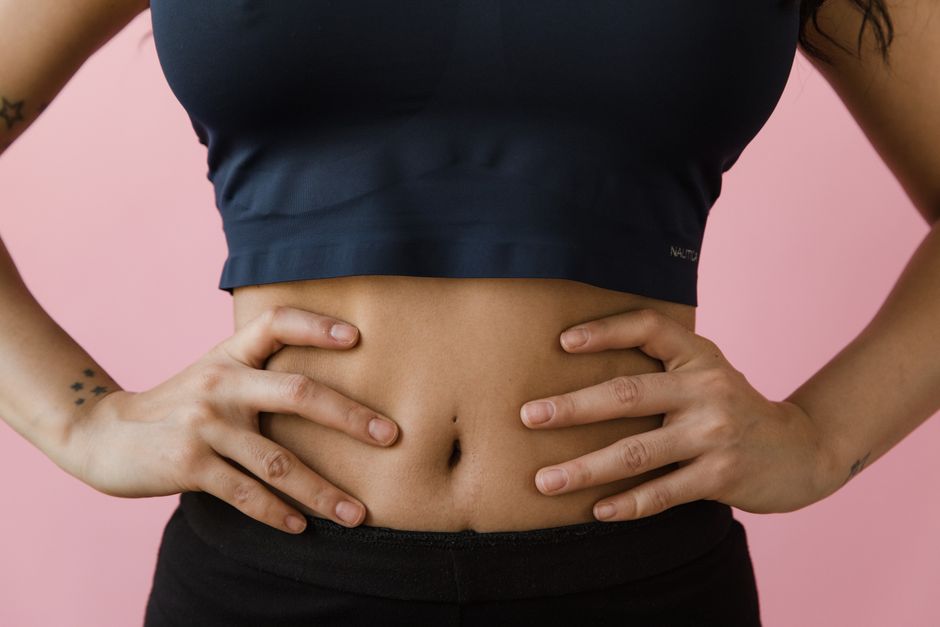
Loose stomach skin after weight loss or pregnancy is a common frustration. The skin itself cannot be “shrunk” in the way muscle can be toned. What you can do is improve skin elasticity, build the muscle underneath, and give your body time to adjust. Step by step, the most effective approach combines strength training, consistent hydration, and a gradual weight management plan. No cream or device will remove excess skin, but these steps can visibly improve its appearance over several months.
Why Does Stomach Skin Stretch in the First Place?
Skin is the body’s largest organ, and it is designed to stretch. Pregnancy, significant weight gain, or rapid growth all put tension on the skin’s structural proteins — collagen and elastin. These proteins act like a mesh. When stretched beyond their normal range for a long period, the mesh loses some of its spring.
When you lose weight quickly, the fat underneath the skin shrinks faster than the skin can adapt. The skin is left with more surface area than it needs. This is why loose skin is more common after rapid weight loss than after slow, steady weight loss. Age also matters. Collagen production naturally declines as you get older, which means skin does not bounce back as effectively in your 40s and 50s as it did in your 20s.
Genetics play a role too. Some people naturally have more elastin in their skin, which is why two people can lose the same amount of weight and have very different outcomes. You cannot change your genetics, but you can influence how your skin behaves going forward.
Step 1: Build the Abdominal Muscle Beneath the Skin
Muscle fills space. When you strengthen the abdominal wall, the muscle becomes thicker and firmer, which reduces the appearance of loose skin sitting on top of it. This does not remove the skin, but it changes how the area looks and feels.
Focus on compound movements that engage the entire core. Planks, dead bugs, bird dogs, and leg raises are all effective. So are full-body exercises like squats and deadlifts, which require your core to stabilize your spine. Resistance training two to three times per week is a realistic starting point.
Do not chase endless crunches. The rectus abdominis — the “six-pack” muscle — is only one layer. The transverse abdominis, the deepest layer, wraps around your waist like a corset. Training that muscle with exercises like planks and hollow holds does more for a flat appearance than crunches alone.
Building muscle takes time. Visible changes in muscle size typically take 8 to 12 weeks of consistent training. The skin will not snap back in that time, but the overall contour of your midsection will improve.
Step 2: Manage Weight Loss Speed
If you are still losing weight, the speed of that loss directly affects how much loose skin you end up with. Slow, steady weight loss gives skin time to adapt. Rapid weight loss does not.
A sustainable rate is generally considered to be 1 to 2 pounds per week. This is not a guarantee that you will avoid loose skin, but it significantly reduces the severity. Crash diets that produce rapid loss often leave more excess skin behind because the skin simply cannot keep up with the pace of change.
If you have already lost the weight, this step is about maintenance. Keeping your weight stable for a year or more allows your skin to undergo natural remodeling. Some dermatologists note that skin can continue to improve for up to 12 to 18 months after major weight loss, though results vary widely by age and genetics.





Step 3: Prioritize Collagen Production Through Diet
Collagen is the main structural protein in skin. Your body needs the right building blocks to produce it. The most important of these is protein. Adequate dietary protein provides the amino acids your body uses to synthesize collagen and elastin.
Include a source of lean protein at most meals. Chicken, fish, eggs, beans, and legumes all work. The exact amount you need depends on your body weight and activity level, but most adults need between 0.5 and 0.8 grams of protein per pound of body weight per day when actively trying to build muscle.
Vitamin C is also essential. Your body cannot produce collagen without it. Citrus fruits, strawberries, bell peppers, and broccoli are reliable sources. Zinc and copper, found in nuts, seeds, and shellfish, also play supporting roles in collagen synthesis.
Collagen supplements are popular, but the evidence is mixed. Some studies suggest that hydrolyzed collagen peptides may improve skin elasticity, while others show minimal effect. The supplement is not harmful, but eating adequate protein and vitamin C through food is the more established approach. Do not expect a supplement to reverse significant loose skin on its own.
Step 4: Hydration and Skin Moisture
Dehydrated skin is less elastic. When skin lacks water, it appears thinner and more wrinkled. Keeping your body well-hydrated does not tighten loose skin, but it improves the overall quality and appearance of the skin you have.
There is no single magic amount of water that works for everyone. A common guideline is to drink enough that your urine is pale yellow. For most people, this means somewhere between 8 and 12 cups of fluid per day, depending on activity level and climate.
Moisturizers do not add water to the deep layers of skin. They work by trapping moisture in the outermost layer, which can improve surface appearance. Look for moisturizers containing ingredients like hyaluronic acid or glycerin, which are humectants that draw water into the outer skin layer. These products are cosmetic, not medical, and they will not remove excess skin.
Step 5: Give It Time and Consider Realistic Expectations
Skin remodeling is slow. The collagen and elastin fibers that were stretched need time to reorganize. For many people, the first noticeable improvement comes after 3 to 6 months of consistent effort. Full results can take a year or more.
Some degree of loose skin may be permanent. This is especially true if you lost a very large amount of weight, if you are over 40, or if the skin has been stretched for many years. In these cases, no amount of exercise, diet, or topical product will completely eliminate the excess skin.
For severe cases, surgery is the only option that physically removes excess skin. A tummy tuck, medically called an abdominoplasty, removes loose skin and tightens the underlying abdominal wall. This is a major surgical procedure with significant recovery time and cost. It is not a decision to make lightly, and it should only be considered after your weight has been stable for at least 6 to 12 months.
What About Creams, Lotions, and Devices?
The market for “tightening” creams is large, and the evidence for them is thin. Most over-the-counter creams contain ingredients like caffeine, retinol, or peptides. Caffeine may temporarily dehydrate skin cells, which can create a brief firming effect that lasts a few hours. It does not change skin structure.
Retinol, a form of vitamin A, has better evidence. It can stimulate collagen production in the skin over months of consistent use. However, the effect is modest and primarily improves skin texture and fine lines. It will not remove significant amounts of loose skin.
Devices like radiofrequency, ultrasound, and laser treatments are offered by dermatologists and med spas. Some clinical evidence suggests these can produce mild skin tightening by heating the deeper layers of skin and stimulating collagen production. Results are typically subtle and require multiple sessions. These treatments are expensive, and no device currently on the market produces results comparable to surgery.
Frequently Asked Questions
How long does it take for stomach skin to tighten after weight loss?
Most people see noticeable improvement within 3 to 6 months of consistent strength training and weight stability. Full skin remodeling can continue for 12 to 18 months, but some looseness may be permanent.
Can exercise alone get rid of loose stomach skin?
No. Exercise builds the muscle underneath, which improves the appearance of the area, but it does not remove excess skin. Significant loose skin may require surgery to fully correct.
Does drinking water help tighten loose skin?
Hydration improves skin elasticity and overall appearance, but it does not physically tighten loose skin. Well-hydrated skin looks healthier and more supple than dehydrated skin.
Are stomach skin tightening creams effective?
Most creams provide only temporary cosmetic effects. Retinol-based products may modestly improve skin texture over months of use, but no cream has been shown to remove significant loose skin.
