
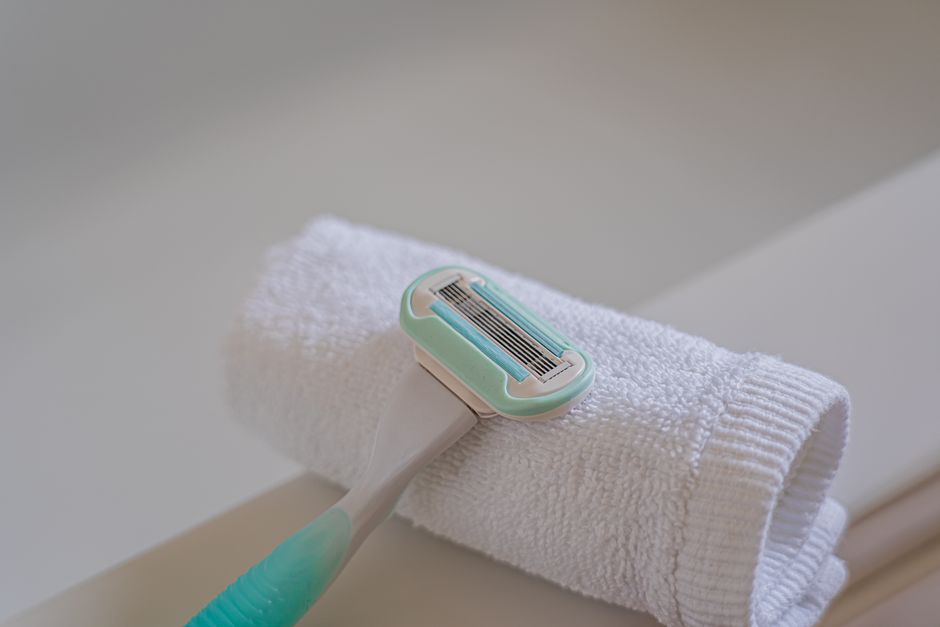
Shaving irritation is mostly a friction and technique problem, not a skin weakness problem. The fix is straightforward: soften the hair with warm water first, use a sharp blade, shave with the grain in short strokes, and apply light pressure instead of pressing down. Most razor burn, redness, and ingrown hairs come from dull blades, dry skin, and dragging a razor sideways across the skin — all of which are avoidable.
The goal is to reduce how much the blade tugs, scrapes, and cuts below the surface of the skin. When you do that, most irritation simply does not happen. This guide explains what actually causes the problem and the steps that reliably prevent it.
What Actually Causes Razor Irritation?
Razor burn is a form of mechanical skin injury. The blade removes hair, but it also strips away a thin layer of the outermost skin cells and creates tiny breaks in the skin barrier. Your body responds with inflammation — redness, stinging, and small raised bumps.
Three factors drive most of it:
- Friction — dragging a blade repeatedly over the same spot removes more skin than hair.
- Dull blades — a worn edge does not slice cleanly. It pulls and catches the hair, and you press harder to compensate.
- Shaving against the grain — cutting hair below the skin surface raises the risk that the new hair tip curls back and grows inward, especially in people with curly hair.
Pseudofolliculitis barbae is the clinical name for the bumpy, inflamed condition that follows ingrown hairs. It is more common in people with tightly curled hair, but it can affect anyone. The mechanism matters because it explains why technique — not just products — is the real solution.
How To Shave With A Razor Blade Without Irritation?
The sequence below is what dermatologists generally describe as best practice, and it is not complicated. Order matters more than the brand of razor you use.
1. Shave after or during a warm shower
Warm water and a few minutes of exposure make hair softer and easier to cut. Soft hair requires less force, and less force means less scraping. If you cannot shower first, hold a warm, wet cloth against the area for a couple of minutes.
2. Use a real lubricant, not just water
Shaving cream, gel, or a thick conditioner creates a cushion between the blade and your skin. Bar soap lathers well but tends to dry the skin and offers less glide. Whatever you use, give it a moment to sit on the skin before you start.
3. Shave with the grain first
Start by moving the razor in the same direction the hair grows. On the face, that usually means downward on the cheeks and upward on the neck. On the legs, it usually means from ankle to knee. This first pass removes most of the hair with the least trauma.
4. Use short, light strokes
Long strokes force you to press harder and pull the skin. Keep strokes short — roughly an inch at a time — and let the blade do the work. Rinse the razor frequently so cut hair and cream do not clog the edge.
5. Do not go over the same spot repeatedly
Passing over the same area again and again is one of the most common causes of irritation. If a patch still feels rough, reapply lubricant before a second pass rather than scraping the dry spot.
6. Rinse with cool water and moisturize
Cool water helps calm the skin. Follow with a fragrance-free moisturizer or a soothing aftershave balm. Alcohol-based splashes can sting and dry the skin, which does not help recovery.
Should You Shave Against the Grain?
Shaving against the grain gives a closer result, and that is exactly why it causes more problems. Cutting hair below the skin surface can leave a sharp tip that curls back as it grows.
The evidence is clearest for people with curly or coarse hair, where against-the-grain shaving is strongly linked to ingrown hairs and razor bumps. If you have straight, fine hair and no history of irritation, an against-the-grain pass may be fine for you. If you get bumps, stop doing it and see whether the problem resolves.
A middle option: make one pass with the grain, then a second pass across the grain. That gets you closer than a single pass without cutting as far below the surface.





How Often Should You Change Your Razor Blade?
There is no single correct number of shaves per blade, because blade life depends on hair coarseness, how much area you shave, and how you store the razor. What is well established is that a blade that tugs, pulls, or feels rough is past its useful life — even if it looks clean.
Two practical signals to replace it:
- You feel pulling or snagging instead of a smooth glide.
- You notice more nicks or irritation than usual with the same technique.
Rinsing and drying the razor after each use, and storing it away from a damp shower surface, helps the edge last longer. Rust and built-up residue both degrade performance.
Do Razor Bumps and Ingrown Hairs Need Different Treatment?
Razor bumps and ingrown hairs are related but not identical. An ingrown hair is a hair that has curled back into the skin or grown sideways under the surface. Razor bumps — pseudofolliculitis — are the inflamed reaction that follows.
For mild cases, the fix is often to stop shaving the area for a period and let the hair grow out. Warm compresses can help. Do not dig at or squeeze the bumps; that raises the risk of infection and scarring.
If bumps are persistent, widespread, or painful, that is a reason to see a clinician rather than keep experimenting. Some cases need medical treatment, and a professional can confirm what you are actually dealing with. Several skin conditions can produce similar-looking bumps, so self-diagnosis is unreliable.
Does Shaving Cause Hair to Grow Back Thicker?
No. This is one of the most durable myths in personal care. Shaving cuts hair at the surface. It does not change the follicle, the hair’s thickness, its color, or its rate of growth.
The reason hair feels coarser after shaving is simple geometry. An uncut hair has a fine, tapered tip. A cut hair has a blunt, flat end with the same diameter as the middle of the shaft. That blunt end feels rougher against the skin, but nothing about the hair itself has changed.
What Shaving Products Actually Help?
Product claims in shaving are often stronger than the evidence behind them. Here is a grounded way to think about the main categories.
- Lubricating shave cream or gel — genuinely useful. It reduces friction, which is the core problem.
- Fragrance-free moisturizer or balm — helpful after shaving, especially for dry or sensitive skin.
- Alcohol-based aftershave — commonly used, but it can sting and dry the skin. It is not required for a good result.
- Exfoliating scrubs before shaving — some clinicians suggest them for ingrown hairs, but the evidence is limited and over-scrubbing can worsen irritation.
- Single-blade versus multi-blade razors — multi-blade razors cut closer in fewer passes, which can reduce total passes but may cut further below the skin. For people prone to ingrown hairs, some clinicians recommend a single-blade razor. The evidence here is mixed, and the best choice varies by person.
Worth noting: a sharper, well-maintained inexpensive razor generally outperforms a dull premium one. Blade condition matters more than razor price.
When Should You See a Doctor?
Most shaving irritation settles within a few days once you change your technique. Seek medical care if you notice:
- Signs of infection — spreading redness, warmth, pus, or fever.
- Bumps that keep getting worse despite better technique.
- Darkened or thickened skin in the shaved area.
- Scarring or persistent pain.
These can point to conditions that need proper diagnosis and treatment, not a different razor.
Frequently Asked Questions
How do I shave without getting razor burn?
Soften the hair with warm water, use a sharp blade and a lubricating shave cream, and shave with the grain in short, light strokes. Avoid pressing down or passing over the same spot repeatedly, which are the main causes of irritation.
Is it better to shave with or against the grain?
Shaving with the grain causes far less irritation and is the safer default, especially if you get ingrown hairs. Shaving against the grain gives a closer shave but raises the risk of razor bumps, particularly for people with curly hair.
If you want a closer result without the risk, try a second pass across the grain instead.
How often should I replace my razor blade?
There is no fixed number of shaves that applies to everyone, since blade life depends on your hair and how you store the razor. Replace the blade when it starts to tug or pull rather than glide smoothly.
Why do I get ingrown hairs after shaving?
Ingrown hairs happen when a cut hair curls back into the skin or grows sideways under the surface, which is more likely when you shave against the grain. Switching to with-the-grain shaving and letting the area rest often resolves mild cases.
