
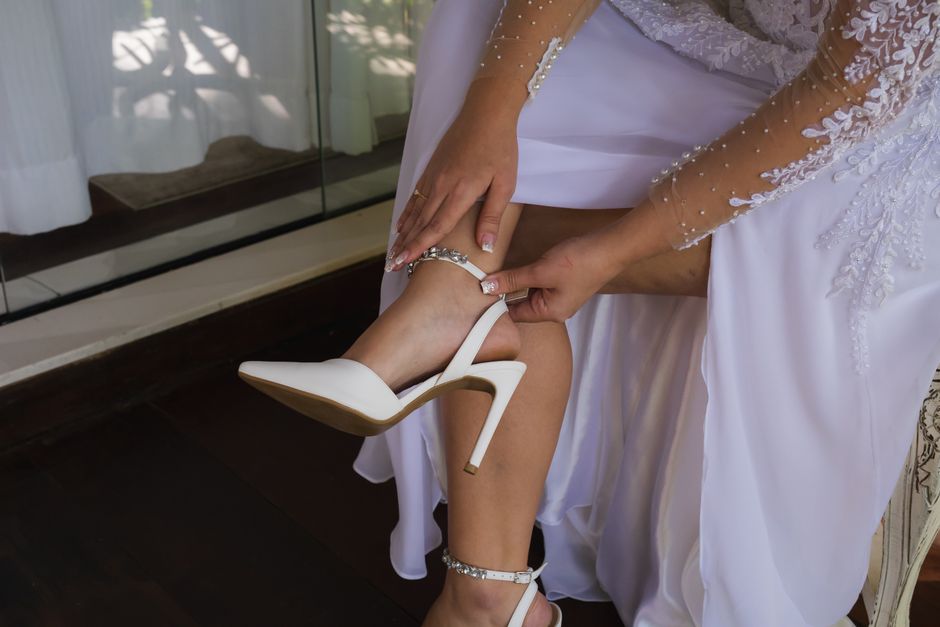
Blisters from heels are a friction problem, not a fate you have to accept. You can prevent them by reducing moisture, smoothing pressure points, and breaking in the shoes before a long day. The most reliable method is to combine the right socks or hosiery, foot powder or balm, and properly fitted shoes that have been worn in gradually.
Why Do Heels Cause Blisters in the First Place?
Blisters form when your skin rubs against the shoe with enough force to separate the top layer of skin from the layers beneath. The space fills with fluid as a protective cushion. Heat and moisture make this worse. Sweaty feet stick to the shoe, creating more friction than clean, dry skin.
Heels are especially problematic because they hold your foot at an angle. Your weight presses forward into the toe box while your heel slides up and down with each step. That repeated motion is exactly what creates the shear force that tears skin layers apart.
Some people blister more easily than others. Thinner skin, prior damage in the same spot, and even genetics play a role. But the basic mechanics are the same for everyone, and the prevention strategies work on the same principle: reduce friction and keep skin dry.
How To Wear Heels Without Getting Blisters
The single most effective step is to break in your heels before you wear them for a full day. New shoes are stiff. The materials need to soften and mold to the shape of your foot. Wear them around the house for short periods, 20 to 30 minutes at a time, over several days. Increase the duration gradually.
Stretch problem areas before wearing. A shoe stretcher can widen a tight toe box. For specific pressure points, like the back of the heel, use a stretching spray or a hairdryer on low heat while wearing thick socks inside the shoes. Heat softens the material, and the socks stretch it while it cools.
Fit matters more than any product you can buy. A heel that is too big lets your foot slide forward and rub. A heel that is too small presses on the sides and toes. Shop for heels later in the day because feet swell slightly by afternoon. Your true size may differ between brands, so always try both shoes on and walk around before buying.
When you do wear heels, apply a friction-reducing product before you put them on. Balms and sticks designed for blister prevention create a thin lubricating layer between skin and shoe. Some people use antiperspirant on their feet the night before to reduce sweating, though this works better for some than others. Powder also helps keep feet dry, but it can clump and create its own friction if you sweat heavily.
Moleskin or gel pads placed on the inside of the shoe, not on your skin, protect the exact spots that rub. Cut them to fit the heel counter and the toe box. They work best when applied before the blister forms, not after.
What to Do If You Feel a Hot Spot
A hot spot is the warning sign that a blister is about to form. You feel a burning or stinging sensation in one specific area. Stop and address it immediately. Waiting until you get home means the damage is already done.
If you can, remove the shoe and let the area cool. Apply a fresh layer of friction balm or cover the spot with a small piece of moleskin or a blister bandage. These bandages are thicker than standard adhesive bandages and absorb friction better. They also stay in place when your foot moves inside the shoe.
Do not pop a blister that has already formed. The intact skin protects against infection. Cover it with a blister bandage and let it heal on its own. If the blister is large, painful, or in a spot where it will keep rubbing, a healthcare provider can drain it safely under sterile conditions. Do not attempt this yourself at home.



Choosing Heels That Are Less Likely to Blister
Not all heels are created equal. A chunky heel distributes weight more evenly than a stiletto. A platform reduces the angle of your foot, which means less pressure on the ball of your foot and less sliding forward. Ankle straps keep your foot from moving side to side, which reduces friction on the sides of your heel.
Material matters. Soft leather and suede mold to your foot over time. Synthetic materials like polyurethane and PVC do not stretch much and can stay stiff indefinitely. Patent leather looks polished but is notoriously unforgiving.
Open-toe heels avoid the problem of cramped toes, but they create new friction points. The strap across the toes can rub with every step. If you choose open-toe styles, make sure the straps are snug but not tight, and apply friction balm to the strap line before wearing.
There is no such thing as a completely blister-proof heel. But some styles are objectively more comfortable than others because they reduce the mechanical forces that cause blisters in the first place.
Hosiery and Socks: What Actually Works
Bare feet inside heels almost always blister more than covered feet. The skin-to-shoe contact is direct, and sweat has nowhere to go. Thin dress socks or liner socks provide a barrier that absorbs some of the friction.
If barefoot is the only option, foot powder or a friction balm becomes more important. Some people use two pairs of thin socks, a technique used by hikers, to shift friction between the sock layers instead of between skin and shoe. This works in heels too, but it changes the fit. You may need to size up half a size for it to work comfortably.
Nylon stockings do not help much. They are thin, slippery, and offer minimal protection. If you prefer stockings, look for pairs with reinforced toes and heels, which provide a slightly thicker barrier.
Can You Train Your Feet to Handle Heels Better?
Some research suggests that regular heel wear changes the structure of the calf muscles and Achilles tendon over time. The muscles shorten and adapt to the elevated position. This is why frequent heel wearers often find heels more comfortable than people who wear them rarely.
But this adaptation comes with a cost. Shortened calf muscles can cause pain and tightness when you switch back to flat shoes. Stretching your calves before and after wearing heels can help maintain flexibility, though it does not directly prevent blisters.
The practical takeaway is simple: if you wear heels regularly, your feet adjust. If you wear them once a month, they will never fully adapt, and you will need to rely on the prevention methods above every single time.
When Blisters Become a Medical Concern
Most blisters heal on their own within a few days. But some need medical attention. Signs of infection include increasing redness, warmth, pain, or yellow or green drainage from the blister. Fever is another warning sign.
People with diabetes or poor circulation should be especially careful with foot blisters. What looks like a minor friction injury can become a serious wound that does not heal. If you have diabetes and develop a blister on your foot, check it daily and contact your healthcare provider if it does not improve within a few days.
If the same spot blisters every time you wear heels, look at the shoe itself. A rough seam or a stiff edge in the lining can be the culprit. Sometimes a cobbler can smooth or pad the problem area. Sometimes the shoe simply does not fit your foot shape, and no amount of breaking in will fix it.
Products That Help and Products That Don’t
Friction balms and sticks are well-supported by sports medicine research. They reduce friction between skin and footwear, and many athletes use them for the same reason hikers and runners do. Look for products with ingredients like petrolatum, wax, or silicone, which create a smooth barrier.
Gel pads and silicone sleeves can help, but they change the fit of the shoe. A pad that is too thick can make the shoe tighter, creating a new pressure point. Choose thin pads and test them with the shoes you plan to wear.
Products that claim to permanently stretch shoes with heat or chemicals have limited evidence behind them. Some work on certain materials, like leather, and do nothing on others. The safest approach is a professional shoe stretcher or a cobbler, especially for expensive heels.
No spray, cream, or patch can replace a shoe that fits. Products are tools, not solutions. The solution is fit, preparation, and friction management.
Frequently Asked Questions
What is the best thing to put on your feet to prevent blisters from heels?
A friction balm or stick applied to dry skin before putting on your shoes is the most effective option. Powder helps absorb moisture but can clump, so balms are generally more reliable.
How long does it take to break in new heels?
Most shoes need several short wearing sessions over the course of a week or two to soften and mold to your foot. Wearing them for hours at a time on the first day almost guarantees blisters.
Should I pop a blister from wearing heels?
No. Leave the blister intact and cover it with a blister bandage. Popping it increases the risk of infection and slows healing.
Do gel inserts prevent blisters from heels?
Gel inserts can help by cushioning pressure points, but they also change the fit of the shoe. Thin inserts work better than thick ones, and they work best when combined with a friction balm.
