
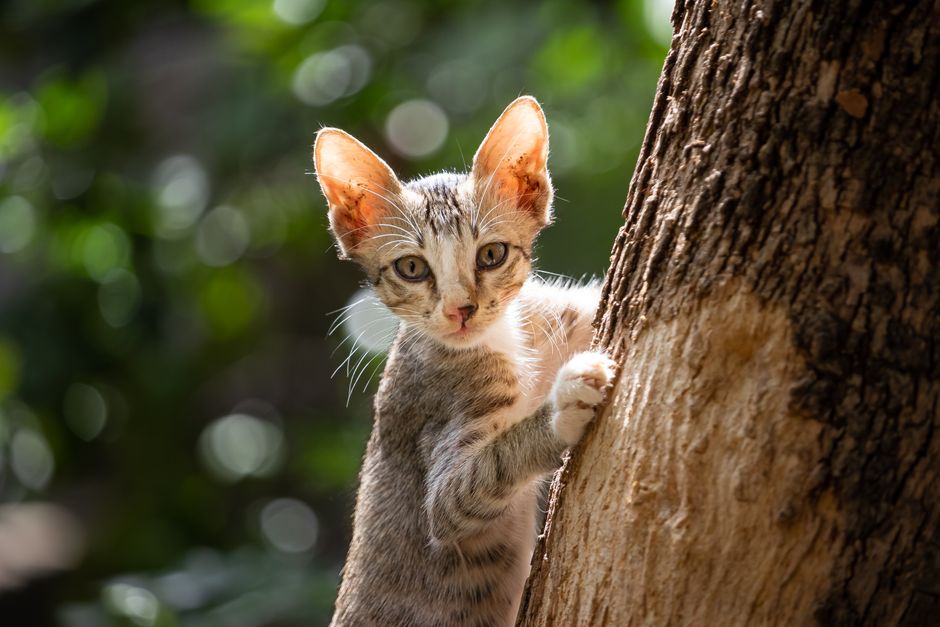
Scruffing a kitten means grabbing the loose skin on the back of its neck. Mother cats use this to carry very young kittens. But doing it wrong—or doing it at the wrong age—can hurt the kitten or cause lasting fear. To scruff a kitten safely, always support the hindquarters, never let the kitten hang by the neck skin, and only do it for a few seconds at most. You should not scruff a kitten older than 2–3 weeks, during vet exams, or as a form of punishment.
What Does It Mean To Scruff A Kitten?
Scruffing is picking up a kitten by the loose skin at the back of the neck. In kittens under two weeks old, this skin is loose and the kitten has a natural reflex to go limp when the mother carries them. This reflex is called clipnosis or the “scruff response.” It stops the kitten from struggling while being moved.
In older kittens, that reflex fades. Their body weight becomes too heavy for the neck skin to support. Scruffing then becomes uncomfortable, painful, and stressful. Many veterinarians and animal behaviorists now advise against scruffing kittens beyond the first few weeks of life, except for specific medical reasons and for only a few seconds.
Is Scruffing A Kitten Safe? What The Evidence Says
The idea that scruffing is harmless came from watching mother cats carry their kittens. But mother cats only do this for the first two to three weeks of the kitten’s life. During that time, the kitten’s weight is low and the skin is stretchy. The mother also supports the kitten with her body as she carries it—she rarely lets the kitten dangle by the scruff alone.
Some research has looked at the stress response in kittens during scruffing. Studies have found that scruffing—even for a few seconds—can raise heart rate, increase cortisol (a stress hormone), and cause defensive behaviors like hissing or freezing. Freezing may look like calmness, but it can actually be a fear response called tonic immobility. This is not cooperation; it is distress.
Veterinary behaviorists generally agree that scruffing is not a good routine handling method for kittens over a few weeks old. The American Association of Feline Practitioners has recommended against scruffing as a routine restraint technique since 2004. Many modern veterinary schools teach alternative handling methods that focus on supporting the whole body.
How To Scruff A Kitten Safely (Step-By-Step)
If you must scruff a kitten—for example, to give oral medication or to remove it from immediate danger—follow these steps. Only attempt this with kittens under two to three weeks old. For older kittens, use alternatives described later.
- Use one hand to gently grasp the loose skin between the kitten’s shoulder blades. Do not pinch hard—just enough to hold.
- Immediately place your other hand under the kitten’s hindquarters to support the back legs and bottom. Never let the kitten dangle unsupported.
- Hold the kitten close to your body or against a flat surface. Do not lift it high in the air.
- Keep the scruff hold for no more than five to ten seconds. Release as soon as the needed action is done.
- If the kitten squirms or cries out, release immediately. Pain or fear means you are holding too tight or the kitten is too old for this method.
Important: Never shake a kitten while scruffing. Never use scruffing as a way to punish or discipline a kitten. It does not teach anything and only creates fear.





When NOT To Scruff A Kitten
There are many situations where scruffing is not safe or appropriate.
Do not scruff kittens older than 2–3 weeks. By this age, the kitten’s body weight is too much for the neck skin to hold without strain. The skin can tear, or the kitten can injure its neck muscles or spine if it struggles.
Do not scruff during veterinary examinations. Modern veterinary practice uses other restraint methods that are less stressful. Scruffing can make a cat more fearful of future handling.
Do not scruff to give a bath. Bathing a kitten is stressful enough. Scruffing adds pain and panic. Use a towel and gentle full-body support instead.
Do not scruff to discipline. Scruffing does not teach a kitten that scratching or biting is wrong. It only teaches fear of hands. Reward-based training is more effective.
Do not scruff a kitten that is sick, injured, or in pain. The extra stress can worsen its condition. In an emergency, support the entire body with both hands or a towel.
Better Alternatives To Scruffing For Handling Kittens
For most routine handling—nail trims, giving medication, brushing—there are safer, less stressful methods.
The towel wrap. Gently wrap the kitten in a soft towel, leaving one leg or the head exposed as needed. This provides comfort and restricts movement without force. Many kittens calm down quickly when swaddled.
The two-hand support. For lifting, place one hand under the chest just behind the front legs and the other hand under the hindquarters. Keep the kitten close to your body. This distributes weight evenly and gives the kitten a sense of security.
The burrito hold. Similar to the towel wrap, but you tuck the kitten’s body into the towel so only the face is out. This is commonly used for nail trims and oral medications.
Distraction and treats. For kittens that are old enough to eat solid food, offer a small reward like a bit of wet food or a treat while you handle them. This builds positive associations.
These alternatives are recommended by veterinary behaviorists and are supported by a growing body of evidence that they cause less stress and fewer injuries than scruffing.
Signs Your Kitten Is Stressed Or In Pain From Scruffing
Knowing when to stop is just as important as knowing how to start. Watch for these signs:
- Vocalizing – mewing, crying, or hissing during the hold.
- Struggling or squirming – trying to free itself.
- Freezing and not moving – this may look like calm but can be tonic immobility (a fear response).
- Ears flattened back – a classic sign of fear or pain.
- Tail tucked under the body – another indicator of distress.
- Urination or defecation – this can happen from extreme fear.
If you see any of these, release the kitten immediately and switch to a different handling method. Never force a kitten to endure a scruff hold.
Frequently Asked Questions
Can you scruff a 6-week-old kitten?
No. By 6 weeks, a kitten is too heavy and the scruff reflex is no longer reliably present. Scruffing at this age risks injury and causes unnecessary stress.
Does scruffing hurt a kitten?
It can, especially if the kitten is older than 2–3 weeks or if the kitten struggles while dangling. The neck skin is not designed to hold the full body weight after that age.
What is the correct way to pick up a kitten without scruffing?
Place one hand under the chest behind the front legs and the other hand under the hindquarters. Lift gently and hold the kitten against your body for support.
Is scruffing ever necessary for a kitten?
In rare situations, such as an emergency removal from danger or a very quick medical procedure in a newborn, it may be needed. But it should never be a routine handling method.
