
Most people trying to clean their indoor air end up making it worse. They buy an air purifier that does nothing for VOCs, or they use a chemical spray that adds more pollutants. The right way to remove VOCs is simple but not obvious: stop adding them first, then ventilate, and only then consider an air cleaner. This article explains exactly what works, what does not, and why most advice you have heard is incomplete.
What Are VOCs and Why Should You Care?
VOC stands for volatile organic compound. These are chemicals that evaporate into the air at room temperature. They come from many common household items. Paints, varnishes, cleaning products, air fresheners, new furniture, carpets, and even some building materials release VOCs.
The health effects depend on the chemical and how much you are exposed to. Short-term exposure can cause headaches, dizziness, and eye or throat irritation. The EPA reports that levels of several common VOCs can be two to five times higher inside homes than outside. Long-term exposure to some VOCs is linked to more serious health problems including liver and kidney damage and some cancers.
Not all VOCs are equally dangerous. Formaldehyde is one of the more concerning ones. It is found in pressed wood products, some glues, and certain fabrics. Benzene, found in tobacco smoke and some solvents, is another high-risk VOC. Others cause irritation but have less evidence for serious long-term harm.
Does Opening Windows Actually Remove VOCs?
Yes, and it is one of the most effective methods you have. Dilution with outdoor air works. The more fresh air you bring in, the lower the concentration of VOCs becomes. This is not a theory. Studies measuring indoor air quality consistently show that ventilation reduces VOC levels.
The catch is that this only works when outdoor air is cleaner than indoor air. If you live near a busy highway or in an area with high smog, opening windows might bring in pollutants that are worse than the VOCs inside. In most suburban and rural settings, outdoor air is significantly lower in VOCs than indoor air.
Cross-ventilation matters. Open windows on opposite sides of the room or house. This creates a path for air to flow through rather than just mixing in one spot. Even fifteen minutes of open windows can measurably reduce VOC levels in a room. Doing this daily is a simple habit that makes a real difference.
How To Remove VOCs From Indoor Air The Right Way With an Air Purifier
Choosing the wrong air purifier is a waste of money. Many people buy a HEPA filter and assume it removes VOCs. It does not. HEPA filters capture particles like dust, pollen, and mold spores. VOCs are gases and pass right through a HEPA filter.
The technology that actually removes VOCs is activated carbon. Carbon filters absorb gaseous chemicals onto their surface. The more carbon there is, the more VOCs it can hold. Some air purifiers have a thin carbon sheet attached to a HEPA filter. Those are nearly useless for VOCs because there is not enough carbon to absorb meaningful amounts.
Look for an air purifier with a thick, separate activated carbon filter. The weight of the carbon is the key number. A filter with one pound of carbon will work much better than one with a few ounces. Some purifiers use a blend of carbon and other materials like zeolite. That can work too, but carbon is the main active ingredient.
Placement matters. Put the purifier in the room where you spend the most time, usually the bedroom. Keep it running continuously. VOCs are constantly being released from materials in your home, so intermittent use is less effective.
Here is a simple comparison of common air cleaning technologies for VOCs:
| Technology | Removes VOCs? | Notes |
|---|---|---|
| HEPA filter | No | Only captures particles, not gases |
| Activated carbon | Yes | Effectiveness depends on amount of carbon |
| Ionizer | No | May produce ozone, which is a lung irritant |
| UV light | Limited | Can break down some VOCs but produces byproducts |
| Photocatalytic oxidation | Mixed evidence | Some studies show it works, others show it creates formaldehyde |




What About Houseplants for VOC Removal?
This is one of the most overhyped claims in indoor air quality. The idea that houseplants remove VOCs comes from a NASA study from 1989. That study was done in sealed chambers, not in real homes. The conditions were nothing like a normal living space.
Later research has shown that plants do not remove VOCs at a rate that matters in a real room. A 2019 study published in the Journal of Exposure Science and Environmental Epidemiology found that you would need between 10 and 100 plants per square meter to match the air cleaning rate of simple ventilation. That is an absurd number of plants for any home.
Plants are fine for other reasons. They look nice and some people find them calming. But do not count on them to clean your air of VOCs. The effect is real but so small it is not practically useful. If you want cleaner air, open a window instead.
What Are the Most Common Sources of VOCs in Your Home?
You cannot remove VOCs effectively if you keep bringing them in. Source control is the first and most important step. Identify the biggest sources in your home and reduce them.
New furniture is a major source. Pressed wood products like particleboard and MDF release formaldehyde for months or years. If you buy new furniture, look for solid wood or products labeled as low-VOC or no added formaldehyde. Let new furniture off-gas in a garage or outside for a few days before bringing it inside.
Paints and finishes are another big source. Many paints now have low-VOC or zero-VOC options. These are widely available and work just as well as traditional paints. If you are painting, choose these. Even after the paint dries, VOCs continue to off-gas for weeks.
Cleaning products and air fresheners are often overlooked. Many contain VOCs that are released into the air as you use them. The phrase “unscented” does not mean no VOCs. Some unscented products still contain chemical solvents. Look for products that list their ingredients clearly or use simple alternatives like vinegar and water for cleaning.
Here are the most common VOC sources to check in your home:
- New carpets and rugs
- Paint and varnish
- Cleaning supplies
- Air fresheners and candles
- New electronics and plastics
- Dry cleaned clothes
- Tobacco smoke
- Gas stoves and heaters
Does Baking Soda or Charcoal Bags Remove VOCs?
Baking soda is widely claimed to absorb odors and chemicals. The evidence for this is weak. Baking soda can neutralize some acidic compounds through a chemical reaction, but it does not absorb most VOCs in a meaningful way. Leaving an open box of baking soda in your fridge might help with smells, but it will not reduce VOC levels in a room.
Charcoal bags are a different story. Activated charcoal does absorb VOCs. The question is how much. Small charcoal bags sold for odor control contain very little carbon. They become saturated quickly. A few small bags in a room might absorb a tiny fraction of the VOCs present. They are not a practical solution for whole-room air cleaning.
Large amounts of activated carbon, like what is in a good air purifier, can make a difference. But a small bag hanging in a closet is mostly marketing. If you want to use carbon for VOC removal, buy a purifier with a thick carbon filter, not a decorative bag.
Frequently Asked Questions
How long does it take for VOCs to leave the air?
Most VOCs from a single source like paint will decrease significantly within a few days with good ventilation. Some VOCs from pressed wood products can off-gas for years.
Do air purifiers remove VOCs or just dust?
Only air purifiers with activated carbon filters remove VOCs. Standard HEPA purifiers only remove particles like dust and pollen, not gases.
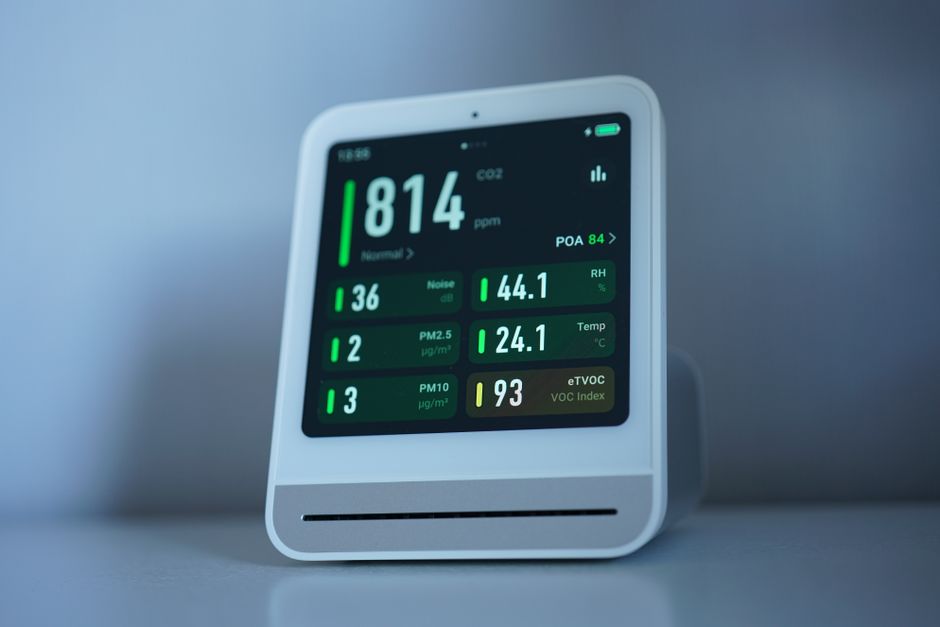
Can I test my home for VOCs?
Yes, you can buy home test kits or hire a professional. Test kits vary in accuracy. Professional testing is more reliable if you suspect a specific problem.
Are low-VOC products safe enough?
Low-VOC products release fewer chemicals than standard products. They are a good choice but not zero risk. Still ventilate after using them.
