
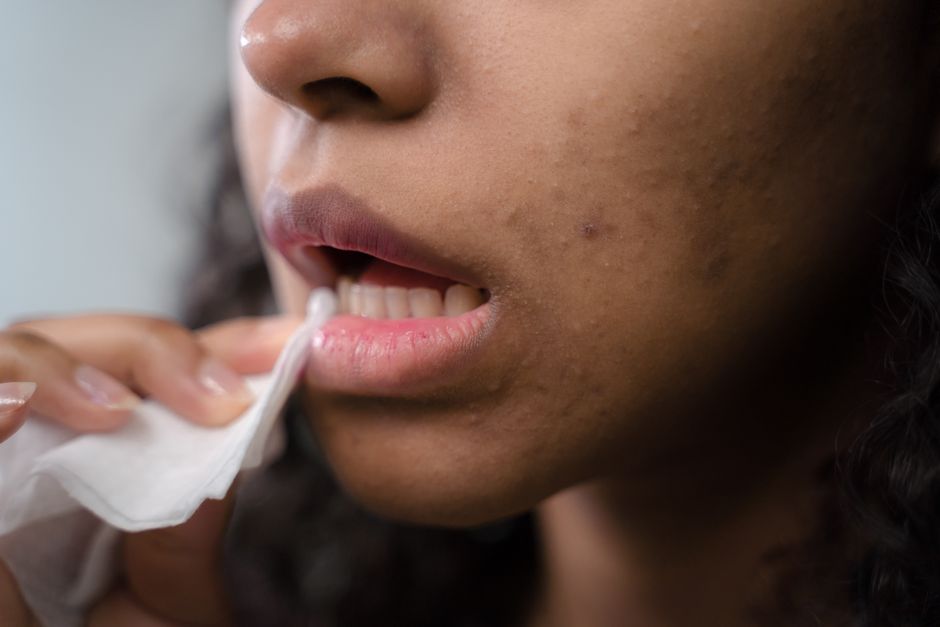
A pimple on your lip line is painful, obvious, and hard to ignore. The good news is that most lip pimples are treatable at home with the right approach. The most important step is to identify what you are actually dealing with, because a cold sore requires completely different care than a pimple. If it is a true pimple, you can reduce it by applying a warm compress, using a spot treatment with benzoyl peroxide or salicylic acid, and leaving it alone. Picking or popping it will almost always make it worse and can cause scarring or infection.
Is It a Pimple or a Cold Sore?
Before you touch anything, look closely. A pimple and a cold sore look similar but need different treatments. Pimples form when a hair follicle gets clogged with oil and dead skin cells. Cold sores are caused by the herpes simplex virus (HSV-1) and are contagious.
Pimples usually appear as a single red bump with a white or yellow center. They may be tender but rarely tingle before they appear. Cold sores often start with a tingling or burning sensation a day or two before the blister shows up. Cold sores are typically clusters of small fluid-filled blisters that crust over. If you see a cluster or feel that telltale tingle, treat it as a cold sore and avoid touching it.
Applying acne medication to a cold sore will not help and may irritate the skin. Applying cold sore cream to a pimple will also do nothing. Getting this step wrong wastes days of treatment time.
How To Remove Pimple From Lips: Step-by-Step Care
Once you have confirmed it is a pimple, follow these steps. The goal is to dry out the pimple and reduce inflammation without damaging the delicate skin on your lip line.
- Warm compress. Soak a clean cloth in warm water and hold it against the pimple for 10 to 15 minutes. Do this two to three times a day. The heat increases blood flow to the area, which helps bring the pimple to a head faster.
- Cleanse gently. Wash the area with a mild, fragrance-free cleanser. Do not scrub. The skin around the lips is thinner than the rest of your face and tears easily.
- Apply a spot treatment. Use a product with 2% salicylic acid or 2.5% to 5% benzoyl peroxide. Dab a thin layer directly on the pimple only. Avoid getting these ingredients on the actual lip tissue because they can cause peeling and irritation.
- Moisturize carefully. Keep the surrounding skin hydrated with a simple, non-comedogenic moisturizer. Do not apply heavy lip balms directly over the pimple unless they are non-comedogenic.
- Leave it alone. Do not pick, squeeze, or pop. Popping a lip pimple pushes bacteria deeper into the skin and increases the risk of scarring. It can also spread the infection to nearby hair follicles.
Most pimples will shrink within a few days with this routine. If the pimple has a visible white head, a warm compress alone may cause it to drain naturally. Let that happen on its own.
What Not To Do
Certain habits make lip pimples worse. Avoid these common mistakes.
Do not pop it. This is the most important rule. The skin on the lip border is thin and heals slowly. Popping increases the chance of a dark spot or scar that lasts for months.
Do not use toothpaste. The toothpaste trick is a viral myth. Toothpaste contains ingredients like baking soda and fluoride that dry out the skin, but they also cause chemical burns and severe irritation. No clinical evidence supports toothpaste as an acne treatment.
Do not apply ice directly. Ice can numb pain, but direct contact with skin damages tissue. If you want to reduce swelling, wrap ice in a thin towel and apply for no more than five minutes at a time.
Do not over-wash. Washing the area repeatedly strips natural oils and triggers more oil production. Cleanse twice a day maximum.




How Long Does a Lip Pimple Last?
A typical pimple follows a life cycle of about five to seven days. Day one and two involve redness and swelling. Days three to five usually bring a white head. After that, the pimple drains and heals.
With consistent spot treatment, you can shorten the active phase slightly. But no treatment makes a pimple disappear overnight. Products that claim immediate results are not supported by evidence.
If a pimple lasts longer than two weeks without changing, see a dermatologist. Persistent bumps on the lip line can be something other than acne, including a cyst, a mole, or in rare cases, skin cancer. A healthcare provider can examine it and tell you what it is.
When To See a Doctor
Most lip pimples resolve at home. But some situations require medical attention.
See a doctor if the bump is extremely painful, grows rapidly, or bleeds without being touched. Also seek care if you have multiple pimples in the same area that keep returning, or if the area becomes hot and swollen with red streaks. Those signs suggest a bacterial infection that needs prescription treatment.
If you get pimples on your lips frequently, a dermatologist can help. Prescription options like topical retinoids or oral medications are more effective than over-the-counter products for persistent acne. Do not self-treat with strong prescription medications from online sources.
Why Do Pimples Form on the Lips?
Pimples form when a pore becomes blocked. The lip line has many oil glands, and the skin there is prone to buildup from food, lip balm, and cosmetics.
Common triggers include heavy lip products that clog pores, not removing makeup before bed, and touching your mouth frequently. Hormonal changes also increase oil production and can cause pimples in this area. Stress does not directly cause pimples, but it can worsen existing acne by increasing inflammation.
Some research suggests that diets high in refined sugar and dairy may worsen acne in some people. The evidence is not strong enough to recommend a specific diet, but reducing these foods is a reasonable experiment if you get frequent breakouts.
Preventing Future Lip Pimples
Prevention is easier than treatment. Build habits that keep the lip area clear.
Remove all makeup every night. Use a gentle makeup remover, then a cleanser. Check that lip balms and lipsticks are labeled non-comedogenic, which means they do not clog pores. Replace old cosmetics regularly because bacteria grow in expired products.
Wash your hands before touching your face. Your hands carry bacteria and oils that transfer to your skin. Avoid resting your chin or mouth on your hands while working or studying.
Change your pillowcase at least once a week. Pillowcases collect oil, dead skin cells, and bacteria that contact your face while you sleep.
If you shave your upper lip, use a clean razor each time. Dull blades irritate hair follicles and can trigger pimples.
Frequently Asked Questions
Can I pop a pimple on my lip?
No. Popping a lip pimple increases the risk of infection, scarring, and spreading bacteria to nearby pores. Let it drain naturally or use a warm compress to help it come to a head.
Is toothpaste good for lip pimples?
No. Toothpaste is not an acne treatment and can cause chemical burns on the delicate skin around the lips. Use a product with salicylic acid or benzoyl peroxide instead.
How can I tell if it is a pimple or cold sore?
Pimples are single bumps that appear without warning, while cold sores usually start with tingling and appear as clusters of small blisters. If you are unsure, avoid touching it and see a healthcare provider.
How long does a lip pimple take to heal?
Most lip pimples heal within five to seven days with consistent care. If a bump lasts longer than two weeks, see a dermatologist to rule out other conditions.
