
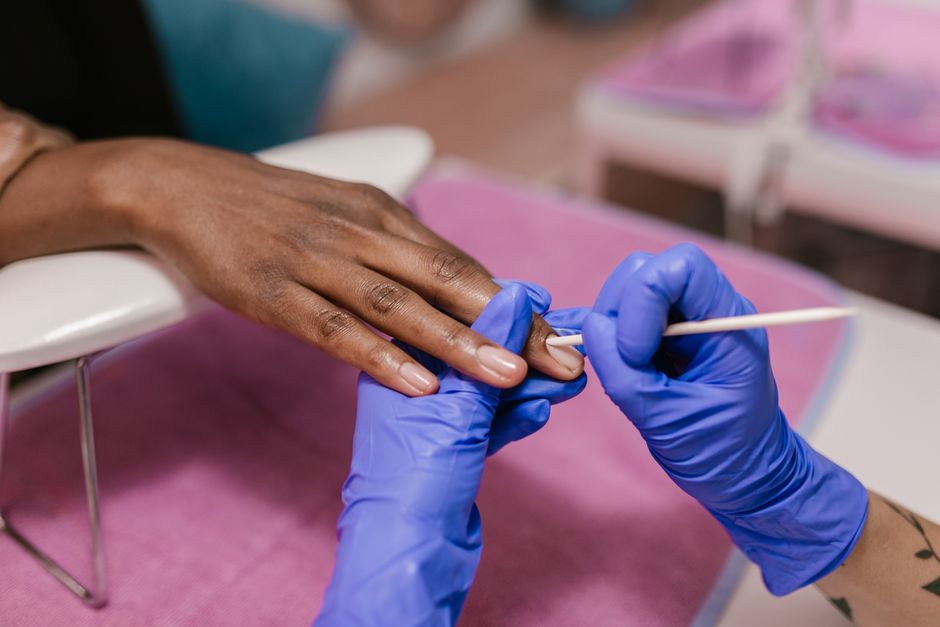
Nail glue is designed to hold fake nails in place for weeks, so removing it takes patience and the right method. The safest approach is to soften the glue with acetone-based nail polish remover, then gently work the nail loose. Never rip, bite, or pry off the fake nail, because that can tear the natural nail and damage the nail bed.
What follows is a plain guide to how nail glue works, which removal methods are safe, which ones cause damage, and when it makes sense to let a professional handle it.
What Is Nail Glue and Why Does It Hold So Tightly?
Nail glue is usually a cyanoacrylate adhesive, the same family of fast-bonding glue found in many household super glues. It works through a rapid chemical reaction. When the glue meets trace moisture on your nail surface, it hardens in seconds and locks the fake nail to your natural nail.
That bond is strong by design. Manufacturers want the fake nail to stay put through hand washing, typing, and daily life. The trade-off is that the same strength that keeps the nail on also makes it stubborn to remove without the right technique.
One point worth understanding: the glue bonds to the surface of your natural nail, not just the tip. If you force a fake nail off, you are not just breaking a glue seal. You can peel away layers of the nail plate itself, which is where most damage happens.
How To Remove Nail Glue From Fake Nails Safely at Home
Acetone is the key. It breaks down cyanoacrylate glue in a way that water and oil cannot. Soaking gives the acetone time to reach the bond and soften it, so the fake nail lifts with minimal force.
Here is a step-by-step method that limits damage:
- Trim the fake nail short with nail clippers so the acetone reaches the edges faster.
- Buff the shiny top layer lightly with a nail file. This helps the acetone penetrate.
- Soak a cotton ball in acetone-based nail polish remover and place it on the nail.
- Wrap the fingertip in aluminum foil to hold the cotton in place and trap the fumes.
- Wait about 15 to 20 minutes, then check whether the nail has loosened.
- Gently push the fake nail off with a cuticle stick or orange stick. Do not force it.
- If it still holds, re-wrap and soak longer. Repeat until it releases.
The waiting is the part people skip, and it is the part that protects the natural nail. If the nail does not move easily, the glue is not ready. More soaking is always safer than more pulling.
Plain acetone, sold as pure acetone in most drugstores, tends to work faster than a standard polish remover that contains added oils and fragrances. Both can work. Pure acetone is simply more concentrated.
Which At-Home Removal Methods Actually Work?
Not every method you see online is effective, and some cause real harm. It helps to know which is which.
Acetone soaking is the standard method and the one most reliable for dissolving cyanoacrylate glue. It is well established and widely used in nail care.
Warm soapy water may loosen a weak or older bond over time, but it does not dissolve the glue itself. It is a slow and unreliable option for a fresh, strong bond.
Oil, such as cuticle or olive oil, can condition the skin and nail but does not break down cyanoacrylate glue. It is often suggested online, but there is no strong evidence it removes a firm bond.
Dental floss or a thin string is sometimes used to saw the nail loose. This can work if the bond is already softened, but using it on a hard bond risks lifting the natural nail. Use it only after soaking, and only with light pressure.
Biting, picking, or prying is the most common cause of damage. It can strip the nail plate, cause pain, and open the door to infection. Avoid it.




What Happens If You Damage Your Natural Nail?
Forcing a fake nail off can remove layers of the natural nail plate. The nail may look thin, feel tender, and become more likely to split or peel. In more serious cases, the nail bed underneath can be injured.
Signs that you should stop and get medical attention include:
- Pain that does not ease
- Swelling, redness, or warmth around the nail
- Pus or a bad smell
- A nail that lifts, changes color, or looks separated from the nail bed
These can point to an infection or a more serious injury. A damaged nail grows out slowly. Fingernails typically take several months to fully regrow, so protecting the nail while it heals matters.
If the nail is painful, swollen, or showing signs of infection, see a doctor or a dermatologist rather than trying more home removal. These are the situations where self-treatment can make things worse.
When Should You See a Professional Instead?
A nail technician or dermatologist can remove fake nails with less risk when the situation is tricky. This is worth considering if:
- The nails are firmly attached and home soaking is not working
- You have sensitive skin or a known reaction to acetone or nail products
- Your natural nails are already thin, damaged, or painful
- You have diabetes, poor circulation, or a weakened immune system
- There are signs of infection
People with diabetes or circulation problems should be especially careful with any nail procedure, because small injuries can become serious. For these groups, professional removal is the safer choice.
Some salons use an electric file or drill to remove product. This can be efficient, but it also carries a risk of thinning the natural nail if used too aggressively. If a technician works quickly and you feel heat or burning, speak up.
How Can You Prevent Glue Problems Next Time?
The best way to avoid a painful removal is to reduce how strongly the glue bonds in the first place.
- Use glue sparingly. A thin layer holds well and is easier to remove.
- Consider press-on nails with adhesive tabs instead of glue for short-term wear. They come off with less force.
- Keep the natural nail healthy between sets. Give it time to recover.
- Follow the removal instructions that come with the product.
- Skip acetone soaks too often, since repeated use can dry and weaken the nail and skin.
Acetone is effective, but it is also drying. Repeated soaks can leave nails brittle and skin irritated. Moisturizing after removal helps, though it will not reverse damage that has already happened to the nail plate.
If you wear fake nails often, giving your natural nails breaks between sets is one of the simplest ways to keep them from thinning over time.
Does Acetone Damage Your Nails?
Acetone can dry out the nail and surrounding skin, which may make nails look dull or feel brittle with frequent use. It does not, however, dissolve the natural nail the way it dissolves glue. The bigger risk to your nails usually comes from the physical force of removal, not the acetone itself.
Using acetone occasionally and moisturizing afterward is generally considered acceptable in nail care. Using it constantly, or leaving it on far longer than needed, is where the drying effects add up.
Frequently Asked Questions
How long do I need to soak fake nails in acetone?
Most fake nails loosen after about 15 to 20 minutes of soaking in acetone. If the nail still holds firmly, re-wrap and soak longer rather than pulling.
Can I remove nail glue without acetone?
Warm soapy water or oil may loosen a weak bond over time, but neither dissolves cyanoacrylate glue reliably. Acetone remains the most effective at-home option.
Is it safe to rip off fake nails?
No. Ripping or prying off a fake nail can strip layers of your natural nail and injure the nail bed. Always soften the glue first.
When should I see a doctor about a damaged nail?
See a doctor if you have pain, swelling, redness, pus, or a nail that looks separated from the nail bed. These can signal an infection or a more serious injury.
