
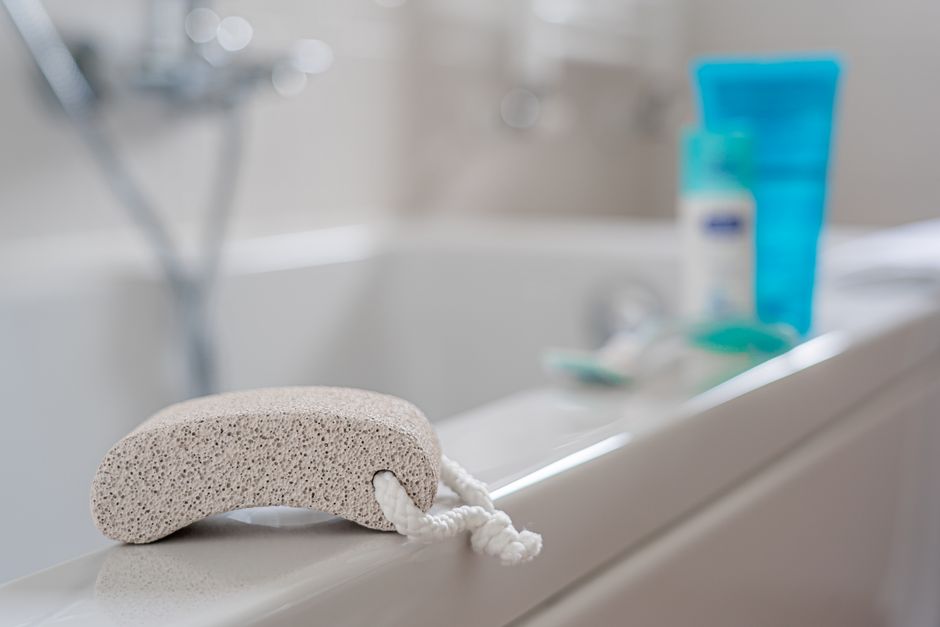
Corns on your feet are thick, hardened layers of skin that develop to protect the area from repeated friction or pressure. The most reliable way to remove a corn is to address the source of that pressure, then gently thin the thickened skin over time using safe methods. Do not cut corns off yourself, and avoid medicated pads with acid unless a doctor has told you to use them. The safest approach combines daily filing with a pumice stone after soaking, using moisturizers with urea or ammonium lactate, and changing your footwear to stop the corn from coming back.
What Actually Causes a Corn to Form?
A corn is your skin’s response to repeated rubbing or pressure. It builds extra layers to protect the deeper tissue underneath. The most common cause is wearing shoes that are too tight, too loose, or have seams that press against your toes.
High heels force your weight forward into the toe box. Shoes with narrow toe boxes squeeze your toes together. Loose shoes allow your foot to slide forward, causing your toes to jam into the front of the shoe with every step. Any of these situations can trigger a corn within a few weeks of regular wear.
Bone structure also plays a role. People with hammertoes, bunions, or other foot deformities are more prone to corns because their toes rub against shoes in abnormal ways. Research published in the Journal of the American Podiatric Medical Association has confirmed that structural foot issues are a primary risk factor for recurring corns.
How To Remove Corn On Foot Safely at Home
The standard home method involves three steps: soak, file, and moisturize. Soak your feet in warm water for 10 to 15 minutes to soften the skin. Use a pumice stone or foot file to gently rub the corn in a circular motion. Do not try to remove all of it in one session — only remove the layers that come off easily. Stop if you feel pain or see raw skin.
After filing, apply a thick moisturizer. Products containing 10 to 40 percent urea or 12 percent ammonium lactate are backed by dermatological evidence for softening hard skin. These ingredients help break down the keratin protein that makes the corn tough. Applying the moisturizer daily, even on days you do not soak, is essential for gradual thinning.
Avoid using over-the-counter corn pads that contain salicylic acid if you have diabetes, poor circulation, or fragile skin. The acid can burn healthy tissue and lead to infection. The American Academy of Dermatology advises that people with these conditions should only treat corns under medical supervision.
What Does Research Say About Corn Treatment Methods?
Clinical evidence on corn treatments is not as robust as you might expect. A 2012 Cochrane review, which is considered the gold standard for evidence-based medicine, found only limited data comparing different corn removal methods. The review concluded that salicylic acid plasters were more effective than placebo, but the quality of the studies was low.
More recent research has focused on prevention rather than removal. A 2019 study in the Journal of Foot and Ankle Research found that properly fitted footwear reduced corn recurrence by roughly 40 percent over six months compared to people who did not change their shoes. This suggests that the most effective treatment may be the one that happens before the corn forms.
There is no clinical evidence that home remedies like vinegar, lemon juice, or baking soda remove corns. These substances can irritate the skin and cause chemical burns if used incorrectly. If a home remedy sounds like something you would use to clean a countertop, it probably does not belong on your feet.



When Should You See a Podiatrist for a Corn?
You should see a podiatrist if the corn is painful, red, warm to the touch, or draining fluid. These are signs of infection. You should also see a doctor if you have diabetes, peripheral artery disease, or neuropathy — corns can become dangerous quickly when your circulation or sensation is compromised.
A podiatrist can perform a procedure called enucleation, where they use a sterile scalpel to carefully remove the corn. This is not the same as cutting it off at home. The doctor removes the central core of the corn, which is the hard plug at the center that causes the most pain. This provides immediate relief and is safe when done by a trained professional.
Podiatrists can also prescribe custom orthotics or recommend specific shoe brands that accommodate your foot shape. For people with structural foot issues, orthotics are often the only way to prevent corns from coming back. A 2020 survey published in Foot and Ankle Specialist reported that patients who used custom orthotics had a 65 percent lower recurrence rate of corns over two years.
Comparison of Common Corn Removal Methods
| Method | How It Works | Evidence Level | Best For |
|---|---|---|---|
| Soaking + pumice stone | Softens skin, gentle abrasion | Moderate — widely recommended by dermatologists | Mild corns, maintenance |
| Urea or ammonium lactate cream | Breaks down keratin protein | Strong — supported by dermatological guidelines | Thick, stubborn corns |
| Salicylic acid pads | Chemically dissolves skin layers | Moderate — Cochrane review found limited evidence | Healthy adults with no diabetes or circulation issues |
| Podiatrist enucleation | Surgical removal of corn core | Strong — immediate symptom relief | Painful or infected corns, high-risk patients |
| Custom orthotics | Redistributes pressure on foot | Strong — reduces recurrence by up to 65% | Recurring corns, structural foot issues |
What to Avoid When Treating a Corn
Do not use a razor blade, scissors, or corn shaver at home. These tools can cut into healthy skin, cause bleeding, and introduce bacteria. The risk of infection is not worth the temporary satisfaction of seeing the corn gone. Podiatrists see infections from home corn cutting regularly, and these infections can take weeks to resolve.
Do not apply salicylic acid to healthy skin around the corn. The acid does not distinguish between hard corn tissue and normal skin. If you use medicated pads, cut them to fit the corn exactly, or use a protective ring around the pad to shield surrounding skin.
Do not ignore the underlying cause. You can remove a corn perfectly, but if you put the same tight shoes back on, the corn will return within weeks. The CDC reports that foot problems are a leading cause of reduced mobility in older adults, and many of these problems start with preventable issues like ill-fitting shoes.
Common Misconceptions About Corns
Many people believe corns have roots that must be pulled out. This is false. Corns are entirely surface-level skin formations. They do not have roots, and they do not grow inward. The hard center that people mistake for a root is just a dense plug of dead skin cells.
Another widespread belief is that corns are contagious. They are not. Corns are caused by pressure and friction, not by a virus. Plantar warts, which are caused by the human papillomavirus, are contagious and are frequently confused with corns. A wart has tiny black dots in the center, which are clotted blood vessels. A corn has no dots and is uniform in color.
Some people think that soaking feet in hot water will soften corns faster. Hot water can burn your skin before it softens a corn. Use warm water at a temperature that feels comfortable to your wrist. Soaking for longer than 15 minutes does not provide additional benefit and can strip natural oils from your skin, making it dry and cracked.
How to Prevent Corns From Coming Back
Prevention starts with your shoes. Have your feet measured at a shoe store at the end of the day, when feet are slightly swollen. Buy shoes that leave a thumb’s width of space between your longest toe and the end of the shoe. Avoid pointed toe boxes and heels higher than two inches for daily wear.
Use toe separators or moleskin pads to cushion areas where you know corns form. These are available at drugstores and can be worn inside your shoes. They reduce friction before the skin has a chance to thicken. Some people report that silicone toe caps work well for corns on the tops of toes, though strong evidence for these products is limited.
Moisturize your feet daily even after the corn is gone. Dry skin is more prone to cracking and thickening. A simple unscented lotion applied after showering is enough for most people. If you have naturally dry skin, a cream with urea can keep the skin soft and reduce the chance of new corns forming.
Frequently Asked Questions
Can you remove a corn on your foot with a pumice stone?
Yes, but only after soaking your feet in warm water for 10 to 15 minutes. Gently rub the corn in a circular motion and stop if you feel pain.
Is it safe to cut off a corn at home?
No. Cutting a corn with a razor or scissors can cause bleeding and infection. Podiatrists can safely remove corns using sterile instruments.
Do over-the-counter corn removers actually work?
Some studies suggest salicylic acid pads can help, but the evidence is limited. These products should not be used by people with diabetes or poor circulation.
How long does it take to get rid of a corn?
With consistent daily filing and moisturizing, most corns improve within two to four weeks. Recurrence is common if the cause of pressure is not addressed.
