
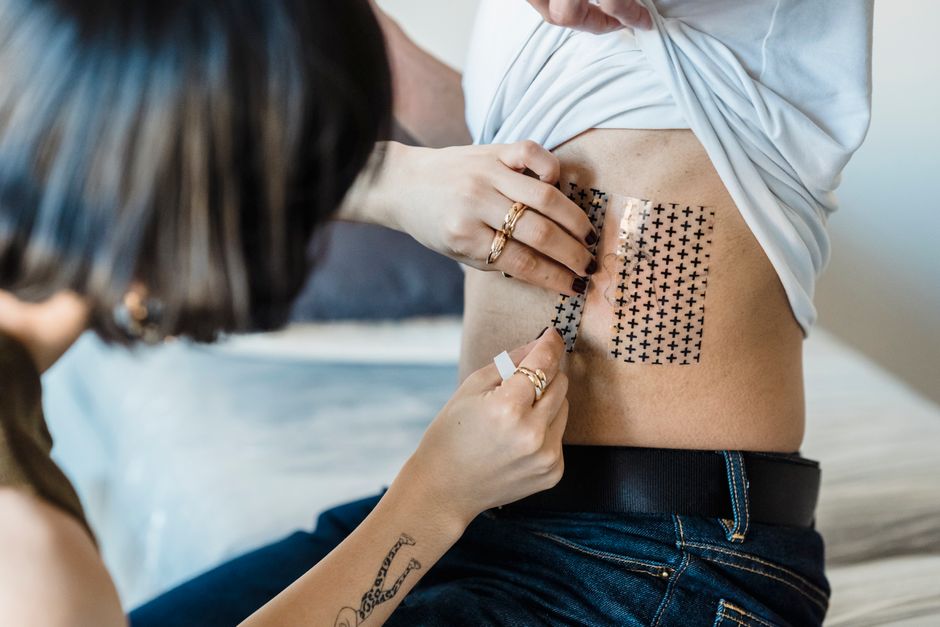
Temporary tattoos fade on their own, but how fast depends on what kind you have and where it sits on your body. Most henna and ink-transfer designs last anywhere from a few days to a few weeks. There is no single removal method that works for every type, and some popular internet fixes can damage your skin. The reliable approach is to match the removal method to the tattoo type, use gentle techniques first, and give your skin time between attempts.
What Kind of Temporary Tattoo Do You Have?
The word “temporary” covers several products with very different chemistry. What removes one may do nothing to another, or may irritate skin that would otherwise be fine.
- Water-transfer tattoos. Printed ink on a thin film that you press onto skin with a wet cloth. These sit mostly on the surface of the skin and wash off within days.
- Henna and “black henna.” A plant-based dye, sometimes mixed with other ingredients, that stains the top layer of skin. Real henna stains reddish-brown. Dyes marketed as “black henna” are a separate concern discussed below.
- Jagua gel. A plant-based dye that stains skin blue-black and typically lasts one to two weeks.
- Airbrush or stencil tattoos. Cosmetic ink sprayed or stamped onto the skin, often at events or festivals. These usually wash off with soap and water.
- Semi-permanent “temporary” tattoos. Some products use fruit-based or other dyes that penetrate slightly deeper and can last a couple of weeks. These behave more like a faint stain than a surface film.
Check the packaging or ask the artist what was used. That single piece of information determines which removal methods below are worth trying.
How To Remove A Temporary Tattoo Safely
Start with the gentlest method and work up. Most surface tattoos come off with friction and a mild cleanser, no special products required.
For water-transfer and airbrush tattoos
Warm water, a soft washcloth, and mild soap remove most of these in one or two washes. Rub gently in small circles. A little baby oil or rubbing alcohol on a cotton ball can lift stubborn edges. Do not scrub hard enough to leave skin red or raw.
For henna and jagua stains
These dyes bind to the outer layer of skin, so you cannot simply wash them off. The stain fades as that layer of skin naturally sheds, which is why the location matters. Skin on the palms and soles turns over slowly, so a henna stain there can linger longer than one on the forearm.
What helps in practice:
- Exfoliate gently with a washcloth or a mild scrub once a day. This speeds up shedding of the stained layer without injuring the skin beneath.
- Keep the area moisturized. Well-hydrated skin sheds more evenly.
- Give it time. Most henna stains fade substantially within one to three weeks, though exact timing varies by person, dye strength, and location.
There is no cream or solution that reliably erases a henna stain overnight. Products marketed for this purpose have little to no clinical evidence behind them. Be skeptical of anything promising same-day removal.
Does Rubbing Alcohol or Hairspray Remove Temporary Tattoos?
Alcohol can help lift surface inks, but hairspray is a poor choice. It leaves a sticky residue, can irritate skin, and offers no advantage over soap and water.
Rubbing alcohol works because it dissolves some inks and evaporates quickly. Apply a small amount to a cotton ball and dab at the tattoo. Do not soak the skin. Alcohol dries and irritates skin with repeated use, so keep it to one or two attempts.
Other household products that circulate online — nail polish remover, bleach, lemon juice, and salt scrubs — range from ineffective to genuinely harmful. Acetone and bleach can burn skin. Lemon juice can cause a rash, especially with sun exposure. Skip them.




What About “Black Henna” and Skin Reactions?
This matters more than removal speed. Many products sold as black henna contain a chemical called paraphenylenediamine (PPD), a dye also used in hair color and textile dyes. PPD is a known skin sensitizer.
A reaction can show up as redness, itching, blistering, or a raised rash at the tattoo site. It may appear hours to days after application. In some people, the sensitivity persists, which means future exposure to PPD — including in hair dye — can trigger a stronger reaction.
If you have blistering, spreading redness, swelling, or pain, stop trying to remove the tattoo yourself and see a healthcare provider. Do not apply more products to irritated skin. A dermatologist can assess the reaction and advise on care. Scrubbing a reaction will make it worse, not better.
How Long Do Temporary Tattoos Last?
Duration depends almost entirely on the type and the body location. These are general ranges, not fixed rules — individual results vary.
| Type | Typical Duration |
|---|---|
| Water-transfer | A few days |
| Airbrush or stencil | One to several days |
| Henna (reddish-brown) | One to three weeks |
| Jagua gel | One to two weeks |
| Semi-permanent fruit-based dyes | Up to a couple of weeks |
Areas that rub against clothing or get washed often fade faster. Skin that turns over slowly, like the palms and soles, holds a stain longer. Sun exposure can also affect how a dye looks over time.
When Should You See a Doctor?
Most temporary tattoos need no medical care. See a healthcare provider if you notice any of the following:
- Blistering, oozing, or open sores at the site
- Redness or swelling that spreads beyond the tattoo
- Signs of infection such as increasing pain, warmth, or pus
- A rash that appears days after application and keeps getting worse
- Any reaction that affects your breathing or causes swelling of the face or throat — seek emergency care immediately
These signs can point to an allergic reaction or infection that needs proper assessment. Removal attempts should wait until a clinician has looked at the skin.
How Do You Prevent a Temporary Tattoo From Lasting Too Long?
The simplest way to avoid a stubborn tattoo is to choose carefully before application. Patch-test any henna or dye product on a small area of skin first, and wait to see how it reacts. Avoid products labeled “black henna,” since the PPD concern is well documented.
If you want a design that comes off easily, water-transfer and airbrush tattoos are the safer bet. They sit on the surface and wash away with soap and water. Plant-based dyes that penetrate the skin will always take longer to fade, no matter what removal method you use.
Frequently Asked Questions
How do you get a temporary tattoo off fast?
For water-transfer tattoos, warm water, mild soap, and gentle rubbing usually remove them in minutes. Henna and jagua stains cannot be removed quickly because the dye binds to skin — they fade over one to three weeks as skin sheds.
Does toothpaste remove temporary tattoos?
There is no reliable evidence that toothpaste removes temporary tattoos, and the abrasives in it can irritate skin. Soap, water, and gentle exfoliation are more effective and safer.
Can you remove a henna tattoo with alcohol?
Alcohol may lift a small amount of surface dye but will not erase a henna stain, which sits in the outer layer of skin. The stain fades as that layer sheds naturally.
Is it safe to scrub a temporary tattoo off?
Gentle rubbing is fine, but hard scrubbing can damage the skin barrier and cause irritation or infection. If the tattoo is not coming off with mild friction, let it fade rather than scrubbing harder.
