
Sore muscles after a workout or a long day of physical work are a normal part of how the body adapts to effort. The most reliable ways to relieve soreness are gentle movement, adequate sleep, hydration, and time. Most exercise-related muscle soreness peaks within one to three days after activity and fades on its own without treatment.
What follows is an honest look at what soreness actually is, what helps, what does not, and when muscle pain is a signal to stop and get medical care.
What Actually Causes Sore Muscles After Exercise?
The soreness you feel a day or two after unaccustomed exercise has a name: delayed onset muscle soreness, or DOMS. It is not caused by lactic acid. That is one of the most persistent myths in fitness.
Lactate is a fuel source the body clears from muscle within roughly an hour of exercise ending. It cannot be responsible for pain that shows up 24 to 72 hours later. Research using muscle biopsies has consistently shown this.
The actual mechanism involves microscopic damage to muscle fibers, particularly from movements that lengthen a muscle while it is under load. Think of lowering a weight slowly, running downhill, or doing squats for the first time in months. This type of contraction is called eccentric, and it produces more soreness than other kinds of muscle work.
That mechanical stress triggers an inflammatory response. Immune cells move into the tissue, and the resulting chemical environment sensitizes nerve endings in the muscle. The soreness you feel is largely that sensitization, not the structural damage itself.
This matters because it explains why soreness is not a reliable measure of workout quality. A session that leaves you barely able to walk is not automatically better than one that does not. Soreness reflects novelty and intensity more than effectiveness.
How Long Does Muscle Soreness Usually Last?
Typical DOMS begins within 12 to 24 hours after exercise, peaks between 24 and 72 hours, and resolves within about five to seven days. The exact timeline varies by person and by how unfamiliar the activity was.
If soreness lasts longer than a week, or if it gets worse instead of better after the second day, that pattern does not fit ordinary DOMS. It may point to a strain or another injury, and it is worth having a clinician evaluate it.
There is a useful distinction here. Soreness is diffuse, affects the muscle belly rather than a specific point, and feels like tenderness when you press on it. A strain tends to be more localized, may come with swelling or bruising, and often produces pain with specific movements rather than general achiness.
What Helps Relieve Sore Muscles Fastest?
No intervention eliminates DOMS. What the evidence supports is managing it while the tissue recovers on its own. A few approaches have reasonable backing.
- Light movement. Walking, easy cycling, or swimming at low intensity increases blood flow and can reduce stiffness. It will not speed tissue repair, but it often makes the muscle feel better in the moment.
- Sleep. Muscle repair happens largely during sleep. Short sleep is associated with slower recovery and more next-day soreness in athletes.
- Hydration and food. Adequate fluid and enough protein support normal recovery processes. There is no evidence that any specific food or supplement dramatically shortens soreness.
- Gentle stretching. Stretching feels good and may reduce stiffness temporarily. Studies have not found that it prevents or meaningfully shortens DOMS.
- Topical menthol or heat. These create a distracting sensation that can make soreness feel less prominent. They do not change what is happening in the tissue.
Notice what is not on this list. Ice baths, massage guns, and compression garments are popular, and some athletes report benefit. The research on whether they meaningfully reduce DOMS is mixed, and effects tend to be small when they appear at all. That does not make them useless — a massage that helps you feel better has value — but it is fair to say the evidence is not strong.



Do Ice Baths and Anti-Inflammatory Drugs Actually Help?
This is where the honest answer gets uncomfortable. Two of the most common recovery strategies may work against the very adaptation you trained for.
Cold water immersion reduces the perception of soreness in many people. The evidence for that is reasonably consistent. But some research suggests that regularly blunting inflammation after strength training may reduce long-term muscle growth and strength gains. The inflammation is part of the signal that tells the muscle to rebuild stronger.
The same concern applies to nonsteroidal anti-inflammatory drugs like ibuprofen. They reduce soreness. They may also interfere with the adaptive response when used routinely around training. Occasional use for significant pain is a different situation from making them a standard part of every workout.
If your goal is to feel better today, ice and ibuprofen can help. If your goal is to get stronger over months, using them after every session may be counterproductive. That is a genuine trade-off, and it is worth discussing with a clinician or coach rather than assuming more recovery tools are always better.
What About Foam Rolling and Massage?
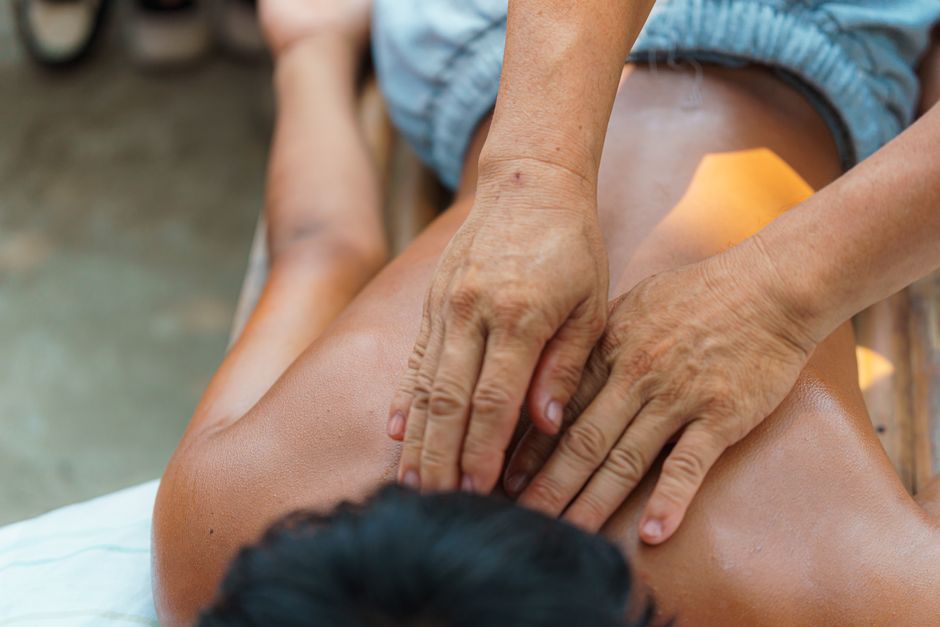
Foam rolling and massage are widely used and generally low risk. Some studies find small reductions in soreness and improvements in perceived recovery. Others find no meaningful difference compared with rest.
The effects, when present, appear to be modest and short-lived. They likely work partly through the nervous system — the sensation of pressure and movement changes how you perceive the ache — rather than through any direct effect on muscle repair.
None of this means you should skip them. If foam rolling helps you feel looser and more willing to train, that has real value. Just do not expect it to shorten recovery by days.
Can You Prevent Sore Muscles in the First Place?
You can reduce soreness, though you cannot reliably prevent it. The single most effective strategy is gradual progression.
Soreness is driven mostly by novelty. Doing far more than your muscles are used to, or doing a movement pattern for the first time, reliably produces it. Increasing volume or intensity slowly gives the tissue time to adapt.
The repeated bout effect is worth knowing about. After one bout of a given exercise, the same workout done again within a few weeks produces noticeably less soreness. The muscle adapts to that specific stress. This is why the first leg day of the year hurts far more than the tenth.
Warming up before activity and cooling down after are widely recommended. The evidence that they reduce DOMS specifically is weak, but they support general performance and safety.
When Is Sore Muscle Pain a Warning Sign?
Soreness is usually harmless. Certain symptoms are not, and they require prompt medical attention.
Rhabdomyolysis is a rare but serious condition in which muscle breaks down rapidly and releases contents into the bloodstream. It can follow extreme exertion, especially in heat or when someone is very deconditioned. Warning signs include severe pain that keeps worsening, dark or cola-colored urine, significant swelling, and weakness out of proportion to the workout.
Seek urgent care if you notice any of the following:
- Muscle pain that gets worse instead of better after 48 hours
- Dark, tea-colored, or cola-colored urine
- Severe swelling or a muscle that feels hard and tight
- Weakness that makes it hard to move the limb normally
- Fever, or pain with no clear cause and no recent exercise
Muscle pain without an obvious trigger can also reflect medication side effects, thyroid problems, or other conditions. That is a reason to see a clinician, not to self-treat.
Why Do Some Workouts Cause More Soreness Than Others?
Eccentric contractions are the biggest driver. Any movement where a muscle lengthens under tension — downhill running, lowering weights, jumping and landing — tends to produce more soreness than concentric work like lifting or pushing.
Other factors matter too. Being new to exercise, returning after a break, training in extreme heat, and being dehydrated all tend to increase soreness. Genetics and individual recovery capacity also play a role, which is why two people can do the same workout and feel completely different the next day.
The practical takeaway is that soreness is information about how unfamiliar a stimulus was, not a badge of effort. Chasing it deliberately is not a smart training strategy.
Frequently Asked Questions
How long does sore muscle pain last?
Typical delayed onset muscle soreness peaks between 24 and 72 hours after exercise and fades within about five to seven days. If it lasts longer or keeps worsening, get it checked.
Is it better to rest or keep moving with sore muscles?
Light movement usually helps sore muscles feel better and is generally safe. Intense training of the same sore muscle group is not recommended until the soreness has largely resolved.
Does stretching prevent sore muscles?
Stretching does not prevent or meaningfully shorten delayed onset muscle soreness. It can temporarily reduce stiffness and feels good, but it is not a recovery fix.
When should I worry about sore muscles?
Worry if pain keeps getting worse after 48 hours, if your urine turns dark, or if you have severe swelling or unusual weakness. Those signs need urgent medical care.
