
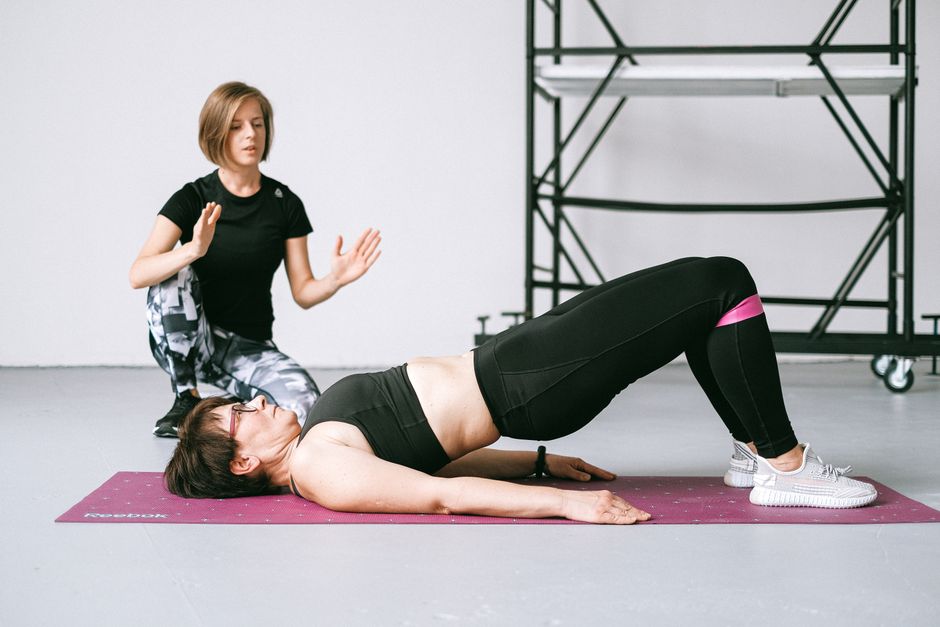
Strengthening your buttock muscles comes down to three things: exercises that load the glutes through hip extension and hip abduction, enough resistance to make those muscles work hard, and a routine you repeat two to three times a week. The gluteal group is the largest muscle group in the human body, and it responds to training the same way other muscles do. Progressive resistance — gradually asking more of the muscle over time — is what drives the change.
Most people who feel their glutes are weak are not dealing with a muscle that cannot work. They are dealing with muscles that spend most of the day shortened by sitting and are rarely asked to produce force. The fix is not complicated. It is consistent.
What Do the Buttock Muscles Actually Do?
The glutes are three separate muscles, and they do different jobs. Knowing which is which helps you pick exercises that train all of them rather than just one.
The gluteus maximus is the big one. It is the primary driver of hip extension — the motion of bringing your thigh backward, or standing up from a squat. It also contributes to external rotation of the hip. This muscle produces a large share of the force in running, jumping, climbing stairs, and rising from a chair.
The gluteus medius sits on the outer hip. Its main job is hip abduction — moving the leg out to the side — and it stabilizes the pelvis when you stand on one leg. During walking, it keeps your pelvis level while the opposite foot is off the ground. If it is weak, the pelvis can drop on the unsupported side, a pattern clinicians call a Trendelenburg gait.
The gluteus minimus lies underneath the medius and assists with abduction and hip stabilization. It is deep and not visible, but it works alongside the medius in nearly every single-leg activity.
Here is a point that gets overlooked: the glutes are not just cosmetic muscles. They are central to how you walk, climb, and balance. Training them is a function project as much as a strength project.
How To Strengthen Buttock Muscles Exercises Program?
A workable program trains the glutes through their main functions — hip extension, hip abduction, and single-leg stability — and builds in progression over weeks. There is no single correct routine. What matters is that the exercises load the muscles, that you do them regularly, and that you make them harder as you get stronger.
A simple structure that covers the bases:
- One bilateral hip extension movement — a squat, hip thrust, or bridge variation. These load the gluteus maximus with both legs.
- One single-leg movement — a split squat, step-up, or single-leg bridge. These add a balance and stability demand that recruits the medius.
- One hip abduction movement — side-lying leg raises, banded lateral walks, or a hip abduction machine if you have gym access. These target the medius directly.
- One hip hinge — a Romanian deadlift or good morning. Hip hinges load the glutes and hamstrings together, which reflects how they work in daily life.
Two to three sessions per week is a reasonable starting point. Muscles need recovery between hard sessions, and the glutes are no exception. A day of rest or lighter activity between training days gives them time to adapt.
Progression is where most programs fall short. Doing the same three sets of the same exercise at the same weight for months will produce a plateau. The general principle in strength training is to gradually increase the challenge — more resistance, more repetitions, or a harder variation — as the current workload becomes manageable. How fast to progress varies by person and is not something a set formula can predict.
Which Exercises Target the Glutes Most Effectively?
Different exercises emphasize different parts of the gluteal group, and the best program uses more than one. Some research using muscle activity measurements suggests that hip thrusts and bridges produce high gluteus maximus activation, while squats and deadlifts also load the muscle but distribute the work across more of the lower body. These findings describe muscle activation during a movement — they do not automatically translate into which exercise builds the most strength over months. That is a different question, and the evidence there is less settled.
For practical purposes:
- Hip thrusts and glute bridges load the gluteus maximus heavily with relatively little strain on the knees and lower back.
- Squats and split squats train the glutes alongside the thighs in a standing position that resembles real-world movement.
- Step-ups combine hip extension with single-leg stability, which recruits the medius.
- Romanian deadlifts load the glutes and hamstrings through a hip hinge.
- Side-lying leg raises and banded lateral walks target the gluteus medius through abduction.
- Single-leg bridges add a stability demand to a familiar movement.
Bodyweight versions of these exercises are a reasonable starting point. As they become easy, adding resistance — bands, dumbbells, or a barbell — is how you keep the muscles challenged.




How Often and How Hard Should You Train the Glutes?
Two to three sessions per week gives most people a workable balance between training stimulus and recovery. The general strength-training principle is that a muscle adapts when it is challenged beyond what it is used to and then given time to recover. Training the same muscles hard every day does not speed that process and can work against it.
How hard is hard enough? A common guideline in strength training is to finish a set feeling that you could have done a few more repetitions but not many. That is a rough marker, not a precise target. If a set feels easy from start to finish, the muscle is not being asked to adapt.
Soreness is not a reliable measure of a good workout. Some soreness after a new or harder session is normal. Soreness that lingers for days, or that appears after every session regardless of difficulty, is not a sign of progress. It usually means the workload jumped too fast.
People new to strength training often see early improvements in the first few weeks. These early gains come largely from the nervous system learning to coordinate the movement, not from muscle growth. Visible changes in muscle size typically take longer — weeks to months of consistent training — and the timeline varies widely between individuals. No program can promise a specific result by a specific date.
Why Do So Many People Feel Their Glutes Are Weak?
Prolonged sitting is the usual suspect. When you sit for long periods, the hip flexors at the front of the hip stay in a shortened position and the glutes stay relatively inactive. Over time, this can contribute to a sense of stiffness or weakness in the hips. The muscles have not disappeared. They have simply not been asked to work.
There is also a common misconception worth clearing up. The idea that certain muscles are “asleep” and need to be “woken up” before they can work is a popular framing in fitness marketing. Muscles do not switch off in the way that phrase implies. What changes is how much a muscle contributes during a given movement, and that can improve with practice and targeted training. The practical takeaway is the same — train the muscles — but the underlying story is less dramatic than the marketing suggests.
Some people do have genuine glute weakness related to nerve injury, hip surgery, or neurological conditions. In those cases, a program designed with a physical therapist or physician is the right approach, not a general online routine.
What Should You Do If an Exercise Causes Pain?
Stop the exercise and do not push through sharp pain. Muscle effort and discomfort during a hard set are expected. Sharp, stabbing, or joint-centered pain is a different signal and warrants attention.
Common sources of glute-area pain during exercise include hip joint issues, lower back strain, and irritation of the sciatic nerve, which runs through the region. These are different problems with different management, and a single symptom can point to more than one of them. A qualified clinician — a physical therapist or physician — is the right person to sort out which is which.
Mild muscle soreness that fades within a day or two is generally not a reason to stop training. Pain that worsens, persists, or comes with numbness, tingling, or weakness in the leg should be evaluated rather than worked through.
Do You Need Equipment to Strengthen Your Glutes?
No. Bodyweight exercises can build glute strength, especially for beginners. Bridges, single-leg bridges, step-ups on a stair, side-lying leg raises, and bodyweight squats all load the muscles without any equipment.
That said, progression eventually requires more resistance. Once bodyweight exercises feel easy, adding a resistance band, dumbbells, or a barbell is the standard way to keep the muscles challenged. A resistance band is inexpensive and useful for hip abduction work in particular. A sturdy chair or step is enough for step-ups.
Gym equipment is convenient but not essential. The principles — load the muscle, progress over time, train consistently — matter far more than the equipment you use.
Frequently Asked Questions
How long does it take to see results from glute exercises?
Early strength gains often appear within a few weeks, largely from improved coordination. Visible changes in muscle size usually take longer — typically weeks to months of consistent training — and the timeline varies widely between people.
Can you strengthen your glutes without weights?
Yes. Bodyweight exercises like bridges, step-ups, and side-lying leg raises can build glute strength, especially for beginners. Adding resistance becomes useful once those movements feel easy.
How many days a week should you train your glutes?
Two to three sessions per week is a reasonable starting point for most people. Muscles need recovery between hard sessions, so training the same muscles intensely every day is not recommended.
Are squats enough to strengthen the glutes?
Squats load the glutes but also involve the thighs and lower back heavily. A program that adds hip thrusts, hip abduction work, and single-leg exercises trains the gluteal group more completely.
