
Upper back tension often feels like a knot that will not budge. The tightness between your shoulder blades or at the base of your neck is usually a muscle problem, not a bone problem. Simple, targeted stretching can release that tension by lengthening muscles that have stayed shortened for hours. The most effective approach combines gentle stretching with light movement and consistent posture breaks throughout your day.
Why Does the Upper Back Get So Tight?
The muscles in your upper back are designed to hold your posture. When you sit at a desk, look at a phone, or drive for long periods, those muscles work harder than they should. Your head weighs about 10 to 12 pounds. For every inch your head moves forward from your shoulders, the weight your neck and upper back muscles must support increases significantly.
This sustained effort keeps muscles in a semi-contracted state. Blood flow decreases. Waste products build up. The muscle fibers stay shortened and become tender. This is why the area between your shoulder blades and the top of your traps feels tight, achy, or even burning.
Stress also plays a role. When you are anxious, your body activates your fight-or-flight response. This causes muscles in the neck, shoulders, and upper back to contract. If stress is chronic, those muscles rarely get the signal to fully relax.
How To Release Upper Back Tension With Simple Stretches: The Core Routine
Stretching works best when you do it gently and consistently. You are not trying to force a muscle into a deeper range of motion. You are teaching a tight muscle that it is safe to lengthen. Hold each stretch for 20 to 30 seconds. Breathe steadily. Do not bounce.
Here are the stretches that target the most common areas of upper back tension:
- Seated spinal twist. Sit tall in a chair. Place your right hand on your left knee. Gently rotate your torso to the left. Place your left hand on the back of the chair for support. You should feel a stretch between your shoulder blades. Hold for 30 seconds, then switch sides.
- Thread the needle. Start on your hands and knees. Slide your right arm underneath your left arm, palm facing up. Lower your right shoulder toward the floor. You will feel a deep stretch across your upper back and between your shoulder blades. Hold for 30 seconds, then switch sides.
- Cat-cow stretch. Start on your hands and knees. Inhale and let your belly drop, lifting your chest and tailbone. Exhale and round your spine toward the ceiling, tucking your chin. Move slowly with your breath. This mobilizes the entire spine and relieves tension in the muscles that attach to it.
- Ear-to-shoulder stretch. Sit or stand tall. Gently tilt your head toward your right shoulder. Keep your left shoulder relaxed and down. You should feel a stretch on the left side of your neck and upper shoulder. Hold for 30 seconds, then switch sides.
- Cross-body shoulder stretch. Bring your right arm across your chest. Use your left hand to gently pull the right arm closer to your body. This stretches the rear deltoid and the muscles around the shoulder blade. Hold for 30 seconds, then switch sides.
Perform this routine once in the morning and once before bed. If you sit for long periods, take a two-minute stretch break every hour. Consistency matters more than intensity.
Why Foam Rolling Helps the Upper Back
Stretching lengthens muscles. Foam rolling addresses the tissue quality itself. A foam roller applies pressure to tight areas, which can help reduce muscle spasm and improve blood flow to the region.
To roll your upper back, lie on the floor with a foam roller positioned under your shoulder blades. Bend your knees and keep your feet flat on the floor. Cross your arms over your chest. Gently lift your hips and roll slowly from the middle of your back up toward your shoulders. Stop on any spot that feels particularly tender and hold pressure there for 20 to 30 seconds.
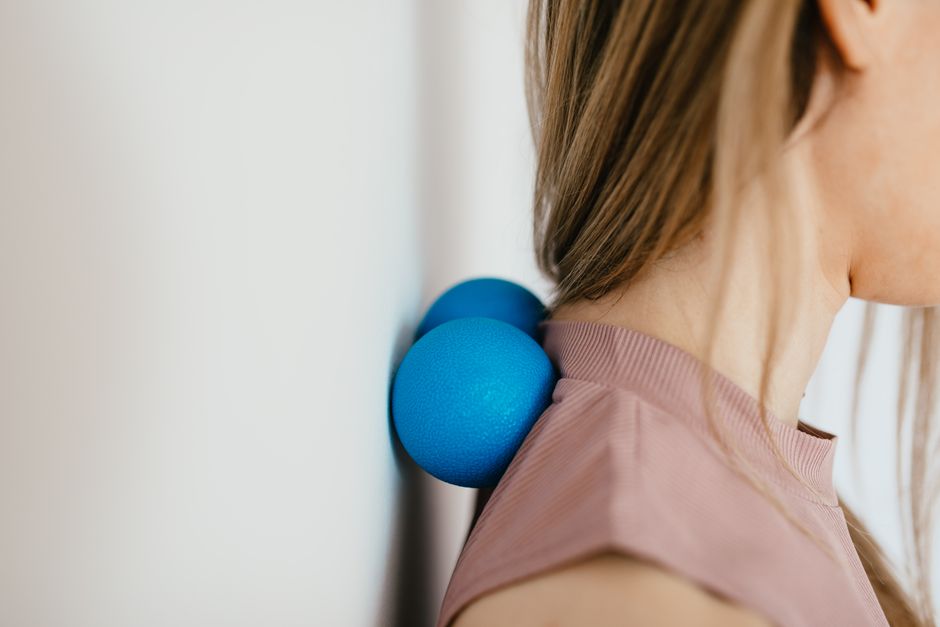
Do not roll directly on your spine or your neck. Keep the roller on the muscle tissue beside the spine and on the shoulder blade area. If you do not have a foam roller, a tennis ball placed against a wall works for targeting specific knots. Place the ball between your shoulder blade and your spine, lean into the wall, and move your arm slowly to find the tender spot.





What Is Causing Your Upper Back Knots?
A muscle knot is a small area of muscle fibers that stay contracted. These are called myofascial trigger points. They feel like small, hard beans under the skin. When you press on them, they are tender and may cause pain in another area, such as your head or arm.
Trigger points form for several reasons. Repetitive motion, poor posture, and inactivity are common causes. Sleeping in an awkward position or carrying a heavy bag can also create them. Some research suggests that trigger points develop when muscle fibers are overworked and do not receive enough oxygen.
Stretching and rolling can help release these points. But if a knot has been present for weeks or months, it may take consistent effort over several days to fully resolve. Do not expect one stretching session to eliminate a chronic knot. Be patient.
Posture Habits That Prevent Upper Back Tension
Stretching releases tension that has already built up. Posture changes prevent that tension from returning. The two work together.
When you sit, keep your ears aligned over your shoulders. Your shoulder blades should sit flat against your rib cage, not winging outward. Your feet should rest flat on the floor. Your computer screen should be at eye level so you do not tilt your head down to see it.
Phone use is a major contributor to upper back strain. Holding your phone at chest level and looking down puts significant stress on your neck and upper back muscles. Bring the phone to eye level instead of dropping your head toward it.
Standing up every 30 to 45 minutes is one of the simplest prevention strategies. Even a 30-second walk to the kitchen resets muscle tension. Your muscles were not designed to hold one position for hours.
When Upper Back Pain Is Not Just Muscle Tension
Most upper back pain comes from muscle strain. But not all of it does. You should know the signs that indicate something more serious.
See a healthcare provider if your upper back pain follows a fall or injury. Seek care if the pain is severe, does not improve with stretching, or wakes you from sleep. Upper back pain accompanied by chest pain, shortness of breath, fever, or weakness in your arms or legs requires immediate medical attention.
Pain that radiates down your arm or causes numbness or tingling in your fingers may indicate a nerve issue, such as a herniated disc in the cervical spine. This does not mean you should panic. It means you should have a professional evaluate it rather than assuming stretching will fix it.
In rare cases, upper back pain can signal a problem with your heart, lungs, or other internal organs. This is uncommon, but it is why persistent or unusual pain should never be ignored.
The Role of Strength in Releasing Tension
Stretching alone is often not enough. Weak muscles in the upper back allow the chest and shoulder muscles to dominate. This creates an imbalance that pulls your shoulders forward and keeps your upper back in a stretched, weakened position.
Strengthening the muscles between your shoulder blades helps correct this imbalance. Simple exercises like wall slides, prone Y raises, and band pull-aparts target the rhomboids and lower trapezius muscles. These exercises do not require equipment or a gym membership.
Wall slides are particularly effective. Stand with your back against a wall. Press your arms against the wall with your elbows bent at 90 degrees. Slowly slide your arms upward until they are straight overhead, keeping your wrists, elbows, and hands in contact with the wall. Lower slowly. Repeat 10 times.
This type of strengthening does not release tension in the moment. It prevents tension from accumulating over weeks and months. Include it in your routine two to three times per week.
Heat and Cold for Upper Back Tension
Heat and cold serve different purposes. Use heat for chronic tightness and cold for acute injury.
Heat increases blood flow to the area. It relaxes muscles and can make stretching more comfortable. Apply a heating pad or warm compress to your upper back for 15 to 20 minutes before stretching. This warms the tissue and may improve the stretch’s effectiveness.
Cold reduces inflammation. Use it only if you have a specific injury, such as a muscle strain from lifting something heavy. Apply an ice pack wrapped in a thin towel for 15 minutes at a time. Do not apply ice directly to the skin.
Neither heat nor cold treats the underlying cause of tension. They are temporary comfort measures that support your stretching routine.
When To Expect Results From Stretching
Most people notice some relief immediately after stretching. The muscles have been lengthened and blood flow has increased. This immediate relief is often temporary.
Long-term change requires consistency. Muscles that have been shortened for months need repeated stretching to regain their full resting length. Expect to stretch daily for at least two weeks before you notice that the tension stays away for longer periods.
If you stretch consistently for two to three weeks and see no improvement, reassess your approach. You may be stretching incorrectly, or the problem may not be purely muscular. A physical therapist can assess your posture, movement patterns, and muscle strength to identify what is driving your specific tension.
Frequently Asked Questions
How often should I stretch my upper back?
Stretch daily for best results. If you sit at a desk, take a two-minute stretch break every hour in addition to a longer session morning and night.
Can stretching make upper back pain worse?
Yes, if you stretch too aggressively or bounce into the stretch. Stretching should feel like mild tension, never sharp pain. If a stretch increases your pain, stop and consult a healthcare provider.
Why won’t my upper back tension go away?
Persistent tension usually means the muscle is continuously reactivated by poor posture or weakness. Stretching releases the muscle, but posture habits and strength imbalances must be addressed to keep it released.
Is it better to stretch or foam roll the upper back?
Both are useful but serve different purposes. Stretching lengthens shortened muscles, while foam rolling reduces spasm and improves tissue quality. Use them together for the best results.
