
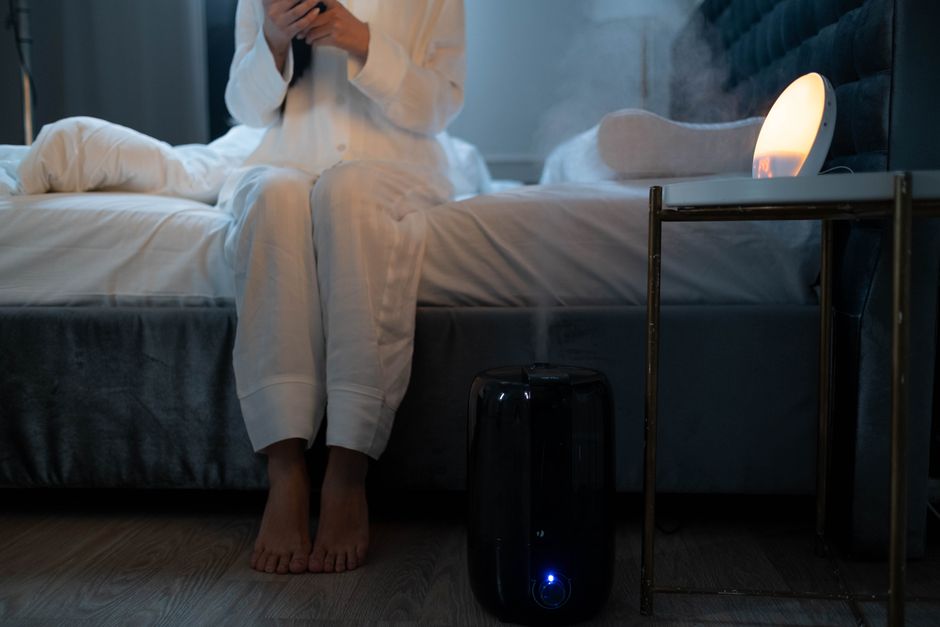
Sleep does not start when you close your eyes. It builds through the evening, driven by two forces working together: sleep pressure that accumulates the longer you stay awake, and a circadian clock that tells your body when night has arrived. When those two systems line up, sleep comes more easily. When they don’t, you can lie in bed tired but wired. The practical steps below are the ones with the most consistent evidence behind them: keep a steady wake time, get bright light in the morning, and treat the hour before bed as a wind-down rather than a second workday.
How To Relax At Night And Fall Asleep Faster
Falling asleep is not something you do. It is something that happens when your nervous system shifts out of alert mode. That shift is controlled by your body’s arousal system, and it needs the right conditions to power down.
Two systems matter most here. The first is your circadian rhythm, a roughly 24-hour internal clock that governs when your body expects sleep. The second is sleep pressure, a drive that builds the longer you stay awake. A chemical called adenosine accumulates in the brain across the day and contributes to that pressure. Caffeine works by blocking adenosine, which is one reason a late afternoon coffee can still be working against you at bedtime.
When you try to sleep, your brain also needs to stop treating the bedroom as a place for thinking, planning, or scrolling. This is the basis of stimulus control, one of the most studied behavioral approaches to insomnia. The idea is simple: the bed should be strongly linked with sleep, not with wakefulness and worry.
What actually helps, based on the strongest evidence:
- Keep the same wake time every day, including weekends. This anchors your circadian clock more than bedtime does.
- Get bright light soon after waking. Morning light helps set the timing of your internal clock.
- Keep the room cool, dark, and quiet. Core body temperature needs to drop slightly for sleep to begin.
- Get out of bed if you are awake and frustrated for what feels like a long stretch. Return when you feel sleepy.
- Save the bed for sleep and sex only. This is a core part of cognitive behavioral therapy for insomnia, or CBT-I.
CBT-I is considered the first-line treatment for chronic insomnia in clinical guidelines, ahead of sleep medication for most adults. It is usually delivered over several sessions with a trained clinician, though self-help versions exist.
Why Can’t I Fall Asleep Even When I’m Tired?
Feeling tired and being able to sleep are two different things. You can have high sleep pressure and still lie awake because your arousal system is switched on.
Several common causes explain this gap:
- Stress and worry. Mental alertness keeps the arousal system active. This is why a quiet room can feel like the loudest place to think.
- Caffeine timing. Caffeine has a half-life of roughly five hours in most adults, meaning a good portion can still be in your system many hours later. Sensitivity varies widely between people.
- Alcohol. Alcohol can make you feel drowsy and may help you fall asleep faster, but it fragments sleep later in the night and reduces restorative sleep stages.
- Irregular schedule. Going to bed and waking at very different times confuses your circadian timing.
- Screen light and mental stimulation. Late scrolling keeps the brain engaged, even when the light itself is not the main problem.
One clarification worth making: the idea that blue light from screens is the single cause of poor sleep is overstated. The bigger issue is usually what you are doing on the screen, not just the light it emits. Content that activates or stresses you is more disruptive than the glow itself.
What Is The Best Wind-Down Routine Before Bed?
A wind-down routine works by giving your nervous system a predictable signal that the day is ending. There is no single routine that works for everyone, but the structure matters more than the specific activities.
A practical approach is to set aside 30 to 60 minutes before bed for calming, low-stimulation activity. During this time:
- Dim the lights in your home. Bright overhead lighting late at night can delay your circadian timing.
- Put screens away or switch to something passive and calm.
- Do something repetitive and low-stakes, such as reading, light stretching, or listening to quiet audio.
- Write down tomorrow’s tasks. Getting worries onto paper can reduce the mental replay that keeps people awake.
- Keep the temperature in your bedroom on the cool side.
Relaxation techniques such as slow breathing, progressive muscle relaxation, and guided imagery are used in clinical practice for sleep problems. Some studies suggest they help, though the evidence is stronger for structured CBT-I than for any single relaxation method on its own.





Does Melatonin Help You Fall Asleep Faster?
Melatonin is a hormone your body produces to signal that night has arrived. It helps set the timing of sleep more than it forces sleep itself.
The evidence is strongest for specific situations: shifting your sleep schedule, such as with jet lag or certain shift-work patterns, and for some circadian rhythm disorders. For general difficulty falling asleep, the evidence is more mixed and the effect is generally modest.
Dosing and timing matter, and they differ by situation. If you are considering melatonin, especially for a child, during pregnancy, or alongside other medications, talk with a clinician first. No universal dose applies to everyone, and products vary widely in actual content.
Melatonin is not a sleeping pill in the way many people assume. It nudges your internal clock rather than knocking you out.
Which Habits Make It Harder To Fall Asleep?
Some habits quietly work against sleep, even when you feel like you are doing everything right.
- Long or late naps. Napping can reduce the sleep pressure you need at night. Short, early naps are less disruptive for most people.
- Caffeine after midday. For many adults, afternoon caffeine still affects sleep at night.
- Alcohol as a sleep aid. It may speed up falling asleep but tends to worsen sleep quality.
- Heavy meals or lots of fluids close to bedtime. These can cause discomfort or nighttime waking.
- Vigorous exercise late in the evening. This affects people differently. Some sleep fine after evening workouts; others find it too activating.
- Lying in bed awake and frustrated. Staying in bed while stressed strengthens the link between bed and wakefulness.
If you snore heavily, wake gasping, or feel exhausted despite enough time in bed, that is worth mentioning to a doctor. These can point to sleep disorders such as sleep apnea, which need proper evaluation rather than home remedies.
When Should You Talk To A Doctor About Sleep?
Occasional trouble falling asleep is common and usually not a medical concern. Ongoing insomnia that affects your daytime functioning is different and worth addressing.
Talk with a clinician if poor sleep lasts for weeks, if it is affecting your mood, focus, or safety, or if you have symptoms like loud snoring, gasping during sleep, or restless legs. Chronic insomnia is treatable, and the first-line approach is behavioral rather than pharmacological.
Sleeping pills can play a role in some situations, usually short-term. They are generally not the first choice for long-term insomnia because of tolerance, side effects, and limited lasting benefit. This is a decision to make with a clinician, not from a label on a bottle.
Frequently Asked Questions
How long should it take to fall asleep?
For most healthy adults, falling asleep takes roughly 10 to 20 minutes. Consistently taking much longer, or feeling distressed about it, can be a sign worth discussing with a doctor.
Does melatonin actually help you sleep faster?
Melatonin helps reset sleep timing more than it forces sleep, with the strongest evidence for jet lag and circadian rhythm issues. For general trouble falling asleep, the effect is usually modest and the evidence is mixed.
Is it bad to look at your phone before bed?
Screen use before bed can delay sleep, but the content matters as much as the light. Stimulating or stressful content tends to be more disruptive than the screen glow alone.
What is the fastest way to relax at night?
Slow, steady breathing and a consistent wind-down routine are among the simplest approaches with some supporting evidence. Structured CBT-I remains the most effective approach for ongoing insomnia.
