
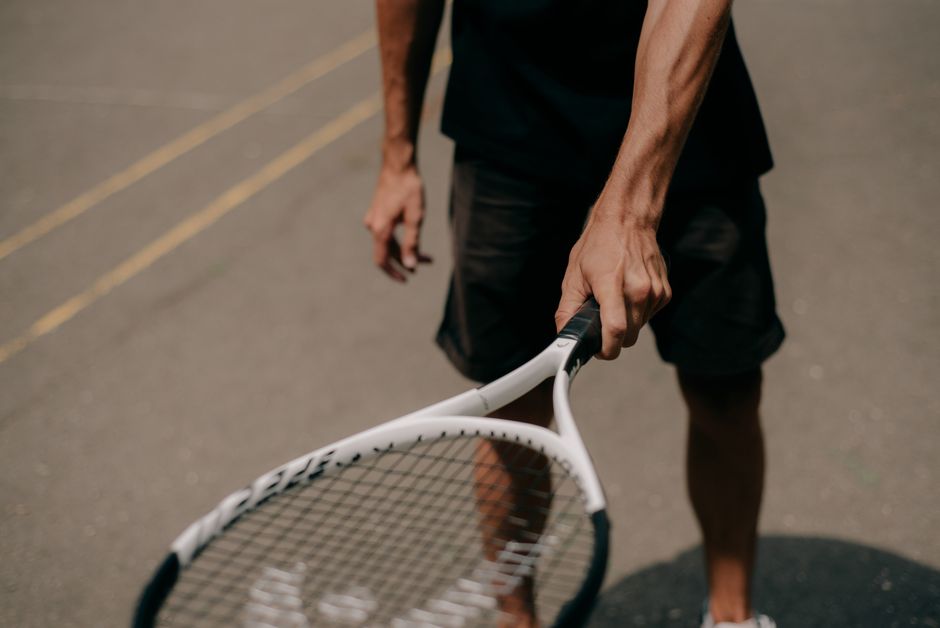
Tennis elbow hurts. The pain sits on the outside of your elbow and can travel down your forearm. Simple tasks like lifting a coffee cup or turning a doorknob can become miserable. The good news is that targeted exercise is one of the most effective ways to reduce the pain and get your arm working normally again. The most effective approach combines specific strengthening exercises with gentle stretching, done consistently over several weeks.
What Exactly Is Tennis Elbow?
Tennis elbow is the common name for lateral epicondylitis. It is an injury to the tendons that attach to the bony bump on the outside of your elbow. These tendons connect the muscles of your forearm to the bone. Their job is to straighten your wrist and fingers.
Despite the name, most people who get tennis elbow never play tennis. The injury comes from repeated use of the wrist and forearm. Painting, typing, using hand tools, or even cooking can cause it. The repeated motion creates tiny tears in the tendon. Over time, the tendon becomes irritated and painful.
The condition is actually a tendinopathy, not a simple inflammation. This matters because it changes how you treat it. Pure rest alone rarely fixes it. The tendon needs controlled loading to heal properly. That is why exercise is the cornerstone of treatment.
How To Reduce Tennis Elbow Pain Exercises More Effectively
Exercise works for tennis elbow because it forces the tendon to adapt. When you load the tendon in a controlled way, it stimulates repair. The tendon rebuilds its structure and becomes stronger over time. This is called eccentric strengthening.
An eccentric exercise is one where the muscle lengthens while under tension. For tennis elbow, the most famous eccentric exercise is the wrist extension drop. You rest your forearm on a table with your hand hanging off the edge, palm facing down. Hold a light weight in your hand. Use your other hand to lift your wrist up. Then slowly, over about three seconds, lower the weight back down. That slow lowering phase is the eccentric part.
This type of loading has been studied extensively. Research consistently shows that eccentric exercise reduces pain and improves function in people with tennis elbow. The key is to do it regularly and progress the weight gradually. You should feel a stretch or mild discomfort in the tendon, but not sharp pain.
Start with a very light weight. An empty soup can or a one-pound dumbbell is often enough. Do three sets of ten repetitions, twice a day. As the exercise gets easier, increase the weight slowly. If you feel sharp pain during the exercise, reduce the weight or stop.
Which Stretches Help the Most?
Stretching complements strengthening. It helps improve flexibility in the forearm muscles and reduces tension on the tendon. The wrist flexor stretch is simple and effective. Hold your arm straight out in front of you with your palm facing up. Use your other hand to gently bend your wrist downward so your fingers point toward the floor. You should feel a stretch along the underside of your forearm. Hold for 30 seconds. Repeat three times.
The wrist extensor stretch targets the muscles that attach at the elbow. Hold your arm straight out with your palm facing down. Use your other hand to gently bend your wrist down so your fingers point toward the floor. You will feel a stretch on the top of your forearm. Hold for 30 seconds and repeat three times.
Do these stretches after your strengthening exercises or after a warm shower. Stretching a cold muscle can cause more irritation. Gentle is better. Stretching should never cause sharp pain.
Some people also benefit from a towel twist exercise. Hold a rolled towel with both hands, arms straight in front of you. Twist the towel in opposite directions as if you were wringing out water. Do this for about 30 seconds. This works the muscles that rotate your forearm, which are often involved in tennis elbow.





What Does the Research Say About Exercise?
Exercise is not just a suggestion. It is the most evidence-based treatment for tennis elbow. Clinical guidelines consistently recommend exercise as a first-line treatment. Studies have compared exercise to other treatments like corticosteroid injections. The results show that exercise provides longer-lasting relief than injections.
Corticosteroid injections often provide quick pain relief, but the effect wears off. Some research suggests that people who get injections early on may actually have higher recurrence rates later. Exercise takes longer to work, but the results are more durable.
One important point: the quality of the exercise matters more than the quantity. Doing the movement properly with controlled speed is more effective than rushing through repetitions with heavier weights. Slow and controlled is the goal.
Some studies also suggest that a combination of eccentric and concentric exercise works well. Concentric exercise is when the muscle shortens under tension, like lifting the weight up. Most rehabilitation programs include both phases. The eccentric phase gets the most attention because it appears to be the most effective for tendon healing.
How Long Until the Pain Goes Away?
Tennis elbow does not heal overnight. Tendons have poor blood supply, so they repair slowly. Most people notice improvement within six to eight weeks of consistent exercise. Full recovery can take three to six months. Some stubborn cases take longer.
You should see gradual progress. The pain during daily activities should decrease first. Then you will notice you can lift heavier objects or use your arm longer before discomfort sets in. Do not stop the exercises as soon as you feel better. Continue for several weeks after your symptoms resolve to prevent recurrence.
If you see no improvement after eight weeks of consistent exercise, talk to a doctor or physical therapist. They can assess your technique and rule out other causes of elbow pain. In rare cases, tennis elbow can be confused with arthritis, nerve compression, or other tendon problems.
What Else Can You Do Alongside Exercise?
Exercise is the main treatment, but other measures can help you manage pain while you recover. A counterforce brace worn just below the elbow can reduce strain on the tendon during activity. It does not fix the problem, but it can make daily tasks more comfortable.
Ice can help after activity if you have a flare-up. Apply an ice pack to the painful area for 15 minutes. Do not ice before exercise because it can reduce blood flow to the area. Some people find heat more helpful for stiffness, especially in the morning.
Over-the-counter pain relievers like ibuprofen can help with short-term pain. They do not heal the tendon. Use them sparingly and only when needed. Long-term use of anti-inflammatory medication has not been shown to improve tendon healing.
Ergonomics matter too. If your job involves repetitive wrist movements, look at your workstation. Adjust your chair height, keyboard position, or tool grip to reduce strain on your forearm. Small changes can make a big difference over time.
When Should You See a Doctor?
Most cases of tennis elbow can be managed at home with exercise. But some situations need professional evaluation. See a doctor if the pain is severe, if you have numbness or tingling in your hand, or if the pain does not improve after several weeks of exercise.
Also seek medical advice if the pain follows a direct injury like a fall or a blow to the elbow. A doctor can examine you and order imaging if needed. An ultrasound or MRI can show the extent of tendon damage. This is not necessary for everyone, but it can be helpful in stubborn cases.
Physical therapy is a good option if you are unsure about your exercise technique. A therapist can design a program specific to your needs and correct any mistakes in your form. This can speed up your recovery and reduce the risk of making things worse.
What Makes Tennis Elbow Worse?
Certain activities will aggravate your tendon while it is healing. Avoid heavy lifting with your palm facing down. Avoid repetitive gripping, especially with a tight grip. If you play tennis, take a break from playing until your pain settles. When you return, consider using a lighter racket with looser string tension.
Do not push through sharp pain during exercise. A mild stretch or muscle fatigue is normal. Sharp pain is a sign that you are loading the tendon too heavily. Back off and reduce the weight or the number of repetitions.
One common mistake is doing too much too soon. People feel a little better and jump back into their full activities. This often causes a setback. Increase your activity level gradually, even if you feel good. The tendon needs time to adapt to increased loads.
Frequently Asked Questions
Can I exercise with tennis elbow pain?
Yes, gentle strengthening and stretching exercises are recommended for tennis elbow. Stop any exercise that causes sharp or severe pain.
How often should I do tennis elbow exercises?
Most programs recommend doing strengthening exercises once or twice daily, with a rest day if the tendon feels especially sore. Consistency matters more than doing many sessions in one day.
Is it better to rest or exercise a sore elbow?
Complete rest can weaken the tendon further, so controlled exercise is generally better. You should avoid activities that cause sharp pain, but keep the arm moving with gentle exercises.
How long does it take for tennis elbow exercises to work?
Most people notice improvement within six to eight weeks of consistent exercise. Full recovery often takes three to six months.
