
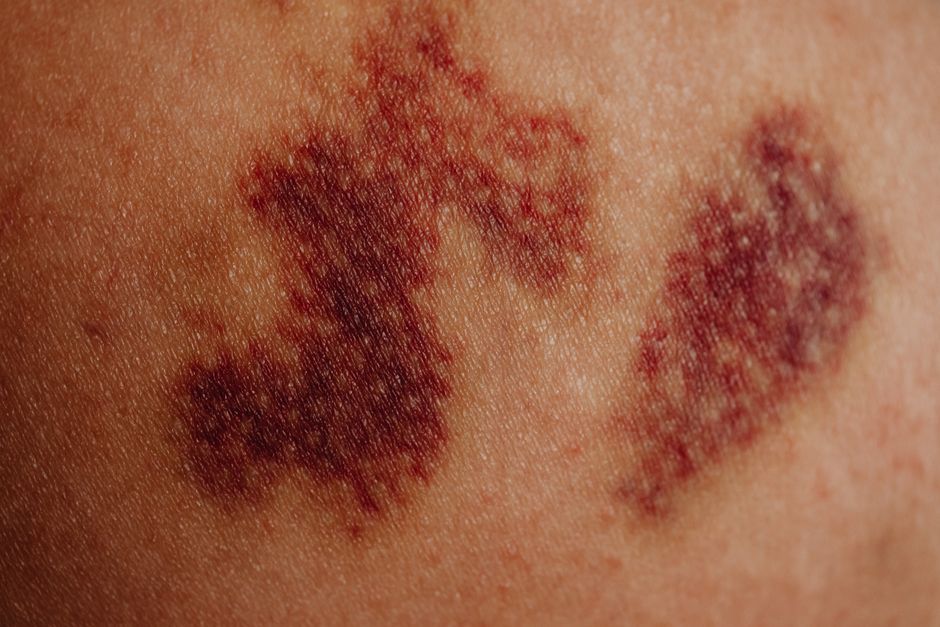
Bruises happen when small blood vessels under the skin break and leak blood into the surrounding tissue. The body then works to break down and reabsorb that blood, which is why the bruise changes color over several days. You can reduce bruising by applying cold early, using heat later, and elevating the injured area. These steps, along with a few simple habits, help the body clear the trapped blood faster and limit how large the bruise becomes.
Why Do Bruises Form and Change Color?
A bruise starts the moment blood vessels tear from a bump, a fall, or pressure. Blood leaks into the tissue and collects there. The body immediately sends white blood cells to the area to clean up the damaged cells and start repairing the vessel wall.
The color changes follow a predictable pattern. A fresh bruise looks red or purple because it contains oxygen-rich blood. Over the next few days, the blood loses oxygen and the bruise turns blue or dark purple. As the body breaks down hemoglobin — the protein that carries oxygen in red blood cells — the bruise shifts to green, then yellow, and finally brown before fading completely. Most bruises resolve within two to four weeks.
How To Reduce Bruising Proven Tips That Help Heal Faster
The most effective way to reduce bruising is to act within the first 48 hours. Cold therapy is the cornerstone of early bruise treatment. Applying an ice pack constricts the blood vessels, which reduces the amount of blood that leaks into the tissue. Less leaked blood means a smaller bruise.
Use a cold pack, a bag of frozen peas, or ice wrapped in a thin cloth. Apply it to the area for 15 to 20 minutes at a time, several times a day. Never place ice directly on the skin — it can cause frostbite. After the first two days, switch to warm compresses. Heat increases blood flow to the area, which helps the body reabsorb the trapped blood faster.
Elevation is another simple and effective step. If the bruise is on an arm or leg, raise it above heart level when possible. Gravity then works with you, making it harder for fluid and blood to pool in the injured area. This reduces both bruising and swelling.
Does Arnica or Other Topical Creams Actually Work?
Arnica is one of the most popular remedies for bruising. It comes as a gel, cream, or ointment applied directly to the skin. Some research suggests arnica can reduce bruising, but the evidence is not strong. A few small studies show modest benefit, while others show no difference compared to a placebo.
The key point is that arnica is applied topically, not taken as a pill. Oral arnica is a homeopathic preparation and has not been shown to reduce bruising in any reliable clinical trial. If you choose to try arnica gel, apply it only to unbroken skin and stop if you notice any irritation.
Vitamin K cream is another topical option. Some studies indicate that vitamin K applied to the skin can help bruises fade faster, particularly after cosmetic procedures. The evidence here is also limited, but it is a low-risk option worth considering. No topical cream will erase a bruise overnight. These products may speed up the process slightly, but the body still needs time to clear the blood.




What Role Does Diet Play in Bruising?
Your diet affects how easily you bruise and how quickly you heal. Vitamin C is essential for collagen production, and collagen is the main structural protein in blood vessel walls. When you have enough vitamin C, your vessel walls are stronger and less likely to tear. Citrus fruits, bell peppers, broccoli, and strawberries are all rich sources.
Vitamin K plays a direct role in blood clotting. Without enough of it, even minor bumps can cause significant bruising. Leafy green vegetables like spinach, kale, and Swiss chard are excellent sources of vitamin K. Most people get enough from their diet, but if you eat very few vegetables, your vitamin K levels may be low.
Some research suggests that bromelain, an enzyme found in pineapple, may help reduce bruising and swelling. The evidence is preliminary, and most studies are small. Eating pineapple is unlikely to hurt, but do not expect dramatic results. Supplements are not necessary if you eat a balanced diet.
When Is Bruising a Sign of Something Serious?
Most bruises are harmless and heal on their own. But some bruises warrant medical attention. If you bruise easily without any known injury, or if you develop bruises that are unusually large, painful, or slow to heal, talk to a doctor. This could indicate an underlying bleeding disorder, a vitamin deficiency, or a medication side effect.
Certain medications increase bruising. Blood thinners like warfarin, apixaban, and aspirin are common culprits. Even over-the-counter medications like ibuprofen and naproxen can increase bruising because they interfere with platelet function. If you take any of these medications and notice more bruises than usual, mention it to your doctor. Do not stop taking a prescribed blood thinner without medical advice.
Seek immediate medical care if a bruise is accompanied by severe pain, swelling that continues to worsen, or if you cannot move the injured area. A bruise that forms a hard lump, called a hematoma, may need drainage. Bruises on the head, especially if followed by confusion, vomiting, or a severe headache, require urgent evaluation.
Do Supplements Like Vitamin C or Zinc Speed Up Healing?
Vitamin C supplements are sometimes recommended to reduce bruising, particularly in people who do not get enough from food. For someone with a true deficiency, supplementing can help. For someone with normal levels, extra vitamin C has not been shown to reduce bruising or speed healing.
Zinc is involved in tissue repair and immune function. Some research suggests that zinc supplementation may help wounds heal faster, but its effect on bruises specifically is not well studied. If you eat a varied diet with meat, nuts, and legumes, you likely get enough zinc.
The honest position is that supplements do not have strong evidence for bruise prevention or faster healing in healthy people. A balanced diet provides the nutrients your body needs for normal repair processes. If you are concerned about a specific deficiency, ask your doctor to run blood tests before starting any supplement.
What Makes Some People Bruise More Easily?
Age is a major factor. As you get older, your skin becomes thinner and the fat layer that cushions blood vessels decreases. Blood vessel walls also become more fragile. This combination means older adults bruise more easily and often develop bruises from minor bumps they barely notice.
Genetics play a role too. Some people simply have more fragile blood vessels or thinner skin. Women tend to bruise more easily than men, partly because of differences in skin thickness and fat distribution. Sun damage also weakens blood vessel walls over time, which is why people with significant sun exposure often bruise more easily.
Certain medical conditions increase bruising risk. Liver disease can affect blood clotting. Platelet disorders and clotting factor deficiencies can cause easy bruising. If you suddenly start bruising much more than usual, or if you develop pinpoint red spots called petechiae, see a doctor promptly.
Does Massage or Movement Help or Hurt a Bruise?
Gentle movement is fine and can actually help. Moving the injured area promotes blood flow, which helps the body clear the leaked blood. Walking, stretching, or light exercise that does not aggravate the injury is beneficial. The key is to avoid movements that cause pain or put direct pressure on the bruised area.
Massage is a different story. Massaging a fresh bruise can make it worse. Direct pressure on broken blood vessels can push more blood into the tissue, making the bruise larger. Wait at least two days before any massage, and even then, keep it very gentle. A light touch that does not cause pain is acceptable. Deep tissue massage or firm pressure on a bruise is not recommended.
Frequently Asked Questions
How long does a bruise usually take to heal?
Most bruises fade within two to four weeks. Smaller bruises may resolve in about a week, while larger ones can take a month or longer.
Can ice make a bruise go away faster?
Ice applied within the first 48 hours reduces the size of a bruise by limiting blood flow to the area. It does not make the bruise disappear, but it helps it heal faster.
Is it safe to put arnica on a bruise?
Arnica gel applied to unbroken skin is generally safe for most people. The evidence for its effectiveness is limited, and it should not be used on open wounds.
When should I worry about a bruise?
See a doctor if you bruise without injury, if bruises are unusually large or painful, or if you take blood thinners and notice increased bruising. Severe pain, swelling, or a bruise after a head injury also warrants medical attention.
