
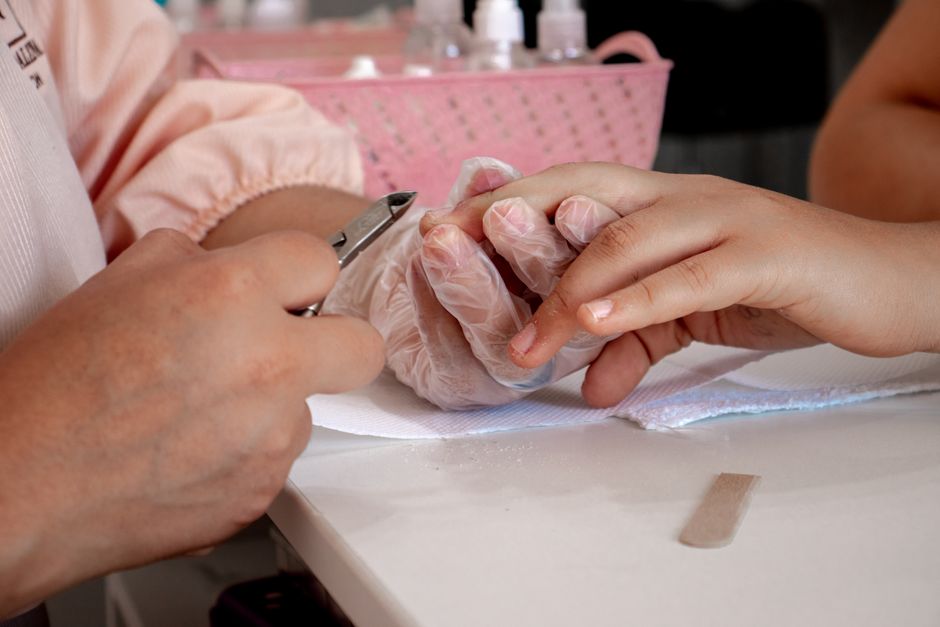
Quitting nail biting starts with understanding that it is usually an automatic habit, not a character flaw or a sign of weak willpower. The most effective approach combines awareness training, a physical barrier like bitter-tasting polish, and replacement behaviors that occupy your hands. For many people, the habit is tied to stress, boredom, or concentration, so addressing those triggers matters as much as the behavior itself.
Why Do People Bite Their Nails?
Nail biting, called onychophagia in clinical settings, is classified as a body-focused repetitive behavior. Research consistently shows it is most common in childhood and adolescence, and a substantial number of people carry it into adulthood. It is not simply a bad habit picked up by chance.
The behavior usually serves a function. For some people it releases tension. For others it fills dead time during boredom or sharpens focus during concentration. Many people bite without noticing until their fingers hurt or someone points it out.
There is a meaningful distinction between occasional nail biting and chronic onychophagia. Occasional biting is common and often fades on its own. Chronic biting — daily, for years, causing visible damage — tends to persist without deliberate intervention. The evidence indicates that chronic nail biting shares features with other repetitive habits in how it is maintained by the brain’s habit circuitry.
Stress is the most frequently reported trigger. Anxiety, boredom, and frustration all appear in the research as common antecedents. Some people also bite when their nails have rough edges or uneven surfaces, which creates a self-perpetuating cycle: biting causes roughness, roughness prompts more biting.
What Actually Helps You Stop Biting Your Nails?
The approaches with the most consistent support in clinical literature are habit reversal training, physical barriers, and awareness-building techniques. No single method works for everyone, and combining strategies tends to be more effective than relying on willpower alone.
Habit reversal training is one of the better-studied behavioral approaches. It involves three core steps: becoming aware of when and where you bite, identifying a competing response (like clenching your fist or pressing your fingertips together), and practicing that response whenever the urge arises. Some research suggests this approach reduces body-focused repetitive behaviors, though study sizes are generally small.
Physical barriers work by interrupting the automatic chain between urge and action. Bitter-tasting nail polishes are widely available and some clinicians recommend them. They do not address the underlying urge, but they can break the automaticity long enough for new patterns to form. The evidence for their effectiveness is moderate — they help some people and do nothing for others.
Awareness techniques include keeping a simple tally of when you bite, or wearing a rubber band on your wrist as a reminder. The goal is not punishment but noticing. Many people genuinely do not realize how often they bite until they start tracking it.
What does not have strong evidence: sheer willpower, punishment-based approaches, or simply deciding to stop. These fail for most people because the behavior operates below conscious decision-making.
How Long Does It Take to Break a Nail Biting Habit?
There is no universal timeline. Habit research suggests that automatic behaviors weaken with consistent interruption over weeks to months, but individual variation is large. Some people notice significant reduction within two to four weeks of consistent effort. Others take considerably longer, especially if the habit has been present for decades.
The often-cited “21 days to break a habit” figure does not come from solid research. A frequently referenced study on habit formation found that automaticity developed over a wide range — from roughly 18 days to over 250 days depending on the behavior and the person. That study looked at forming new habits, not breaking existing ones, so even that range should be treated as a rough indicator rather than a rule.
Relapse is common and does not mean failure. Nail biting often returns during periods of increased stress. The realistic expectation is gradual reduction with occasional setbacks, not a clean stop.




What Triggers Nail Biting and How Do You Manage Them?
Identifying your personal triggers is often the difference between a strategy that works and one that does not. Triggers tend to fall into a few categories.
- Stress and anxiety — biting as a tension-release mechanism
- Boredom — biting to fill unstructured time
- Concentration — biting while reading, driving, or working
- Physical cues — rough edges, hangnails, or uneven nails
- Social modeling — family members or peers who bite
Once you know your triggers, you can build specific responses. If stress is the trigger, a replacement behavior like squeezing a stress ball or taking a few slow breaths can redirect the urge. If boredom is the trigger, keeping your hands occupied — knitting, doodling, a fidget tool — can fill the same need.
For physical cues, keeping nails filed smooth and moisturized removes the roughness that prompts biting. This is a small step that some people find surprisingly effective.
Does Nail Biting Cause Health Problems?
Nail biting can cause real harm, though serious complications are uncommon. The most frequent issues are minor.
Damage to the nail bed and surrounding skin is common with chronic biting. This can lead to painful hangnails, bleeding, and in some cases infection around the nail (paronychia). Repeated biting can also affect how nails grow over time.
There is a hygiene concern as well. Hands carry bacteria, and putting fingers in your mouth transfers those organisms. Biting can also introduce bacteria from the mouth into small breaks in the skin around the nail.
Dental effects are possible with long-term biting. Some dentists report that chronic nail biting can contribute to chipping of front teeth or, in severe cases, shifts in tooth position. The evidence here is mostly clinical observation rather than large controlled studies.
One less obvious concern: biting and swallowing nail fragments is a separate behavior called onychophagia with pica features. In rare cases, swallowed nail fragments have caused gastrointestinal issues, but this is uncommon and typically associated with more extensive ingestion than routine biting.
Are There Treatments a Doctor Can Offer?
For most people, self-help strategies are enough. When nail biting is severe, causes significant distress, or does not respond to behavioral approaches, clinical treatment may help.
Behavioral therapy — particularly habit reversal training delivered by a psychologist or therapist — has the strongest evidence base for body-focused repetitive behaviors. Cognitive behavioral therapy may also help when anxiety or another condition is driving the behavior.
Medication is sometimes used off-label for severe cases. Some clinicians recommend selective serotonin reuptake inhibitors (SSRIs) or N-acetylcysteine, but the evidence for these in nail biting specifically is limited. Most studies are small, and results vary. This is not a first-line approach.
If nail biting is accompanied by significant anxiety, depression, or another mental health condition, treating that condition often reduces the behavior as a side effect. In these cases, the nail biting is a symptom rather than the primary problem.
What Is the Best Strategy to Stop Biting Your Nails?
No single strategy works for everyone, but the combination with the most support involves awareness, interruption, and replacement. Here is a practical framework based on established behavioral approaches.
- Track the habit for a week. Note when, where, and what you were feeling. Patterns usually emerge quickly.
- Add a physical barrier such as bitter polish or a bandage on the most-bitten nail. This interrupts automaticity.
- Choose a competing response — something you can do with your hands when the urge hits. Clenching your fist for 30 seconds is a common suggestion.
- Keep nails smooth and trimmed to remove the physical triggers that prompt biting.
- Address underlying stress through exercise, sleep, or whatever reliably reduces tension for you.
- Expect setbacks and treat them as information, not failure. Note what triggered the relapse and adjust.
Consistency matters more than intensity. A small interruption every time you notice the urge does more than a dramatic effort that fades in a few days.
Frequently Asked Questions
Can nail biting be a sign of a mental health condition?
It can be, though it is not always. Chronic nail biting is classified as a body-focused repetitive behavior and is sometimes associated with anxiety, depression, or obsessive-compulsive spectrum conditions.
Does bitter nail polish actually work?
It helps some people by interrupting the automatic urge-to-action chain, but the evidence is moderate. It works best when combined with awareness training and a replacement behavior.
How long does it take to stop biting your nails?
There is no fixed timeline, and the popular “21 days” figure is not supported by solid research. Many people notice improvement within a few weeks of consistent effort, but habits present for decades often take longer.
Is nail biting harmful to your health?
It can cause damage to the nail bed, skin infections, and dental wear over time. Serious complications are uncommon, but chronic biting is not harmless.
