
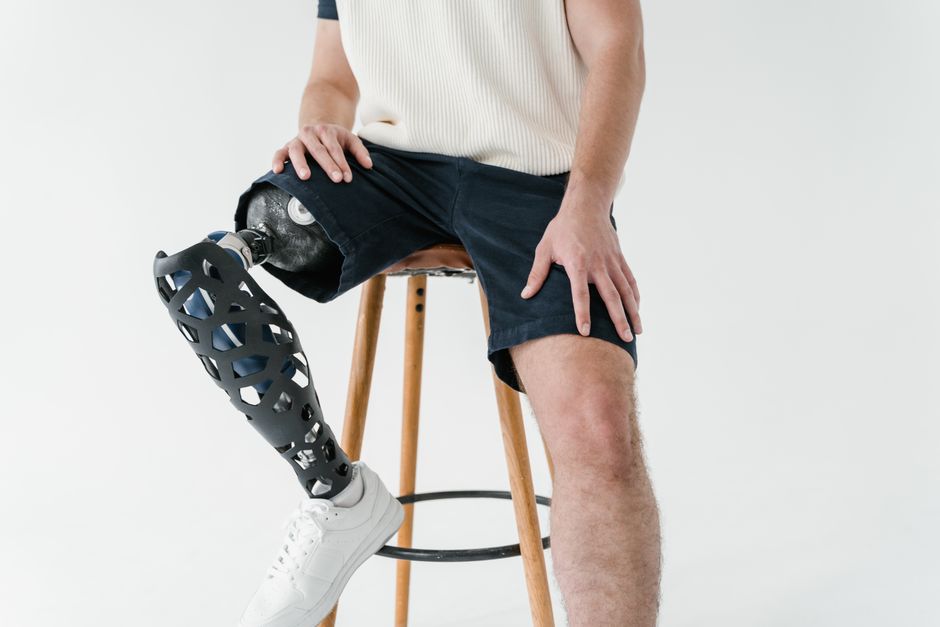
Putting on a below the knee prosthetic leg starts with one step: slide the liner onto your residual limb, making sure it sits flush against the skin with no wrinkles or air pockets. Then push the limb and liner into the socket, and lock or seal the prosthesis in place using the suspension system your prosthetist set up for you. The exact method depends on whether you use a pin lock, suction, or a vacuum system, but the sequence — liner first, socket second, suspension last — stays the same.
How To Put On A Below The Knee Prosthetic Leg: The Basic Steps
A below the knee prosthesis, also called a transtibial prosthesis, has three main parts. The liner is a soft roll-on sleeve that covers your residual limb. The socket is the rigid cup your limb sits inside. The suspension system holds the whole thing on your leg — this could be a pin, a suction seal, or a vacuum pump.
Here is the general order most prosthetists teach:
- Inspect the skin on your residual limb for redness, blisters, or open areas.
- Roll the liner onto the limb, working from the end upward, pressing out wrinkles as you go.
- Check that the liner sits evenly with no folds, especially at the back of the knee.
- Guide the limb and liner down into the socket until it seats fully.
- Engage the suspension — push until the pin clicks, or roll the seal sleeve into place.
- Stand and check the fit before walking.
Your prosthetist will show you the exact technique for your system. The steps above are the common framework, not a substitute for that training. Fit problems are one of the most common reasons people stop using a prosthesis, so getting the routine right matters.
What Is a Prosthetic Liner and Why Does It Matter So Much?
The liner is the layer between your skin and the hard socket. It protects the skin, cushions pressure, and helps hold the prosthesis on. For people with diabetes or vascular disease, the liner also matters because the residual limb skin is more fragile and heals slowly.
Rolling the liner on correctly is where most problems start. A wrinkle in the liner creates a pressure point. Over a full day of walking, that pressure point can turn into a red mark, then a blister, then a wound. That is why the liner step gets so much attention.
Some liners are made of silicone, some of gel, and some have a fabric outer layer. Some are coated with mineral oil or a special top layer. Each type rolls on a little differently. A liner that feels fine for five minutes can still be wrong if it is twisted or sitting too high.
One detail people often miss: the liner should sit against your skin, not over any clothing. A sock or a fold of fabric under the liner defeats the purpose and can cause skin breakdown.
Pin Lock vs Suction vs Vacuum: How Do You Know Which You Have?
Most below the knee prostheses use one of three suspension types. You can usually tell which one you have by looking at the bottom of the liner and the socket.
| Suspension type | How it works | What you do to put it on |
|---|---|---|
| Pin lock | A pin at the bottom of the liner clicks into a lock in the socket. | Push the limb down until you hear or feel the pin click. |
| Suction | Air is pushed out and a seal forms between liner and socket. | Roll a seal sleeve over the socket edge, or push in until air escapes. |
| Vacuum | A pump pulls air out to create a tighter hold. | Seat the limb, then activate the pump or let the system draw air out. |
Pin lock systems are common because they are easy to check — you can feel the click. Suction and vacuum systems can feel more secure to some users but need a good seal, and a small leak can loosen the fit. There is no single best system for everyone. The choice depends on your limb shape, activity level, and skin condition.





How Tight Should the Prosthesis Feel?
It should feel snug and secure, not painful. You should be able to stand and put weight on it without the socket sliding or rotating. If it pinches, rubs, or feels loose, that is a fit problem — not something to push through.
Residual limbs change size. They can swell or shrink during the day, and they change more in the first year after amputation. That is why many people use prosthetic socks — thin fabric socks worn over the liner to add or remove volume. Adding a sock can tighten a loose fit. Removing one can relieve pressure.
A general rule many prosthetists use: add or remove socks in small steps and check the fit each time. If you need several socks to get a good fit, or if the fit changes a lot during the day, tell your prosthetist. The socket may need adjustment.
Pain is not a normal part of a good fit. Discomfort at the end of the limb, at the kneecap, or along the shin bone should be checked. Continuing to wear a poorly fitting prosthesis is one of the fastest ways to injure the skin.
What Should You Check Before and After Putting It On?
Skin checks are part of the routine, not an extra step. Look at your residual limb before you put the prosthesis on and again after you take it off. Early redness that fades within a short time is usually from normal pressure. Redness that stays, or any break in the skin, needs attention.
Things to watch for:
- Red marks that do not fade after you remove the prosthesis
- Blisters, scrapes, or open areas
- Swelling that is new or getting worse
- Numbness, tingling, or a change in how the limb feels
- A socket that suddenly feels too loose or too tight
If you have diabetes or poor circulation, skin problems on the residual limb can get serious quickly. Report changes to your care team rather than waiting to see if they improve. This is general guidance — your own care team’s instructions should take priority.
Why Is the Fit So Important for Comfort and Safety?
A well-fitting socket spreads pressure across the limb in a way the skin and tissue can tolerate. A poor fit concentrates pressure in small areas. Over time, that can cause skin breakdown, pain, and a higher risk of falls.
Falls are a real concern for people who use a prosthesis. A loose socket, a worn liner, or a sock that is too thin can all make the leg feel unstable. If your prosthesis feels less secure than usual, stop and fix the fit before walking.
The socket is also where most of the adjustment happens. As your limb changes, the socket may need to be reshaped or replaced. This is routine. Many people need socket adjustments in the first months of using a prosthesis, and again later as the limb stabilizes.
Common Mistakes People Make
Most problems come from a few repeated errors. Knowing them can save a lot of discomfort.
- Not checking the skin before putting the prosthesis on
- Rolling the liner on with wrinkles or folds
- Wearing the liner over a sock or clothing
- Ignoring a loose or pinching fit
- Using a worn or torn liner
- Skipping the suspension check before standing
A liner that is torn or stretched out will not hold well and can cause skin problems. Liners do wear out and need to be replaced. Ask your prosthetist how often yours should be checked or replaced.
Another point worth knowing: the way you put on the prosthesis can change how it feels all day. Rushing the liner step, or not seating the limb fully in the socket, can lead to a fit that feels off hours later. Taking an extra minute at the start often prevents problems later.
When Should You Contact Your Prosthetist or Doctor?
Contact your prosthetist if the fit changes, if the prosthesis feels loose or tight for no clear reason, or if the socket causes pain. Contact your doctor or care team if you notice skin breakdown, swelling, numbness, or a change in the color or temperature of the limb.
Do not try to fix a serious fit problem by adding many socks or padding on your own. That can make pressure points worse. Your prosthetist can adjust the socket or liner properly.
Frequently Asked Questions
How do you put on a below the knee prosthetic leg?
Roll the liner onto your residual limb with no wrinkles, then push the limb and liner into the socket and engage the suspension system. Your prosthetist will show you the exact method for your pin, suction, or vacuum setup.
What order do you put on a prosthetic leg?
Liner first, then socket, then suspension. The liner goes against your skin, the limb and liner go into the socket, and the pin, seal, or vacuum locks it in place.
How tight should a below the knee prosthesis be?
It should feel snug and secure without pinching or sliding. If it feels painful or loose, that is a fit problem to report to your prosthetist rather than push through.
Can you sleep in a below the knee prosthesis?
Most people are advised to remove the prosthesis for sleep to let the skin rest and recover. Follow your own care team’s instructions, since the right routine depends on your skin and health.
