
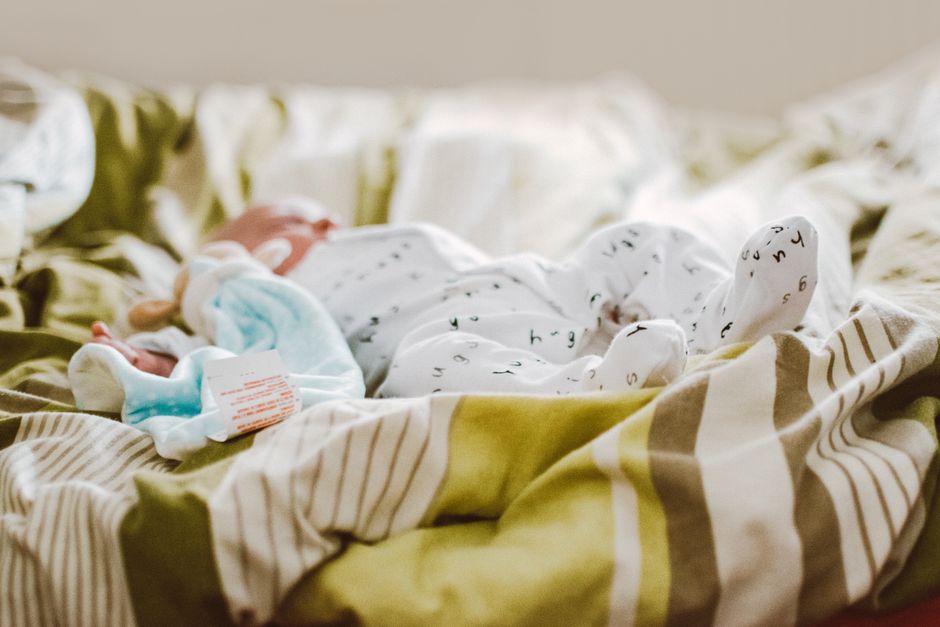
Putting a baby to sleep safely comes down to one position and one sleep space: on the back, on a firm flat surface, in a crib or bassinet with nothing else in it. Those three choices are the foundation of every safe sleep recommendation, and they apply from the first night home through the first birthday. The steps themselves are simple. The reasons behind them are worth understanding, because they explain why some popular products and old habits work against you.
What Are the Safest Sleep Conditions for a Baby?
The safest sleep surface is a firm mattress with a tightly fitted sheet, inside a crib, bassinet, or play yard that meets current safety standards. The mattress should not indent when the baby lies on it. A surface that conforms to the body — an adult mattress, a couch, a pillow, a folded blanket — can block a baby’s airway if they roll face down.
Nothing else belongs in the sleep space. That means no pillows, blankets, bumper pads, stuffed animals, or positioning wedges. This is not about tidiness. Soft objects and loose bedding are a documented suffocation risk, and they have been linked to sleep-related deaths in infants.
Room sharing without bed sharing is the recommended arrangement for at least the first six months. The baby sleeps in their own crib or bassinet in the parents’ room, close to the bed but on a separate surface. This setup makes feeding and monitoring easier and is associated with a lower risk of sleep-related death compared with sleeping in a separate room.
Keep the room at a comfortable temperature and dress the baby in one layer more than you would wear to be comfortable. Overheating is a known risk factor for sleep-related infant death. A sleep sack or wearable blanket keeps a baby warm without loose fabric near the face.
Why Does Back Sleeping Matter So Much?
Back sleeping is the single most protective step you can take. Babies placed on their back to sleep have a substantially lower risk of sudden infant death syndrome (SIDS) than babies placed on their stomach. This finding comes from decades of population data and is one of the most consistent results in pediatric research.
The exact reasons back sleeping is protective are not fully understood. Several mechanisms likely contribute. Babies on their stomach sleep more deeply and are harder to arouse, which may interfere with the body’s ability to respond to a breathing problem. Stomach sleeping also puts pressure on the jaw and can cause a baby to rebreathe their own exhaled air, which raises carbon dioxide levels.
Once a baby can roll both ways on their own — usually around five to six months — they can be left in whatever position they roll into. You should still place them on their back to start. The difference is that a baby who can roll independently has the motor control to change position, and forcing them back onto their back repeatedly is not necessary or recommended.
Side sleeping is not a safe substitute. A baby placed on their side can easily roll onto their stomach, and the side position itself carries a higher risk than the back.
How Should You Handle Sleep During Feeding and Night Waking?
Feed the baby, then put them back down on their back. If a baby falls asleep while feeding, move them to their sleep space as soon as you can. Falling asleep with a baby on a couch or armchair is especially dangerous — this situation is strongly associated with sleep-related infant deaths, more so than falling asleep in a bed.
If you are breastfeeding, feeding in bed at night is common, and many parents do it. The risk comes from the sleep surface and from a parent who may fall back asleep. If there is any chance you will fall asleep while feeding in bed, it is safer to feed in a chair or another spot where falling asleep is less likely, or to set up the bed as safely as possible and move the baby back to their own space once the feed is done.
Bed sharing is a topic where guidance is firm but the reasoning matters. Bed sharing raises the risk of sleep-related death, and the risk is higher in several situations:
- The baby is younger than four months old
- The baby was born prematurely or with a low birth weight
- The parent who shares the bed smokes, has used alcohol, or has taken sedating medication
- The sleep surface is soft, or there are pillows and blankets present
- The baby shares the bed with anyone other than a parent, including other children or pets
Some parents choose to bed share for feeding, bonding, or cultural reasons. If that is your situation, the goal is to reduce risk as much as possible: a firm mattress, no pillows or loose bedding near the baby, no smoking or alcohol, and no other sleepers in the bed. This is a harm-reduction approach, not a recommendation that bed sharing is safe.





What About Pacifiers, Swaddling, and Sleep Positioners?
Offering a pacifier at sleep time is associated with a lower risk of SIDS. The effect is not fully explained, but the association is consistent enough that many clinicians suggest offering one once breastfeeding is established, which is usually around three to four weeks. If the baby refuses it, that is fine. If it falls out during sleep, you do not need to put it back in.
Swaddling can help calm a newborn, but it must be done correctly. The swaddle should be snug around the body and loose around the hips, so the legs can bend and move freely. A tight swaddle around the legs has been linked to hip problems. Once a baby shows signs of starting to roll, swaddling should stop, because a swaddled baby who rolls onto their stomach may not be able to roll back.
Sleep positioners, wedges, and inclined sleepers should not be used. These products have been tied to infant deaths, and several have been recalled. No positioner has been shown to prevent SIDS. The claim that they reduce reflux or keep a baby on their back is not supported by evidence, and the risk they add is real.
Car seats, swings, and bouncers are not sleep spaces. A baby who falls asleep in one should be moved to a firm flat surface. A baby’s head can slump forward in a seated device and narrow the airway.
Does Tummy Time and a Safe Crib Affect Development?
Tummy time is the counterpart to back sleeping. Because babies spend so much time on their backs, supervised awake time on the stomach helps build neck, shoulder, and core strength and supports motor development. Start with short sessions a few times a day and build up as the baby tolerates it. Tummy time should always be supervised and should stop if the baby seems distressed.
Some parents worry that back sleeping will flatten the back of the baby’s head or delay rolling. Positional head flattening is common and usually improves as a baby gains mobility and spends more time upright. The protective benefit of back sleeping far outweighs these concerns, and tummy time helps address them.
A safe crib is not a restriction on development. It is the environment that lets a baby sleep without the risks that come from soft bedding and unsafe surfaces.
What Are the Key Facts to Remember?
The core steps are few and they do not change with the season, the baby’s mood, or how tired you are.
- Place the baby on their back for every sleep, including naps.
- Use a firm, flat sleep surface with a fitted sheet.
- Keep the sleep space empty — no pillows, blankets, bumpers, or toys.
- Share a room, not a bed, for at least the first six months.
- Avoid overheating and keep loose fabric away from the face.
- Stop swaddling as soon as the baby shows signs of rolling.
- Do not use positioners, wedges, or inclined sleepers.
One point that surprises many parents: the risk of sleep-related death is not limited to nighttime. Naps count the same, and the same rules apply. A baby left on a couch or in a swing for a nap faces the same hazards as one left there overnight.
If you are exhausted, ask for help. A partner, family member, or friend who can take a shift lets you sleep in a safe place rather than on a couch with the baby. Fatigue is one of the most common reasons unsafe sleep happens, and planning for it in advance is part of safe sleep.
Frequently Asked Questions
Can a baby sleep on their side?
No. Side sleeping is not safe because a baby can easily roll onto their stomach, which carries a higher risk. Always place a baby on their back to start sleep.
When can a baby sleep with a blanket?
Loose blankets should not be used in the crib until at least the first birthday. Until then, use a wearable blanket or sleep sack to keep the baby warm without loose fabric.
Is it safe to let a baby sleep in a car seat or swing?
No. Car seats, swings, and bouncers are not safe sleep spaces, and a baby who falls asleep in one should be moved to a firm flat surface. A slumped head position can narrow the airway.
What if my baby rolls onto their stomach during sleep?
Once a baby can roll both ways on their own, they can be left in the position they roll into. You should still place them on their back to start every sleep.
