
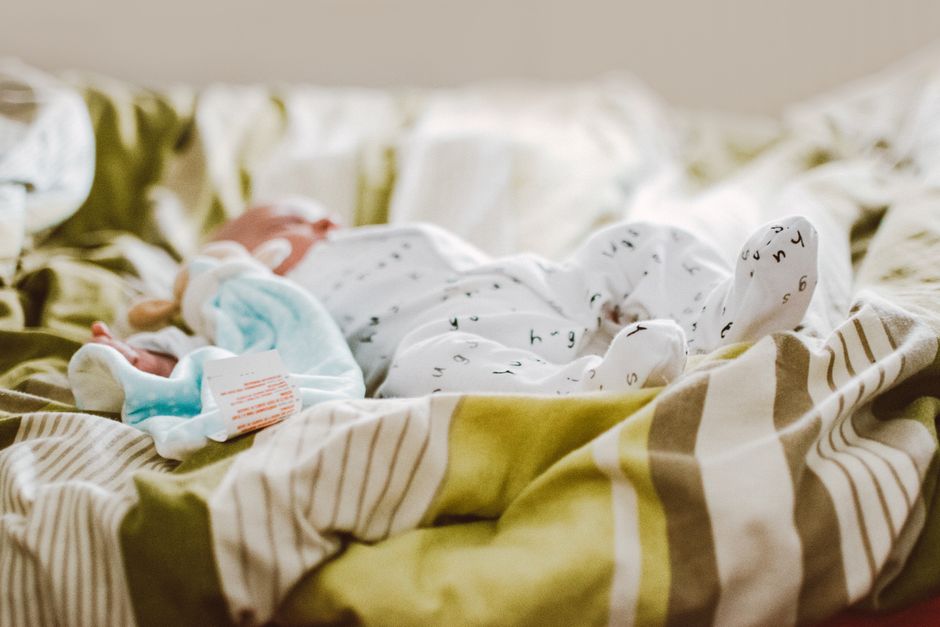
Safe infant sleep comes down to a short list of practices that have been studied for decades: place your baby on their back, on a firm flat surface, in their own sleep space, in the same room as you, with no loose bedding or soft objects nearby. Those steps are the core of what pediatric and public health organizations recommend, and they are backed by consistent evidence. Routines matter too — not because they are magic, but because babies settle more easily when the sequence of events before sleep stays the same. What follows is what the evidence supports, what it does not, and where honest uncertainty remains.
What Are the Safest Sleep Practices for a Baby?
The single most protective step is putting a baby to sleep on their back for every sleep — naps and nighttime, no exceptions. This recommendation comes from decades of research into sudden infant death syndrome (SIDS) and other sleep-related infant deaths, and the drop in infant deaths that followed widespread back-sleeping campaigns is one of the clearest public health successes in modern pediatrics.
Beyond back sleeping, the established recommendations are consistent across major pediatric and public health bodies:
- Back to sleep for every sleep period, including naps.
- Firm, flat surface — a crib, bassinet, or play yard that meets current safety standards, with a fitted sheet only.
- No soft objects in the sleep space: no pillows, blankets, bumpers, stuffed animals, or positioners.
- Room-sharing without bed-sharing — the baby sleeps in the same room as the parents, on a separate surface, ideally for the first several months.
- No overheating — keep the room comfortable and avoid over-bundling.
- Breastfeeding is associated with a lower risk of SIDS, though the relationship is complex and not fully understood.
- Pacifier use at sleep time is associated with reduced risk in some studies.
One point worth clarifying: the evidence on back sleeping is strong and consistent. The evidence on some of the other items — pacifiers, for example — is more mixed. Pacifier use is generally recommended because the potential benefit appears to outweigh the risks, but the mechanism is not well understood and the effect size in studies varies.
Why Does Back Sleeping Matter So Much?
Back sleeping is the position that has the strongest and most consistent link to reduced risk of sleep-related infant death. The exact reasons are not fully known, but several mechanisms have been proposed. Babies sleeping face-down may re-breathe exhaled air, which can raise carbon dioxide levels. They may also have more difficulty arousing from sleep, and they may trap heat more easily. None of these explanations alone accounts for the full effect, and researchers continue to study the issue.
What is clear is that the recommendation has held up across many studies and across different populations. It is not a matter of opinion or preference. Side sleeping is not a safe substitute — babies placed on their side can roll onto their stomach, and the side position itself has been associated with increased risk.
Once a baby can roll both ways on their own, usually around 4 to 6 months, they can be allowed to stay in whatever position they roll into. The key is that they start the sleep period on their back. You do not need to keep flipping them back over once they are mobile enough to roll independently.
What Does a Safe Sleep Environment Actually Look Like?
A safe sleep space is simple by design. The less in it, the safer it is. A firm mattress with a tightly fitted sheet in a crib or bassinet that meets current safety standards is the whole setup. That is it.
Things that should not be in the sleep space include:
- Pillows, blankets, comforters, and quilts
- Bumper pads of any kind
- Stuffed animals and toys
- Sleep positioners and wedges
- Loose bedding or extra mattresses
Sleep positioners deserve a specific mention because they are still sold and marketed for infants. No evidence supports their use, and they have been linked to infant deaths. They are not recommended by any major pediatric organization.
Room temperature matters too. Overheating is a known risk factor, though the exact threshold is not well defined. A comfortably cool room and light clothing are generally advised. Signs that a baby may be too warm include sweating, flushed skin, or a hot chest. A good rule of thumb is to dress the baby in roughly one more layer than an adult would wear in the same room.





How Do You Build a Bedtime Routine That Works?
A consistent routine helps babies learn that sleep is coming. The evidence for routines improving infant sleep is moderate — some studies show benefits for settling and night wakings, but the research is not as strong as the evidence for safe sleep positioning. Still, routines are low-risk and many parents find them helpful.
A workable routine usually has three to four steps that happen in the same order every night. It might look like a bath, a feed, a book, and a song. The specific steps matter less than the consistency. Babies pick up on patterns, and a predictable sequence can help them wind down.
Timing matters as well. Overtired babies often fight sleep harder. Watching for early sleepy cues — yawning, rubbing eyes, slowing down — and starting the routine before a baby gets overtired tends to work better than waiting for full-blown fussiness.
For newborns, routines are less about clock time and more about responding to their natural patterns. Their sleep is fragmented by design, and they need to feed frequently. A rigid schedule is not realistic in the early weeks. As babies get older, their sleep patterns become more predictable, and routines become more useful.
What About Swaddling, White Noise, and Other Sleep Aids?
Swaddling can help some babies settle, but it comes with conditions. Once a baby shows signs of rolling, swaddling should stop, because a swaddled baby who rolls onto their stomach may not be able to roll back. The American Academy of Pediatrics recommends discontinuing swaddling at the point a baby starts trying to roll, which often happens around 2 to 3 months. Swaddling should always be done with the arms in and the hips loose, and it should never be used with loose blankets.
White noise is widely used and generally considered low-risk at reasonable volumes. Some research suggests it may help babies fall asleep, though the evidence is not strong. The main caution is volume and distance — keep the sound source away from the baby’s head and at a level comparable to a normal conversation. There is no established safe maximum, but loud, close-range noise is not advisable.
Other aids — crib mobiles, lullaby machines, special mattresses, and sleep-positioning devices — have little to no evidence supporting them for improving infant sleep or reducing risk. Some, like positioners, carry real danger. Marketing claims for these products often outrun the evidence considerably.
When Should You Talk to a Pediatrician About Sleep?
Most infant sleep patterns, even difficult ones, fall within the range of normal. But some situations warrant a conversation with a pediatrician. These include:
- Loud, persistent snoring or pauses in breathing during sleep
- Extreme difficulty settling that does not improve over time
- Sleep patterns that seem to regress significantly or suddenly
- Any concern about breathing, color, or responsiveness during sleep
Sleep problems in infants can sometimes be a sign of an underlying issue, though most often they are not. A pediatrician can help sort out what is typical and what may need further evaluation. There is no single “right” age for a baby to sleep through the night — the range is wide, and many healthy babies wake to feed well past the first few months.
Frequently Asked Questions
What is the safest way to put a baby to sleep?
Always place your baby on their back on a firm, flat surface in their own sleep space, with no loose bedding or soft objects. This is the position and environment supported by the strongest evidence.
Can a baby sleep on their side?
No. Side sleeping is not a safe alternative to back sleeping because babies can roll onto their stomach from that position. Start every sleep on the back.
When can a baby sleep on their stomach?
Once a baby can roll both ways on their own, usually around 4 to 6 months, they can be allowed to stay in whatever position they roll into. They should still be placed on their back to start.
Is it safe to swaddle a baby all night?
Swaddling can be used for sleep, but it should stop as soon as a baby shows signs of rolling, often around 2 to 3 months. A swaddled baby who rolls onto their stomach may not be able to roll back.
