
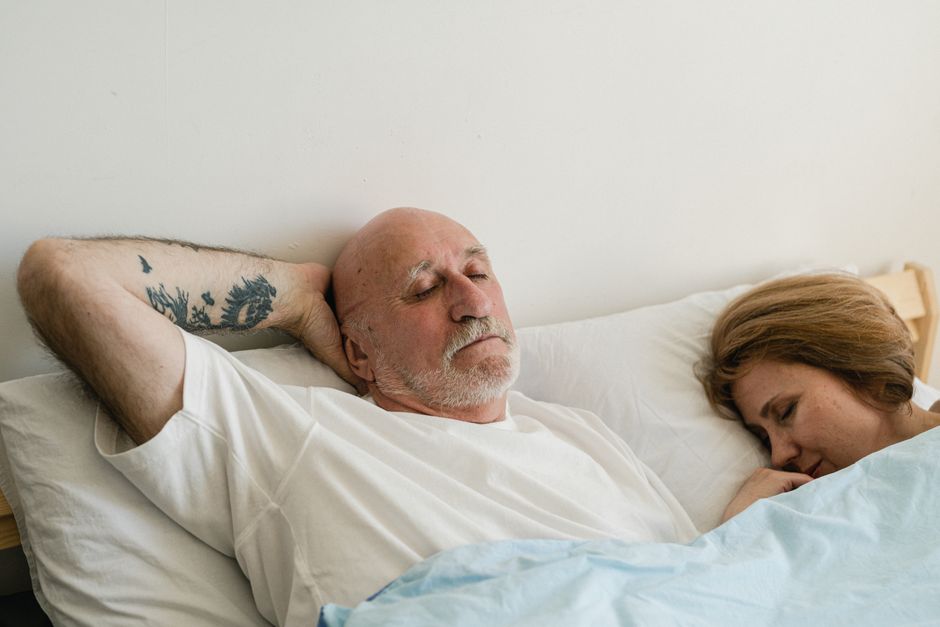
Lower back pain and sciatica can make sleep feel impossible. The position that usually helps most is lying on your back with a pillow under your knees, or on your side with a pillow between your knees. Both keep your spine closer to its natural curve and take pressure off the lower back. The goal is not one perfect pose. It is finding a setup that lets you rest without your pain spiking.
Why Does Back Pain Get Worse at Night?
Pain that worsens at night is common, and the reasons are mostly mechanical and neurological rather than mysterious.
During the day, movement keeps your spinal discs and joints lubricated and your muscles active. At night you stop moving. Stiffness builds. A mattress that sags or a pillow that props your head too high can push your spine out of alignment for hours at a time.
There is also a nervous system piece. When the room is quiet and distractions are gone, your brain has less to compete with the pain signal. That does not mean the pain is imaginary. It means your attention has nowhere else to go. Some people also notice that pain feels sharper in the early morning hours, which researchers have linked to natural fluctuations in cortisol and other hormones that influence inflammation. The evidence on exactly how much this matters is still developing.
Sciatica adds its own wrinkle. The sciatic nerve runs from your lower back through your buttock and down each leg. If a disc or bone spur is pressing on a nerve root, certain sleep positions can increase that pressure. Lying flat on your back with straight legs, for example, can sometimes stretch or compress the nerve further.
What Is the Best Sleeping Position for Lower Back Pain and Sciatica?
Side sleeping with a pillow between your knees is the position most clinicians suggest first for sciatica. It keeps your hips level and reduces rotation in your lower spine.
Back sleeping with a pillow under your knees is a close second. The pillow lifts your legs slightly, which flattens the curve of your lower back and eases strain on the lumbar spine. If you have sciatica that radiates down one leg, back sleeping can sometimes feel worse because it does not take pressure off the nerve. Pay attention to what your body tells you.
Stomach sleeping is the position most likely to cause problems. It forces your neck to turn to one side and arches your lower back. If you cannot sleep any other way, place a thin pillow under your hips and abdomen to reduce the arch. This is a compromise, not an ideal.
Some people with sciatica find relief sleeping on the side opposite the painful leg. The reasoning is that it may reduce pressure on the affected nerve root. This is not a universal rule, and responses vary. Try both sides and see what happens.
How Should You Set Up Your Bed and Pillows?
Your mattress matters more than most people think. A mattress that is too soft lets your hips sink and your spine curve. One that is too firm can create pressure points at the shoulders and hips. Medium-firm is the most commonly recommended middle ground, though the research comparing mattress firmness for back pain is limited and results are not definitive.
Pillow placement does a lot of the work:
- Back sleeping: one pillow under your knees, a supportive but not overly thick pillow under your head.
- Side sleeping: a pillow between your knees thick enough to keep your hips level, plus a pillow that fills the gap between your neck and the mattress.
- Stomach sleeping: a thin pillow under your hips and belly, or no pillow under your head at all.
A body pillow can help side sleepers who tend to roll forward. Hugging it keeps your chest open and prevents your upper body from twisting. Some people also find that a rolled towel under the small of the back adds support when lying on their back.
If you share a bed, a mattress that works for your partner may not work for you. That is a real problem with no perfect solution. A mattress topper is a cheaper experiment than a new mattress.





Does Sleep Position Actually Change Back Pain?
The honest answer is that the evidence is not as strong as the advice suggests. Sleep position is widely discussed in clinical practice, and many people report real improvement. But large, high-quality trials comparing sleep positions for low back pain and sciatica are scarce.
What is better established is the reverse relationship. Poor sleep makes pain feel worse. Research consistently shows that sleep deprivation lowers pain tolerance and increases pain sensitivity. So the goal is not just finding a position that feels good tonight. It is protecting your sleep so your nervous system is not amplifying pain signals the next day.
This is why the position matters even if the direct evidence for any single pose is thin. Sleeping poorly because of pain creates a cycle. Better sleep tends to reduce pain perception, which makes it easier to sleep. Breaking that cycle in either direction helps.
What Else Helps You Sleep With Sciatica?
Position is the foundation, but a few other things matter.
Temperature and heat. A warm shower before bed or a heating pad on the lower back for 15 to 20 minutes can relax tight muscles. Heat is generally considered safe for muscle tension. Do not sleep on a heating pad. It is a burn risk, especially if you have reduced sensation in your legs from nerve compression.
Timing of activity. Gentle movement during the day, like walking or stretching, tends to help more than bed rest. Prolonged bed rest is not recommended for most lower back pain and can make stiffness worse. If you are unsure what movement is safe for your situation, that is a conversation for a clinician.
What you take before bed. Over-the-counter pain relievers are commonly used, and some people find they sleep better when pain is controlled. Which one is appropriate depends on your health history, other medications, and whether you have conditions like stomach, kidney, or liver problems. This is not a decision to make on your own if you take other medications or have chronic conditions. Ask a pharmacist or doctor.
Alcohol. It may make you fall asleep faster, but it fragments sleep later in the night and can worsen next-day pain. Skip it when you are already struggling.
Stress and wind-down. Pain and anxiety feed each other. A consistent bedtime, dim lights, and a screen-free wind-down period are not cures, but they support the sleep that helps you cope with pain.
When Should You See a Doctor About Night Back Pain?
Most lower back pain improves on its own within a few weeks. But some symptoms need medical attention and should not wait.
Seek care promptly if you have:
- Loss of bladder or bowel control
- Numbness in the groin or inner thigh area
- Progressive weakness in one or both legs
- Severe pain that started after a fall or accident
- Pain accompanied by fever, unexplained weight loss, or a history of cancer
- Pain that is severe and getting worse rather than better over time
Those first two symptoms together can point to a rare but serious condition called cauda equina syndrome, which is a medical emergency. If they appear, go to an emergency department.
For pain that is persistent but not alarming, a doctor or physical therapist can help identify what is driving it. Imaging is not always helpful for ordinary back pain, since many people without pain have disc changes on scans. A targeted exam often tells more than a picture.
What About Sleeping Pills and Supplements?
This is where a lot of marketing noise lives. Melatonin, magnesium, valerian root, and various “sleep support” blends are widely sold for people with pain-related insomnia. The evidence for most of these in the context of back pain and sciatica specifically is limited. Melatonin has some evidence for certain sleep problems, but its effect on pain-related insomnia is not well established.
Prescription sleep medications can help short-term, but they carry risks including dependence, next-day grogginess, and falls. They also do not treat the underlying pain. Some clinicians prescribe them for short periods while other treatment is underway. That is a decision for a doctor who knows your situation.
No supplement or sleep aid has been shown to fix the mechanical or nerve-related causes of sciatica. If a product claims to cure sciatica or “reset” your sleep, there is no clinical evidence behind that claim.
Frequently Asked Questions
What is the best sleeping position for sciatica?
Side sleeping with a pillow between your knees is the position most clinicians recommend first, because it keeps your hips level and reduces pressure on the lower spine. Back sleeping with a pillow under your knees is a good alternative if side sleeping feels worse.
Should I sleep on my stomach with lower back pain?
Stomach sleeping is generally the least supportive position because it arches your lower back and twists your neck. If you cannot sleep any other way, place a thin pillow under your hips and abdomen to reduce the arch.
Can a mattress make back pain worse at night?
A mattress that is too soft or too firm can push your spine out of alignment and increase pain. Medium-firm is the most commonly recommended option, though research comparing firmness levels for back pain is limited.
When is night back pain a medical emergency?
Loss of bladder or bowel control, numbness in the groin area, or rapidly worsening leg weakness need emergency care right away. These can signal a serious nerve condition called cauda equina syndrome that requires urgent treatment.
