
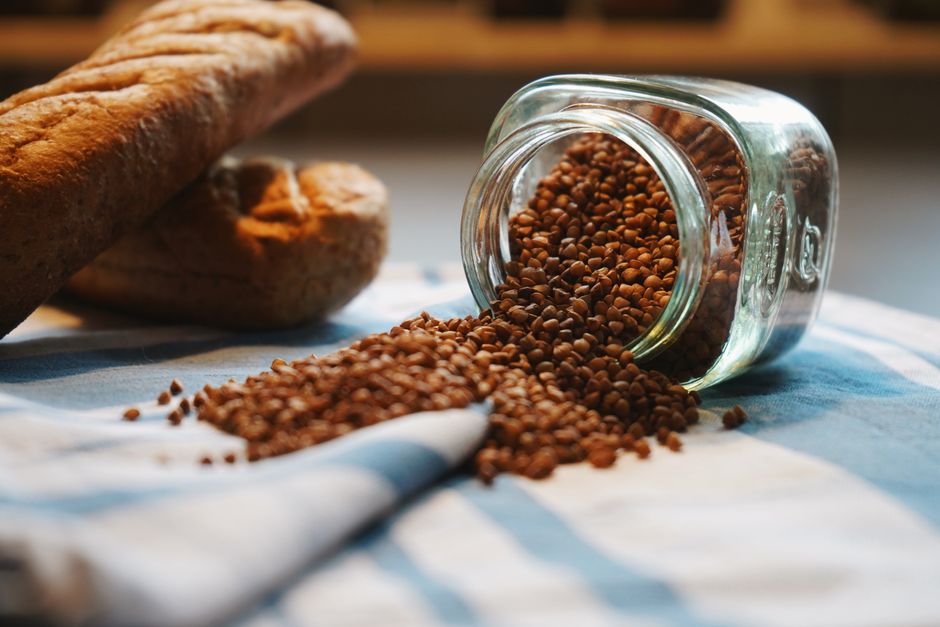
Puffed buckwheat is made by heating buckwheat groats quickly so the moisture inside turns to steam and forces the grain to expand. On a stovetop, you toast dry groats in a heavy pan over medium-high heat with constant motion. In an oven, you spread them on a sheet pan and bake at high heat until they crackle and puff. Both methods work, but they produce a different texture and take different amounts of attention.
Here is what matters most before you start: buckwheat is not wheat. It contains no gluten. It is a seed from a plant related to rhubarb, and its starch and protein behave differently from wheat berries or barley when heated. That difference shapes how it puffs and why some batches puff unevenly.
How To Puff Buckwheat Stovetop And Oven Methods Compared
The stovetop method gives you more control and faster results. The oven method handles larger batches with less hands-on work. Neither one is objectively better — they suit different situations.
Raw buckwheat groats are triangular, pale green or tan seeds. When heated fast, the water inside them converts to steam. That steam has nowhere to go, so it pushes against the starch structure until the groat pops open and turns crisp. This is the same basic principle behind popcorn, though buckwheat does not expand to the same dramatic degree.
The key variable is moisture content. Groats that are too dry will scorch before they puff. Groats that are too wet will steam and soften instead of crisping. Most store-bought raw groats fall somewhere in the middle, which is why a short soak-and-dry step helps consistency.
| Factor | Stovetop | Oven |
|---|---|---|
| Time | 3-6 minutes | 10-15 minutes |
| Batch size | Small (about 1 cup) | Large (2-3 cups) |
| Attention needed | Constant stirring | Shake pan every few minutes |
| Evenness | More even with stirring | Varies by oven hotspots |
| Best for | Quick small batches | Big batches, hands-off |
What Equipment Do You Need for Each Method?
You do not need special equipment. A heavy skillet and a rimmed baking sheet cover both approaches. The stovetop method benefits from a pan that holds heat evenly, because temperature drops when you add cold grain.
For the stovetop, use a wide heavy-bottomed skillet or a Dutch oven. Cast iron works well. A thin nonstick pan heats unevenly and can leave some groats burnt while others stay raw. You also want a lid that fits, because covering the pan briefly traps steam and helps the groats puff.
For the oven, use a rimmed sheet pan. A rimless cookie sheet lets groats slide off when you shake it. Parchment paper reduces sticking but can slow browning slightly. Some cooks prefer no liner so the groats make direct contact with hot metal.
- Heavy skillet or Dutch oven with a lid
- Rimmed baking sheet
- Wooden spoon or spatula for stirring
- Fine-mesh strainer for rinsing and draining
- Clean kitchen towel for drying groats
Step-by-Step: Stovetop Puffing
Start with raw buckwheat groats, not kasha. Kasha is groats that have already been roasted, and it puffs poorly because the roasting step changes its moisture and starch. If your package says “kasha” or “roasted buckwheat,” it will toast but not puff the same way.
Rinse one cup of raw groats in a strainer, then spread them on a towel and pat dry. Let them air-dry for a few minutes. Any surface water will cause them to steam rather than crisp.
Heat your skillet over medium-high heat for two to three minutes. Add the dry groats in a single layer. Stir constantly with a wooden spoon. Within a few minutes you will hear popping and see the groats darken and split.
When most groats have opened and smell nutty, cover the pan and remove it from the heat. Let it sit covered for one to two minutes. The trapped steam finishes the puffing. Uncover, stir, and transfer to a bowl so they stop cooking.
The whole process usually takes three to six minutes. If groats start smoking before they puff, your pan is too hot. If nothing happens after several minutes, your pan is too cool or the groats are too dry.





Step-by-Step: Oven Puffing
The oven method is more forgiving for larger amounts. Preheat to 400°F (about 205°C). Spread two to three cups of rinsed, dried raw groats in a single layer on a rimmed sheet pan. Do not crowd them — overcrowding traps steam and prevents crisping.
Bake for ten to fifteen minutes, shaking the pan every three to four minutes. The groats are done when they look toasted, smell nutty, and most have split open. Ovens vary, so watch closely the first time. A dark pan browns faster than a light one.
Pull the pan when the groats are golden, not dark brown. They continue to crisp as they cool. Spread them on a cool surface right away to stop the cooking.
One note on expectations: buckwheat does not puff up like popcorn or puffed rice cereal. It opens and crisps, but it stays roughly the same size. Anyone expecting a light, airy puff may be disappointed. What you get is a crunchy, toasted, nutty grain.
Why Did My Buckwheat Not Puff?
The most common reason is moisture. Groats that are bone-dry have no steam to expand them, so they just toast and burn. Groats that are soaked and not dried properly steam and stay chewy. The sweet spot is groats that feel dry to the touch but still hold internal moisture.
The second reason is heat. Puffing needs a fast, high burst of heat. A low pan or a cold oven lets moisture escape slowly instead of flashing to steam. That gives you toasted grain, not puffed grain.
The third reason is the grain itself. Roasted groats, sometimes sold as kasha, are already cooked and dried. They will not puff the way raw groats do. Check your package before you start.
If your groats are old and have dried out in the pantry, a quick rinse and a short soak can restore enough moisture. Drain well and dry the surface before heating.
How Should You Store Puffed Buckwheat?
Puffed buckwheat loses its crunch quickly in humid air. Store it in an airtight container at room temperature. It keeps its texture for about one to two weeks. After that it softens but is still fine to eat.
For longer storage, keep it in the freezer in a sealed container. Cold does not make it soggy, and it comes back to room temperature crisp. This is a practical option if you puff large batches.
If it does go soft, you can refresh it. Spread it on a sheet pan and warm it in a low oven for a few minutes. This drives off absorbed moisture and restores some crunch.
What Can You Do With Puffed Buckwheat?
Puffed buckwheat works anywhere you want a nutty crunch. It is naturally gluten-free, which makes it useful for people avoiding wheat, barley, and rye. That said, if you have celiac disease or a gluten sensitivity, check labels — cross-contamination during processing is possible.
Common uses include:
- Sprinkled over yogurt, oatmeal, or smoothie bowls
- Mixed into granola or trail mix
- Used as a crunchy topping on salads or roasted vegetables
- Stirred into soups for texture
- Eaten as a snack on its own
Buckwheat is a source of fiber, plant protein, and minerals including magnesium and manganese, according to USDA nutritional data. It also contains rutin, a flavonoid. These are nutritional facts about the grain, not claims about what eating it will do for your health.
Is Puffed Buckwheat Healthy?
Buckwheat is a whole grain with a reasonable nutritional profile. It provides fiber, plant protein, and several minerals. It is naturally gluten-free. Those are established facts about its composition.
What is not established is that puffed buckwheat delivers specific health outcomes. Puffing is a dry-heat cooking method, and it does not add or remove much nutritionally compared with cooking groats other ways. No large human trials have shown that eating puffed buckwheat produces particular health benefits beyond those of a balanced diet that includes whole grains.
Be cautious with marketing language. Products sold as “superfoods” often carry claims that no study has confirmed. Buckwheat is a good food. It is not a treatment for anything.
One practical point: puffed buckwheat is a dry, crunchy food. Eating a large amount at once can be hard on sensitive teeth or a dry mouth. It is also easy to overeat as a snack because it is light and crisp. Portion awareness matters more than the puffing method.
Frequently Asked Questions
Can I puff buckwheat in a microwave?
No reliable method exists for puffing buckwheat in a microwave. The heat is uneven and does not create the fast, dry burst needed to expand the groats.
Do I need to soak buckwheat before puffing?
A brief rinse and air-dry is usually enough for most raw groats. A short soak can help if your groats are old and dried out, but you must dry the surface completely before heating.
What is the difference between buckwheat groats and kasha?
Groats are the raw, unroasted seed. Kasha is groats that have already been roasted, which changes their moisture and starch so they toast but do not puff the same way.
Is puffed buckwheat gluten-free?
Yes, buckwheat contains no gluten because it is not a wheat grain. Check package labels for cross-contamination warnings if you have celiac disease.
