
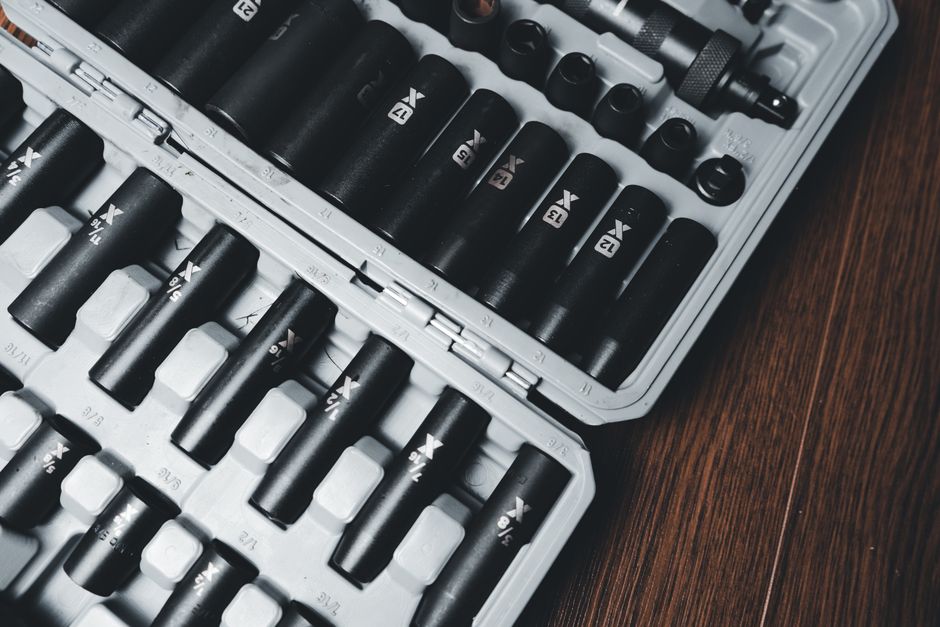
A magnetic socket is a standard socket with a magnet added, so it holds steel fasteners and keeps them from dropping into tight spaces. You can make one at home in four common ways: drop a small magnet inside the socket, press a ring magnet onto the base, wrap a magnetic strip around the outside, or buy a purpose-made magnetic insert. Each method takes a few minutes and uses tools most people already own.
How To Make A Socket Magnetic 4 Easy Methods
The methods below differ mainly in how the magnet attaches and how strong the hold is. None of them change the socket’s fit or its ability to turn a bolt. They only add holding force.
Method 1: Drop a Small Magnet Inside the Socket
This is the simplest approach. You place a small disc or block magnet at the bottom of the socket, inside the well where the bolt head sits.
Choose a magnet thin enough that it does not stop the socket from fully seating on the fastener. A disc magnet a few millimeters thick usually works. Slide it down the bore with a screwdriver tip or a thin rod, then press it flat against the base. The socket’s hex walls will capture a steel bolt head through the magnet’s field, holding it in place while you reach into a gap.
The trade-off is that the magnet sits between the fastener and the socket base. On a shallow bolt head, that small gap can reduce how much of the head the socket grips. For deep sockets with plenty of room, this rarely matters. For shallow sockets, it can.
Retrieval is the other issue. Once a magnet is inside a deep socket, getting it back out can be awkward. A magnet with a small hole, or one glued to a short dowel, makes removal easier.
Method 2: Press a Ring Magnet Onto the Base
A ring magnet sits around the socket’s square drive opening rather than inside the bore. The drive end of the socket is where the ratchet or extension engages, and it is usually flat and accessible.
Ring magnets sized to the common drive sizes — quarter-inch, three-eighths, and half-inch — are widely sold. You press one onto the base so the square hole lines up with the magnet’s center hole. The magnet’s field reaches up through the socket wall and holds a steel fastener at the working end.
This method keeps the socket bore completely clear. The fastener seats fully, and grip is unaffected. That is the main advantage over dropping a magnet inside.
Holding force depends on the magnet’s strength and the socket’s material. Standard chrome vanadium and chrome molybdenum sockets are steel, so the field passes through them. Impact sockets are also steel. A thicker socket wall weakens the field at the far end, so a strong ring magnet helps.
One caution: ring magnets can interfere with the socket sitting flush on a ratchet if the magnet is too thick. Check that the drive still engages fully before applying load.
Method 3: Wrap a Magnetic Strip Around the Outside
Flexible magnetic strip is sold in rolls and cuts with scissors. You wrap a length around the socket’s outer wall, near the working end, and the strip’s field reaches inward to hold the fastener.
This is the least precise method because the magnet is on the outside of the wall, farther from the fastener. Holding force is usually weaker than a ring magnet at the base or a magnet inside the bore. It works best on thin-walled sockets and light fasteners.
The strip also adds bulk to the socket’s outside diameter. In a tight recess, that extra width can stop the socket from reaching the bolt. Measure before you commit.
Adhesive-backed strip stays put better than plain strip, but heat and oil in an engine bay can loosen the glue over time. A wrap of tape over the strip helps it hold.
Method 4: Use a Purpose-Made Magnetic Insert
Several manufacturers sell magnetic inserts designed to drop into a socket or clip onto a socket’s base. These are not homemade, but they are the most reliable option and worth mentioning because they solve the problems the DIY methods create.
A good insert holds the fastener without blocking the bore, does not add outside bulk, and is easy to remove. The trade-off is cost and the need to match the insert to your socket’s drive size.
If you make sockets magnetic often, buying a set of inserts is usually faster and more consistent than building them one at a time.
Which Method Holds Best?
Holding force depends on magnet strength, the distance between magnet and fastener, and the socket’s wall thickness. A ring magnet at the base and a magnet inside the bore both put the magnet close to the fastener. Outside strip puts it farther away, so it holds less.
For heavy fasteners or overhead work, none of these homemade methods match a purpose-built magnetic socket. If the fastener is large or the access is awkward, that difference matters.
What Kind of Magnet Should You Use?
Neodymium magnets are the strongest type commonly available and are the usual choice for this job. They are also brittle and can chip if dropped, and they lose strength above a certain temperature.
That temperature limit is the key practical concern. Neodymium magnets lose magnetic strength as they heat up, and the loss becomes permanent above a threshold that varies by grade. Standard grades are rated for roughly 80 degrees Celsius, or about 176 degrees Fahrenheit. Higher-grade magnets tolerate more heat.
Engine bays, exhaust work, and hot machinery can exceed those temperatures. A magnet that worked cold may hold poorly after it has been heated. Ceramic magnets tolerate higher temperatures but are weaker. For hot work, a purpose-built magnetic tool is usually the better choice.





Does Magnetizing a Socket Cause Problems?
A magnetized socket can attract steel chips and filings, which then cling to the socket and the fastener. In clean work this is minor. Around a grinder, a drill, or a machine shop, it can be a real annoyance and can contaminate a joint or a bearing surface.
Magnetism does not damage a steel socket. It also does not affect the socket’s fit or its torque capacity. The socket still turns the fastener the same way.
One thing to keep in mind: a magnetized tool can affect sensitive electronics and can erase magnetic stripes on cards. Keep magnetic sockets away from those items.
Safety and Practical Limits
None of these methods change how much torque a socket can handle. The socket’s strength comes from its steel and its wall thickness, not from the magnet.
What the magnet does change is how the socket behaves when you are not holding the fastener. It keeps the bolt from falling. That is a convenience, not a structural change.
Do not rely on a magnetic socket to hold a fastener in a position where a dropped bolt would be dangerous. The hold can fail if the magnet is weak, if the socket has heated up, or if the fastener is not steel. Stainless steel and non-ferrous fasteners such as aluminum or brass will not be held at all, because magnets only attract ferromagnetic metals.
That last point catches people out. Many stainless steel grades are only weakly magnetic or not magnetic at all. If your fastener is stainless, a magnetic socket may do nothing.
Why a Magnet Works on a Socket at All
Steel is ferromagnetic, which means its internal structure aligns with a magnetic field and is attracted to it. When a magnet sits near a steel socket, the socket itself becomes slightly magnetized and its field reaches the fastener.
This is why the magnet does not need to touch the bolt. Placing it anywhere on the socket creates a field that extends to the working end. The closer the magnet is to the fastener, and the stronger the magnet, the better the hold.
It also explains why socket wall thickness matters. More steel between the magnet and the fastener means a weaker field at the far end. Thin walls and strong magnets give the best result.
Frequently Asked Questions
Can I make any socket magnetic?
Yes, any steel socket can be made magnetic by adding a magnet. Stainless steel and non-ferrous sockets will not hold a magnetic field well, so the method may not work on those.
What is the best magnet for a socket?
A neodymium ring magnet pressed onto the socket’s base is usually the best balance of hold and clearance. It keeps the bore clear and sits close to the fastener.
Will a magnetized socket lose its magnetism?
Neodymium magnets lose strength permanently if heated above their rated temperature, which is roughly 80 degrees Celsius for standard grades. Below that limit, the magnet keeps its strength.
Does a magnetic socket affect torque?
No. The magnet does not change the socket’s strength or its torque capacity. It only adds holding force for the fastener.
