
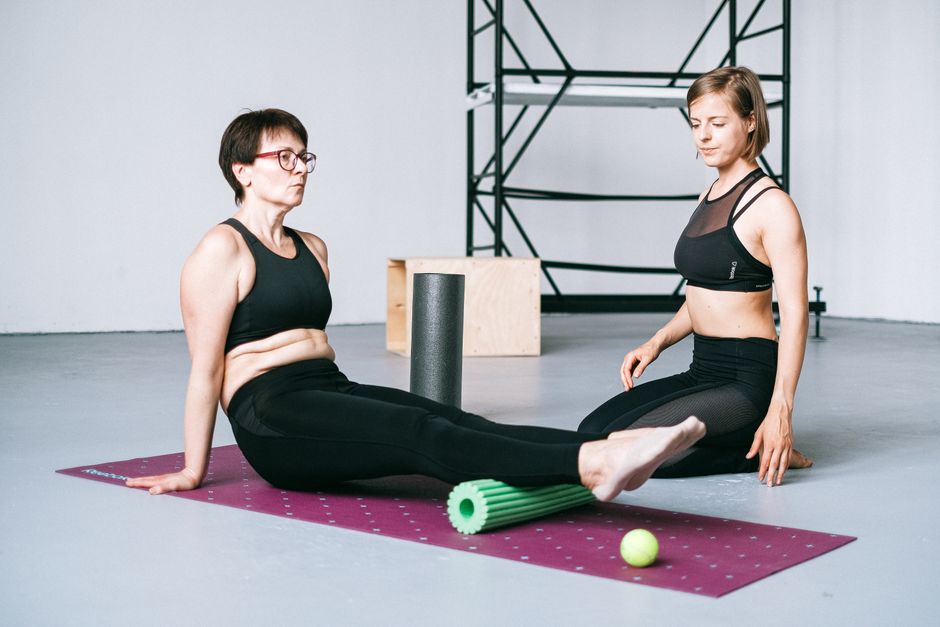
Foam rolling is a self-massage technique that uses a dense foam cylinder and your own body weight to apply pressure to muscles and surrounding connective tissue. To do it properly, move slowly across each muscle group, pause on tender spots for 20 to 30 seconds, and keep the roll on muscle, not on joints or the spine. Most people spend 1 to 2 minutes per muscle group and roll before or after activity depending on their goal.
That is the short version. The longer version involves knowing which muscles respond well to rolling, which ones you should avoid, and what the research actually says about benefits like soreness relief and flexibility.
What Does Foam Rolling Actually Do to Your Muscles?
Foam rolling applies mechanical pressure to muscle tissue and the fascia that surrounds it. That pressure creates a temporary change in how the tissue feels and moves, but it does not physically break up scar tissue or “release” knots the way many product descriptions claim.
The more accurate explanation involves the nervous system. Pressure from the foam roller stimulates sensory receptors in the muscle and skin. That input can temporarily reduce the sensation of tightness and increase how far a joint moves in the short term. Some research suggests this is largely a neurological effect rather than a structural change to the muscle itself.
What foam rolling does not do is lengthen a muscle permanently, correct posture on its own, or replace strength training. Those claims appear often in fitness marketing. No study has confirmed them.
One clarification worth making: the soreness you feel the day after a hard workout is called delayed onset muscle soreness, or DOMS. It comes from microscopic damage to muscle fibers during unfamiliar or intense exercise. Foam rolling may reduce how sore you feel, but it does not speed up the underlying repair process.
How Do You Foam Roll Each Major Muscle Group?
Different muscle groups need different body positions and different amounts of pressure. The general rule is the same everywhere: move slowly, breathe, and stop if you feel sharp pain rather than a dull, spread-out pressure.
Calves
Sit on the floor with the roller under one calf. Cross the other leg on top to add weight. Lift your hips and roll from just above the ankle to just below the knee. Rotate your leg slightly inward and outward to reach the sides of the calf. Spend 30 to 60 seconds per leg.
Hamstrings
Sit with the roller under the back of one thigh. Place your hands behind you for support. Roll from just above the knee to just below the buttock. Avoid rolling directly over the back of the knee joint.
Quadriceps
Lie face down with the roller under the front of one thigh. Support your weight on your forearms. Roll from just above the knee to the top of the thigh. This area is often tender, so start with less body weight and increase gradually.
Glutes
Sit on the roller and lean slightly to one side so the roller sits under one buttock. Cross that ankle over the opposite knee. Roll in small circles or short back-and-forth movements. Glute rolling often reaches the piriformis area, which sits deep in the buttock.
IT Band
Lie on your side with the roller under the outer thigh. The iliotibial band is a thick band of connective tissue, not a muscle. It does not stretch or release the way muscle does. Rolling here is common, but the evidence that it changes IT band tightness is limited. Many clinicians suggest focusing on the glutes and hip muscles instead, since those are what often drive the sensation of a tight IT band.
Upper Back
Lie on your back with the roller across your upper back, knees bent. Support your head with your hands. Roll from the base of the neck to the mid-back. Never roll directly on the lower back or the spine itself.
Lats
Lie on your side with the roller under your armpit area. Extend the bottom arm overhead. Roll from the armpit down the side of your ribcage. Keep the movement slow and controlled.
Chest and Shoulders
Lie face down with the roller angled under one side of your chest. Roll in small movements across the pectoral area. For shoulders, you can lie on your side and place the roller under the back of the shoulder, avoiding the bony point of the joint.
How Long Should You Roll Each Muscle Group?
There is no single official guideline for foam rolling duration. Most published studies use protocols in the range of 1 to 2 minutes per muscle group, often with slow passes rather than rapid back-and-forth movement.
Spending 20 to 30 seconds on a specific tender spot is a common approach. Going longer than a few minutes on one area does not appear to add benefit and may increase irritation.
Frequency is also flexible. Some people roll daily. Others roll only before or after training. The evidence does not clearly favor one schedule over another.





Should You Foam Roll Before or After a Workout?
Both timings have a purpose, and they are not interchangeable.
- Before activity: Short rolling may temporarily increase range of motion without reducing muscle force, which makes it a reasonable part of a warm-up.
- After activity: Rolling after exercise is often used to reduce soreness. The evidence for this is mixed, with some studies showing small reductions in soreness and others showing little difference.
Static stretching before certain activities can temporarily reduce power output. Foam rolling does not appear to have the same effect, though the research on this is not entirely settled. That is one reason it is often preferred as a pre-activity option.
What Should You Avoid When Foam Rolling?
Certain areas should not be rolled, and certain people should check with a clinician first.
- Do not roll directly on the lower back or spine.
- Do not roll over joints, including the knee, elbow, and ankle.
- Do not roll over an area with an acute injury, swelling, or bruising.
- Do not roll over a suspected blood clot, varicose veins, or a healing fracture.
- Avoid rolling on numb or tingling areas, which can signal a nerve issue.
People with osteoporosis, bleeding disorders, or those taking blood-thinning medication should talk to a doctor before using a foam roller. The same applies during pregnancy, where no clinical guidelines currently exist for foam rolling technique or safety.
Sharp pain, burning, or numbness during rolling means stop. A dull, broad pressure that eases as you hold is normal. Nerve pain is not.
Does Foam Rolling Actually Work?
The strongest evidence supports short-term increases in flexibility and range of motion. Research consistently shows that a single session can improve how far a joint moves, at least temporarily.
The evidence for soreness reduction is weaker. Some studies suggest a modest benefit after exercise. Others find no meaningful difference compared with rest or light activity. Results vary by study design, muscle group, and how soreness was measured.
Claims about foam rolling improving recovery time, athletic performance, or long-term muscle health are not well supported. No large human trials have confirmed these outcomes.
What foam rolling reliably does is feel good for many people and provide a low-cost way to add movement and body awareness to a routine. Those are reasonable reasons to do it. They are just not the same as the claims often printed on the roller itself.
What Type of Foam Roller Should You Use?
Foam rollers come in different densities and textures. Smooth, lower-density rollers are generally better for beginners and for sensitive areas. Textured or high-density rollers apply more pressure and are often used by people who have been rolling for a while.
| Type | Pressure Level | Best For |
|---|---|---|
| Smooth, soft density | Low | Beginners, sensitive muscles |
| Smooth, firm density | Medium | General use, larger muscle groups |
| Textured or grid | Higher | Experienced users, targeted areas |
| Small or handheld | Variable | Arms, feet, hard-to-reach spots |
There is no evidence that one texture or density produces better outcomes than another. The best roller is the one you will actually use consistently without causing pain.
Frequently Asked Questions
How long should I foam roll each muscle group?
Most people spend 1 to 2 minutes per muscle group, pausing 20 to 30 seconds on tender spots. There is no official guideline, so this is based on common study protocols rather than a fixed standard.
Is it better to foam roll before or after a workout?
Both work for different purposes. Rolling before activity may improve short-term range of motion, while rolling after is often used for soreness, though the evidence for soreness relief is mixed.
Can foam rolling hurt you?
It can cause bruising or irritation if you roll too hard or on the wrong areas. Avoid the spine, joints, and any injured, swollen, or numb areas.
Does foam rolling actually break up knots?
No. Foam rolling does not physically break up knots or scar tissue. Any relief you feel is likely from temporary nervous system effects rather than a structural change in the muscle.
