
Muscle shock is not a formal medical diagnosis. It is a term used in fitness and sports settings to describe the soreness, weakness, and stiffness that can follow unfamiliar or unusually intense exercise. The closest clinical match is exercise-induced muscle damage, often felt as delayed onset muscle soreness (DOMS). Recovery usually happens on its own within a few days, and no treatment has been shown to speed the underlying repair.
What Is Muscle Shock?
When you ask what muscle shock is, the honest answer is that it is a lay term, not a clinical one. You will not find it in medical textbooks or diagnostic manuals. What people usually mean is the reaction that follows exercise the muscle is not used to.
The scientific name for that reaction is exercise-induced muscle damage. It shows up most often after eccentric exercise — movements where the muscle lengthens while producing force. Lowering a dumbbell slowly, running downhill, or doing squats for the first time are common triggers.
At the microscopic level, this type of exercise can disrupt the structure of muscle fibers. Small tears in the muscle cell membrane and the surrounding connective tissue set off a repair process. That process involves inflammation and is what produces the soreness you feel.
One clarification that matters: muscle shock is not the same as a muscle cramp, a strain, or rhabdomyolysis. A cramp is a sudden involuntary contraction. A strain is an acute tear from overload. Rhabdomyolysis is a rare and serious breakdown of muscle tissue that can cause kidney damage. If you have severe swelling, dark urine, or pain that keeps getting worse rather than better, that is a medical situation, not ordinary soreness.
What Does Delayed Onset Muscle Soreness Feel Like?
DOMS typically appears 12 to 24 hours after exercise and peaks somewhere between 24 and 72 hours. It usually fades within about three to five days. The pattern is fairly consistent across most people, though the intensity varies widely.
The feeling is a dull, aching soreness in the muscles you worked. It often gets worse when you move, especially when you first stand up or reach for something. Many people also notice stiffness and a temporary drop in strength. Touching or pressing the area can feel tender.
A key detail: soreness and damage are not the same thing. You can have significant muscle damage with little soreness, and you can be very sore after a workout that caused minimal damage. This is why soreness is a poor guide for how hard you should train.
DOMS is different from the burn you feel during exercise. That burning sensation comes from metabolic byproducts building up in the muscle and clears within minutes of stopping. DOMS is a repair response that takes days, not minutes.
What Causes Muscle Shock After a Workout?
The main driver is unfamiliar mechanical stress. When a muscle performs a movement it has not adapted to, the load on individual fibers is higher than they are prepared for. Eccentric contractions are especially good at creating this stress because the muscle can generate more force while lengthening than while shortening.
Several factors raise the odds of experiencing it:
- Starting a new exercise program or returning after a long break
- Increasing intensity, duration, or volume faster than your body has adapted to
- Doing a lot of eccentric work, such as downhill running or slow lowering phases
- Unaccustomed movements your muscles have not practiced
There is a protective effect worth knowing about. After one bout of unfamiliar exercise, the same workout done again within a few weeks causes much less soreness and damage. Researchers call this the repeated bout effect. It is one reason the first week of a new program is usually the hardest.
Training experience, genetics, and current fitness all influence how much soreness you get. Two people can do the same workout and have very different experiences.





What Are the Types of Muscle Shock?
Because muscle shock is not a formal category, there are no official types. In practice, people use the term in a few different ways, and it helps to separate them.
| Term used | What it usually means | Typical timeline |
|---|---|---|
| Delayed onset muscle soreness (DOMS) | Soreness and stiffness after unfamiliar exercise | Onset 12-24 hours, peaks 24-72 hours, fades in 3-5 days |
| Acute muscle strain | A tear from a single overload event | Immediate pain, may need medical evaluation |
| Muscle cramp | Sudden involuntary contraction | Seconds to minutes |
| Rhabdomyolysis | Severe muscle breakdown, a medical emergency | Hours to days, requires urgent care |
Only the first row is what most people mean by muscle shock. The others are distinct conditions with different causes and different levels of urgency. Mixing them up can lead people to ignore a problem that needs medical attention.
What Actually Helps Muscle Shock Recovery?
No treatment has been shown to reliably speed up the underlying repair of damaged muscle. What most approaches do is manage symptoms while the body heals on its own. That distinction matters, because it sets realistic expectations.
Light activity is generally more helpful than complete rest. Gentle movement increases blood flow and can reduce stiffness. Walking, easy cycling, or low-intensity versions of your usual exercises are common choices. The goal is not to train hard but to keep moving comfortably.
For soreness, some people find relief from:
- Gentle stretching or foam rolling, which may ease the feeling of tightness
- Warm showers or baths for temporary comfort
- Over-the-counter pain relievers, used as directed on the label
A note on pain relievers: they can reduce how sore you feel, but there is no strong evidence that they help the muscle repair faster. Some research suggests certain anti-inflammatory drugs may even blunt some of the training adaptations if used routinely around workouts. Occasional use for comfort is a different question from regular use for performance.
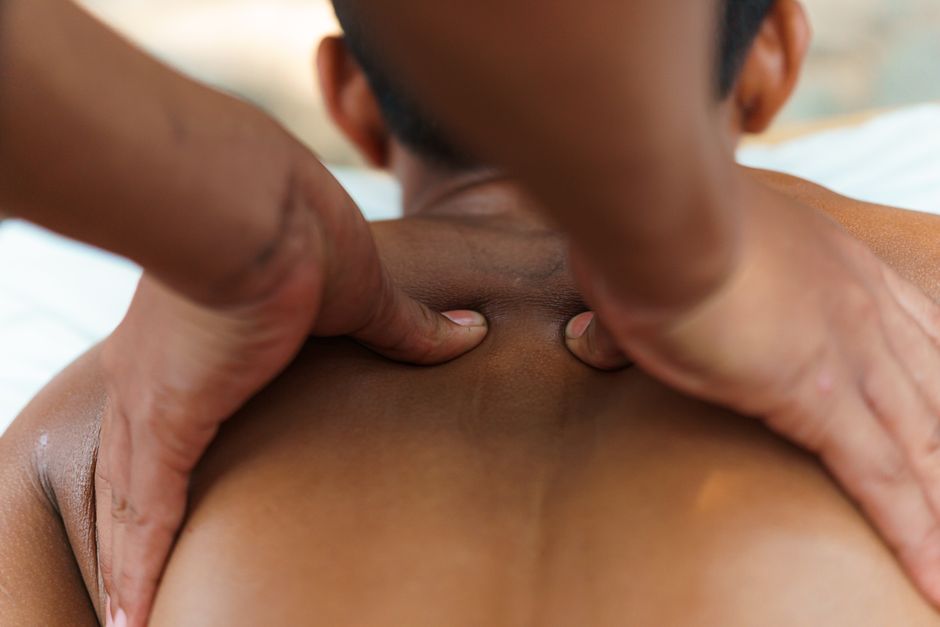
Massage, cold water immersion, and compression garments are widely used. The evidence for each is mixed, and where benefits appear, they tend to be modest and short-lived. That does not mean they are useless for comfort. It means they are not proven recovery tools in the way marketing often implies.
How Long Does Muscle Shock Last?
For most people, DOMS resolves within three to five days. The soreness peaks around 24 to 72 hours after the workout, then steadily improves. By the time it is gone, the muscle has largely completed its initial repair.
Strength can take a bit longer to fully return than the soreness takes to fade. Some studies show a temporary drop in force production that lasts several days after a hard bout of eccentric exercise. This is a normal part of the process.
What you should not do is push hard through significant soreness. Training a very sore muscle at high intensity can add more damage before the first round is repaired. Lighter work, mobility, and patience are the usual approach.
If soreness lasts beyond about a week, keeps getting worse, or comes with swelling, weakness that does not improve, or dark urine, get medical care. Those signs point away from ordinary DOMS.
Can You Prevent Muscle Shock?
You cannot fully prevent it, but you can reduce how bad it gets. The most reliable strategy is gradual progression. Increase volume, intensity, or new movements slowly rather than all at once.
Warming up before exercise and easing into new activities helps. If you are starting a program, begin with lighter loads and fewer sets, then build over several sessions. The repeated bout effect means the same workout will bother you far less the second time.
Things that are commonly recommended but have weaker evidence include stretching before exercise to prevent soreness, and specific supplements marketed for recovery. Stretching before a workout has not been shown to prevent DOMS. Most recovery supplements have limited or no strong human trial support for reducing soreness or speeding repair.
The honest position is that adaptation, not avoidance, is what protects you. Muscles get more resilient to the specific stress you repeat. That is why consistency matters more than any recovery product.
Frequently Asked Questions
Is muscle shock the same as delayed onset muscle soreness?
Yes, in most cases muscle shock is just an informal name for delayed onset muscle soreness, or DOMS. It is not a recognized medical diagnosis, so the term is used loosely.
How long does muscle shock usually last?
Soreness typically starts 12 to 24 hours after exercise, peaks between 24 and 72 hours, and fades within three to five days. If it lasts longer than a week or keeps worsening, see a doctor.
Does stretching or massage help muscle shock recovery?
Stretching and massage may ease the feeling of tightness, but there is no strong evidence they speed up muscle repair. They are best thought of as comfort measures rather than proven recovery tools.
When should I worry about muscle soreness after a workout?
Get medical care if you have severe swelling, dark or cola-colored urine, extreme weakness, or pain that keeps getting worse instead of better. These can signal a serious condition such as rhabdomyolysis rather than ordinary soreness.
