
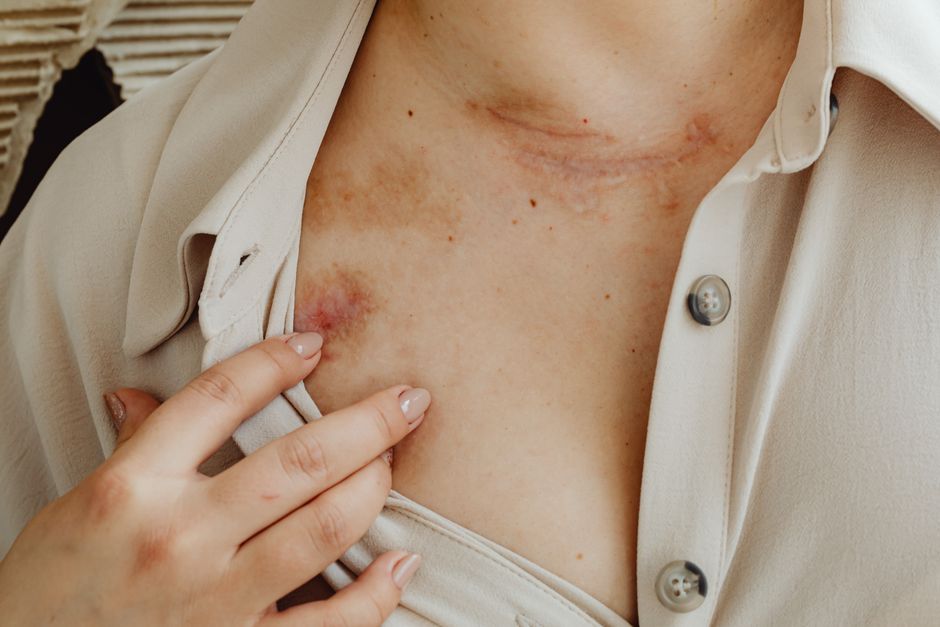
How you care for a wound in the first two weeks shapes how it heals and how it looks a year later. Clean the wound gently, keep it moist with a thin layer of petroleum jelly, cover it with a bandage, and leave scabs alone. Protect the area from sun and avoid picking at it while it heals. These steps won’t erase every scar, but they give your skin the best chance to repair itself with the least visible mark.
How Does a Wound Turn Into a Scar?
When skin is cut or damaged, the body repairs it in phases. First comes inflammation, when blood vessels narrow and immune cells move in to clear debris and fight infection. Then new tissue forms as collagen — a structural protein — gets laid down to close the gap. Finally, the tissue remodels, a process that continues for months as collagen fibers reorganize.
Scars form because this repair process does not rebuild skin exactly as it was. Collagen in normal skin is arranged in a woven, flexible pattern. Collagen in a scar is laid down in a denser, straighter line. That difference in structure is why scars look and feel different from the surrounding skin.
The size and appearance of a scar depend on several factors you partly control and partly don’t. Wound depth matters most. A scrape that stays in the top layer of skin usually heals without a lasting mark. A cut that reaches the deeper layer called the dermis almost always leaves some trace. Infection, repeated trauma, and tension across the wound all make scarring worse. So does sun exposure during healing.
One detail worth knowing: scars keep changing for a long time. A scar that looks red and raised at three months may flatten and fade considerably over the following year. This is normal, and it means early appearance is not the final result.
What Is the Best Way To Clean a Wound?
Clean the wound with cool running water. That is the main recommendation from wound care specialists, and plain water does the job for most minor cuts and scrapes.
Wash around the wound with mild soap, but try to keep soap out of the wound itself, since it can irritate tissue. If there is visible dirt or grit in the wound, gentle irrigation under running water helps flush it out. For deeper wounds, a healthcare provider may use sterile saline.
Skip hydrogen peroxide, rubbing alcohol, and iodine on open wounds. These were once standard, but they damage healthy tissue and can slow healing rather than help it. That is a common misconception worth correcting — a stinging sensation does not mean a product is working.
After cleaning, pat the area dry with a clean cloth or let it air dry. Then move on to dressing it.
Should You Keep a Wound Covered or Let It Breathe?
Keep it covered. The old advice to “let a wound air out” and form a scab is outdated. Research going back decades has shown that wounds kept in a moist environment heal faster and with less scarring than wounds left to dry out.
A moist wound surface allows new skin cells to migrate across the gap more easily. When a wound dries, it forms a hard scab, and cells have to travel underneath that crust. Moist healing also reduces inflammation, which is one of the drivers of scar tissue.
For most minor wounds, a thin layer of petroleum jelly followed by a bandage or gauze is enough. Change the dressing at least once a day, and more often if it gets wet or dirty. When the wound is clean and no longer oozing, some clinicians suggest leaving the bandage off during the day to let it get air, but keeping it covered at night. The evidence on that specific practice is not strong, so treat it as a reasonable option rather than a rule.
What matters more is consistency. A wound that is repeatedly uncovered, scratched, or bumped will scar more than one that stays protected.





How Do You Prevent Infection, Which Worsens Scarring?
Infection is one of the biggest controllable risk factors for a bad scar. When bacteria multiply in a wound, the immune response ramps up, inflammation lasts longer, and more collagen gets deposited. The result is often a thicker, more noticeable scar.
Watch for signs that a wound is infected:
- Increasing redness or warmth around the wound
- Swelling that gets worse instead of better
- Pus or cloudy drainage
- Pain that increases after the first day or two
- A fever
If you notice these, contact a healthcare provider. Some wounds need antibiotics, and delay makes scarring worse.
To lower infection risk in the first place, wash your hands before touching the wound, keep the dressing clean and dry, and avoid touching the wound with unwashed fingers. If the wound came from an animal bite, a dirty object, or a puncture through a shoe, seek medical care — those wounds carry higher infection risk and may need specific treatment.
What Slows Healing and Makes Scars Worse?
Several habits and conditions work against you during healing.
Picking at scabs is the most common self-inflicted problem. A scab is a natural bandage, and pulling it off reopens the wound and restarts the healing clock. Repeated picking can turn a minor cut into a permanent mark.
Sun exposure during the first year of healing is a major cause of dark, permanent scars. Ultraviolet light triggers extra pigment production in healing skin, which can leave a brown or pink mark that lasts far longer than the original wound. Cover the area with clothing or sunscreen with an SPF of 30 or higher once the wound has closed.
Tension on the wound matters too. Wounds over joints or across areas of tight skin tend to scar more because movement pulls the edges apart. If a wound is in a spot like that, a healthcare provider may recommend ways to reduce tension, such as adhesive strips or, for larger wounds, stitches.
Other factors that slow healing include smoking, poorly controlled diabetes, and poor nutrition. These affect blood flow and tissue repair throughout the body, not just at one wound site.
Do Scar Treatments Actually Work?
This is where honest expectations matter. No product erases a scar. Some can make a scar less noticeable, but results vary and the evidence is mixed for many over-the-counter options.
Silicone sheets and gels have the most consistent support. Some studies suggest they can help flatten and soften raised scars, particularly when used early and consistently. They are widely recommended by dermatologists, though results are not guaranteed.
Pressure therapy is used for certain raised scars, especially after burns. It requires consistent, prolonged use and is usually guided by a specialist.
Massage of a healed scar is often recommended by clinicians to help soften tissue and reduce tightness. The evidence for scar appearance specifically is limited, but it is low-risk and commonly used.
Onion extract gels, vitamin E, and various creams are heavily marketed. The evidence for these is weak or mixed. Vitamin E in particular has been studied and has not shown reliable benefit — and in some people it causes skin irritation. No study has confirmed that these products prevent scarring.
For scars that are raised, thick, or spreading beyond the original wound, a dermatologist can discuss options like corticosteroid injections, laser therapy, or other procedures. These are medical treatments with real evidence behind them for specific scar types, but they are not do-it-yourself solutions.
How To Prevent Scarring With Proper Wound Care
The core steps are simple and backed by how skin actually heals. Clean the wound with water, keep it moist and covered, change dressings regularly, and protect it from sun and picking. Watch for infection and get care early if signs appear.
Genetics, wound depth, and the location of the injury all play a role you cannot fully control. Two people with identical cuts can end up with very different scars. What you can control is the environment you give the wound while it heals — and that is where consistent care makes the difference.
Give it time, too. Scars mature over many months. A scar that bothers you at two months may look very different at twelve.
Frequently Asked Questions
How long does it take for a wound to heal without scarring?
Most minor wounds close within one to two weeks, but the tissue underneath keeps remodeling for months. Some degree of scarring is common for any wound that reaches the deeper layer of skin.
Does keeping a wound covered make it heal faster?
Yes, research shows that wounds kept in a moist, covered environment heal faster and with less scarring than wounds left to dry out. Change the dressing daily or whenever it becomes wet or dirty.
Is vitamin E good for preventing scars?
No strong evidence supports vitamin E for scar prevention, and it causes skin irritation in some people. Silicone sheets and gels have more consistent support, though results still vary.
When should I see a doctor about a wound?
Seek care if the wound is deep, gaping, bleeding heavily, or shows signs of infection like spreading redness, pus, or fever. Early treatment lowers the risk of a worse scar.
