
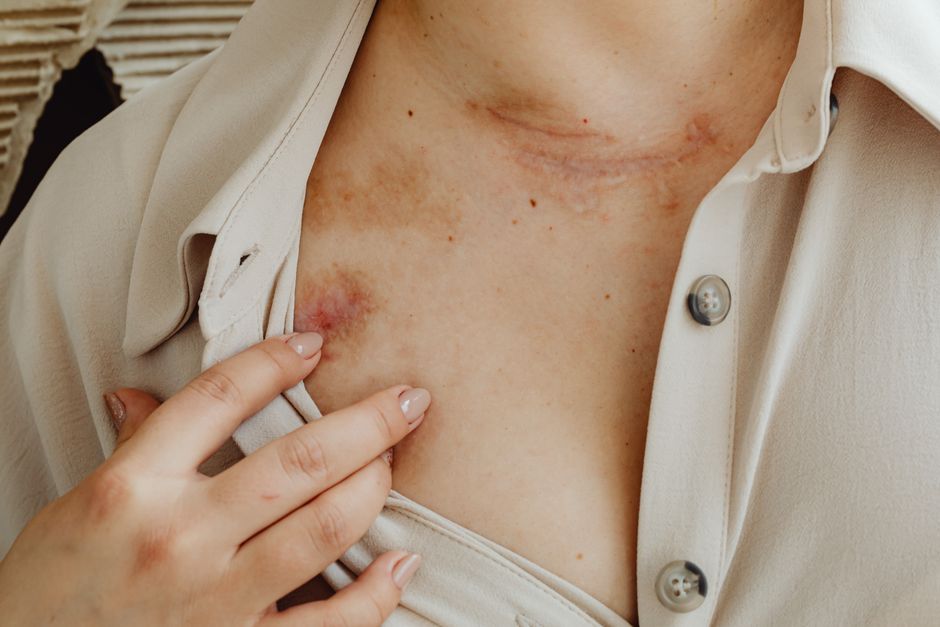
You popped it. Now you’re staring at a red mark in the mirror and wondering if you just made things worse. Here’s the honest answer: the single most effective thing you can do to prevent a scar is to stop touching the area, keep it clean, and protect it from sun and picking while it heals. Most popped pimples do not become true scars — they leave temporary marks that fade on their own over weeks to months. The damage that becomes permanent usually comes from continued squeezing, scabbing, and sun exposure during healing, not from the single pop itself.
Understanding what’s actually happening under the skin makes the advice easier to follow — and easier to tell when a mark is healing normally versus when it’s becoming something more permanent.
What Actually Happens When You Pop a Pimple?
A pimple forms when a hair follicle gets blocked by oil and dead skin cells, and bacteria that normally live on the skin multiply inside it. Your immune system responds, which creates the redness, swelling, and pus you see.
When you squeeze, you’re applying pressure to a closed pocket. That pressure doesn’t just push contents up and out. It can push bacteria, oil, and inflammatory material sideways into the surrounding tissue and deeper into the skin. This is why a pimple that was small and contained can become larger, more painful, and more inflamed after you pop it.
The deeper and longer the inflammation lasts, the more likely it is to damage the structures that give skin its smooth texture — collagen and elastin fibers. When those fibers are destroyed and the body repairs the area, it lays down new tissue. Sometimes that new tissue looks normal. Sometimes it doesn’t.
What Is the Difference Between a Scar and a Pimple Mark?
Most people who think they have scars actually have marks. This distinction matters because marks fade and scars generally do not.
There are three common marks that are not true scars:
- Post-inflammatory erythema (PIE): flat red or pink spots left behind after inflammation. Most common in lighter skin tones. These are dilated or damaged surface blood vessels, not lost tissue.
- Post-inflammatory hyperpigmentation (PIH): flat brown or dark spots. More common in medium and darker skin tones. These come from excess melanin produced during inflammation.
- Post-inflammatory hypopigmentation: flat lighter patches where pigment was lost.
True acne scars are textural. The skin surface is no longer flat. They fall into two main groups: atrophic scars (indented — including icepick, boxcar, and rolling types) and hypertrophic or keloid scars (raised and firm). Atrophic scars happen when too little collagen is laid down during healing. Raised scars happen when too much is.
If you can run your finger over the spot and it feels flat, you’re most likely dealing with a mark. If there’s a dent or a raised bump that persists, that’s more consistent with a scar.
How To Prevent Scarring After Popping A Pimple
The window right after popping is when you have the most control. What you do in the first days and weeks matters more than anything you do later.
Stop squeezing the same spot. Repeated trauma to the same area is the biggest driver of scar formation. Each squeeze extends the inflammation and increases the chance that collagen structures are permanently damaged.
Keep it clean and covered. Wash gently with a mild cleanser and water. Avoid scrubbing. If the area is open, a small hydrocolloid dressing can help keep it moist and protected from bacteria and from your own fingers. A moist wound environment generally heals better than a dry, scabbed one.
Do not pick the scab. A scab is a natural bandage. Picking it off reopens the wound and restarts the healing clock. Repeated scab removal is a common reason a small pimple leaves a lasting indentation.
Protect it from the sun. Ultraviolet light darkens healing skin and can make post-inflammatory marks much more persistent. This is one of the most underrated steps. Sun exposure doesn’t just darken a mark — it can prolong how long it takes to fade. Use a broad-spectrum sunscreen on the area. The American Academy of Dermatology recommends broad-spectrum sunscreen with SPF 30 or higher for general skin protection.
Skip harsh home treatments. Lemon juice, baking soda, toothpaste, and undiluted essential oils are commonly recommended online but can irritate skin and worsen inflammation. No clinical evidence supports them for scar prevention, and some can cause chemical burns or additional pigmentation problems.
Be patient with fading. Post-inflammatory marks typically fade over several weeks to several months. Darker skin tones often take longer because pigment changes are slower to resolve. This timeline varies widely between people and is not a sign that something is wrong.





Which Ingredients Have Evidence for Fading Marks?
No topical product has been shown to prevent a true scar from forming after a popped pimple. What some ingredients can do is help fade the flat marks left behind. That’s a different goal.
Retinoids are among the better-studied options for post-inflammatory hyperpigmentation and for overall acne management. They speed up cell turnover, which can help pigmented marks fade. They can also cause irritation and sun sensitivity, so they require consistent sun protection.
Azelaic acid has evidence for treating both acne and post-inflammatory hyperpigmentation. It is often better tolerated than retinoids.
Vitamin C is widely used for brightening and has some evidence for pigmentation, though results vary and formulations differ significantly in stability and absorption.
Niacinamide has some evidence for reducing pigmentation and is generally well tolerated.
Silicone gels and sheets have the most consistent evidence for improving the appearance of existing raised scars and keloids, particularly when used early on mature wounds. Their role specifically after a popped pimple is less studied.
If you’re considering any of these, a dermatologist can help match the ingredient to your skin type, since irritation from a strong product can itself cause more pigmentation — the opposite of what you want.
When Should You See a Dermatologist?
Some situations call for professional care rather than at-home management.
- Deep, painful nodules or cysts that don’t come to a head — these are more likely to scar and often need prescription treatment
- Scars that are already forming or have been present for months without improvement
- Raised, firm, growing scars, which may be keloids and behave differently from other scars
- Severe or persistent acne, which increases the total number of opportunities for scarring
- Signs of infection: spreading redness, warmth, increasing pain, or pus that worsens rather than improves
Dermatologists have treatments for established scars that aren’t available over the counter, including corticosteroid injections for raised scars, laser therapy, microneedling, chemical peels, and surgical techniques for certain scar types. Results vary by scar type and individual, and most require multiple sessions. No single treatment works for every scar.
The most reliable way to reduce scarring overall is to treat the acne itself. Fewer inflamed pimples means fewer chances to create one.
Does Everyone Who Pops a Pimple Get a Scar?
No. Many people pop pimples and heal without any permanent mark. Whether you scar depends on several factors you don’t fully control.
Genetics play a large role. Some people are simply more prone to atrophic or keloid scarring. Skin tone matters too — darker skin tones are more likely to develop post-inflammatory hyperpigmentation, while keloids are more common in certain populations. The depth, size, and duration of the inflammation all factor in, as does how much you manipulate the area afterward.
This is why the same pimple popped the same way can leave nothing on one person and a lasting mark on another. You can’t change your genetics. You can change what you do in the days after.
Frequently Asked Questions
Can a popped pimple scar be prevented completely?
Not always, because genetics and inflammation depth play a large role. But avoiding further squeezing, keeping the area clean, and using sun protection give you the best chance of preventing a permanent scar.
How long do red marks from popped pimples last?
Post-inflammatory redness and dark marks typically fade over several weeks to several months. Darker skin tones often take longer, and the timeline varies widely between individuals.
Does sunscreen really help prevent pimple scars?
Yes. Sun exposure darkens healing skin and can make post-inflammatory marks more persistent. Broad-spectrum sunscreen with SPF 30 or higher helps protect the area while it heals.
Should I put anything on a popped pimple to help it heal?
Keep it clean and protected, and avoid harsh home remedies like lemon juice or toothpaste, which can irritate skin. A gentle moisturizer or a hydrocolloid dressing can help maintain a moist healing environment.
