
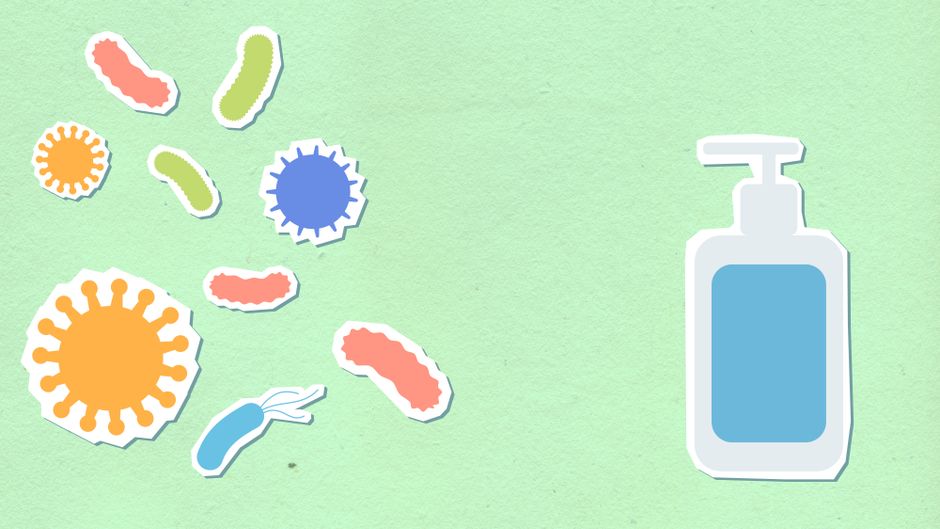
Outbreaks of infectious disease rarely come from a single failure. They come from many small gaps lining up at once — a missed handwash, a crowded room, a skipped vaccine. The good news is that each gap can be closed, and most of the tools are already well understood. Handwashing removes pathogens from skin. Vaccines train the immune system before exposure. Clean air, safe food, and staying home when sick reduce how far germs can travel. No single step is perfect, but layered together they make outbreaks much harder to start and much easier to stop.
How Do Outbreaks Actually Start?
An outbreak needs three things at the same time: a germ, a way for it to spread, and enough susceptible people to pass it along. Remove any one of those and the chain breaks.
Most respiratory viruses spread through tiny droplets and aerosols that leave an infected person’s mouth or nose when they talk, cough, or breathe. Some germs spread through touch — hands pick them up from a surface and deliver them to the eyes, nose, or mouth. Others spread through food, water, or blood. A few, like measles, are unusually good at finding unvaccinated people because they hang in the air and spread easily.
What turns a few cases into an outbreak is usually opportunity. A crowded indoor space with poor ventilation. A community with low vaccination coverage. A food handler who comes to work sick. These are not random events. They are conditions, and conditions can be changed.
Why Is Handwashing Still One of the Most Effective Steps?
Hands are one of the busiest highways for pathogens. Every surface you touch — doorknobs, phones, grocery carts, other people — can leave germs behind, and every time you touch your face you give them a way in.
Soap and water do more than rinse germs away. Soap molecules surround and lift oils, dirt, and microbes off the skin so water can carry them off. Scrubbing matters because it reaches the spaces between fingers, under nails, and around the wrists. Alcohol-based hand sanitizer works well against many germs when soap is not available, though it is less effective against some pathogens, including norovirus and Clostridioides difficile spores.
The timing that matters most is before eating or preparing food, after using the bathroom, after coughing or sneezing, and after caring for someone who is sick. The CDC recommends scrubbing for at least 20 seconds — about the time it takes to hum “Happy Birthday” twice.
What Handwashing Can and Cannot Do
- It reduces transmission of many gastrointestinal and respiratory infections.
- It does not replace vaccination for diseases that spread through the air.
- It works best when done consistently, not just during outbreaks.
One point that often gets lost: handwashing protects other people as much as it protects you. Many people spread germs before they feel sick, so clean hands are a form of community protection, not just personal hygiene.
How Do Vaccines Stop Outbreaks Before They Begin?
Vaccines work by showing the immune system a harmless preview of a pathogen. The body builds memory cells that recognize that germ later and respond fast — often before illness takes hold. This is why vaccinated people are less likely to get sick and, when they do, tend to have milder illness.
The bigger effect is at the population level. When enough people are immune, a germ runs out of easy targets. This is sometimes called herd immunity or community immunity. Measles is the classic example: it is so contagious that coverage needs to stay very high to prevent outbreaks, which is why clusters of unvaccinated people can seed rapid spread even in countries where most people are vaccinated.
Vaccine protection varies by disease. Some vaccines, like measles, provide long-lasting immunity after the recommended series. Others, like flu vaccines, need updating because the viruses change and immunity fades. This is why recommended schedules differ and why some vaccines require boosters.
What About Vaccine Side Effects?
Most side effects are short-lived — soreness at the injection site, mild fever, fatigue. Serious reactions are rare and are monitored through systems like the Vaccine Adverse Event Reporting System in the US. The evidence base for approved vaccines is large, and the risks of the diseases they prevent are generally far greater than the risks of the vaccines themselves.




What Role Do Masks, Ventilation, and Distance Play?
Respiratory outbreaks spread fastest indoors, where air is shared and recycled. Improving ventilation — opening windows, using air filtration, gathering outside when possible — reduces how much virus people breathe in. Masks add a physical barrier that catches some of the particles a person exhales, and they also reduce what the wearer breathes in.
Physical distance helps because the closer you are to an infected person, the more concentrated the exposure tends to be. None of these measures is perfect on its own. Their value is in stacking: ventilation, masking, and distance together reduce transmission more than any one alone.
These tools matter most in the settings where outbreaks cluster — hospitals, nursing homes, schools, prisons, and crowded workplaces. During a known outbreak, public health agencies often recommend specific combinations based on how the germ spreads and how severe it is.
How Does Food Safety Prevent Outbreaks?
Foodborne outbreaks follow a different path, but the logic is the same. Pathogens like Salmonella, E. coli, and norovirus get into food through contaminated water, undercooked meat, unwashed produce, or an infected person handling food.
Four habits cover most of the risk:
- Clean — wash hands, surfaces, and produce.
- Separate — keep raw meat away from ready-to-eat foods.
- Cook — reach safe internal temperatures, especially for poultry, ground meat, and eggs.
- Chill — refrigerate promptly and keep cold foods cold.
If you are sick with vomiting or diarrhea, staying out of the kitchen is one of the most effective things you can do. Many foodborne outbreaks trace back to a single person who prepared food while ill.
When Should You Stay Home or Seek Care?
Staying home when you are sick is one of the least glamorous and most effective outbreak tools. It works because people are often most contagious in the early days of illness, sometimes before they realize they are sick.
General guidance from public health agencies is to stay home while you have a fever and until symptoms are clearly improving. For respiratory illness, that often means staying home until fever has been gone for a period without fever-reducing medication and other symptoms are improving. For vomiting or diarrhea, it usually means staying home until symptoms have stopped for a set period, often 24 to 48 hours depending on the setting.
Seek medical care if symptoms are severe, if you are in a higher-risk group, or if you are not improving. For some infections, early treatment can shorten illness and reduce spread to others.
How Do These Steps Work Together?
No single measure stops every outbreak. Handwashing does not stop measles. Vaccines do not stop norovirus. Ventilation does not stop foodborne illness. But layered together, they cover each other’s gaps.
Think of it as a series of filters. Each one removes some of the risk. When several are in place, the chance that a germ reaches enough people to cause an outbreak drops sharply. This is why public health guidance tends to recommend combinations rather than single actions — and why the same basic principles show up again and again across very different diseases.
Frequently Asked Questions
How long should you wash your hands to prevent outbreaks?
The CDC recommends scrubbing with soap and water for at least 20 seconds. If soap is not available, an alcohol-based hand sanitizer with at least 60% alcohol can be used, though it is less effective against norovirus and some bacterial spores.
Can you still spread illness if you are vaccinated?
Yes, some vaccinated people can still carry and transmit certain germs, though usually for a shorter time and at lower levels. Vaccination mainly reduces your chance of getting seriously ill and helps slow spread across a community.
Do you need to stay home if you only have mild symptoms?
Public health guidance generally recommends staying home while you have a fever and until symptoms are improving. Even mild illness can be contagious, so limiting contact with others reduces the chance of passing it on.
What is the single most effective way to prevent outbreaks?
There is no single measure that covers every disease. Handwashing, vaccination, ventilation, food safety, and staying home when sick each address different transmission routes, and they work best when used together.
