
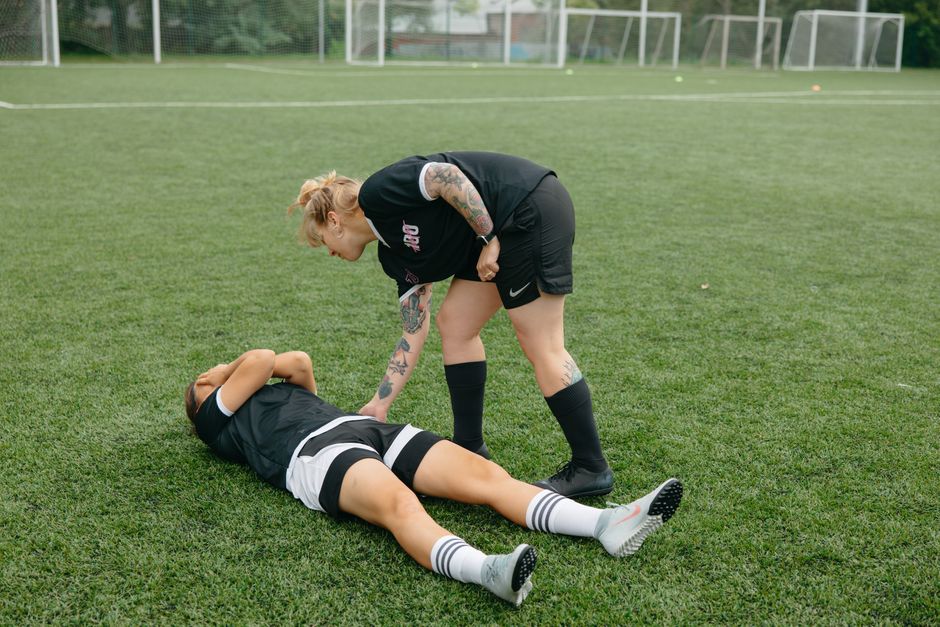
You cannot fully prevent concussions in soccer. No helmet, mouthguard, or rule change removes the risk entirely. What you can do is lower the risk in measurable ways: teach proper heading technique, follow age-based heading restrictions, strengthen the neck, and take any suspected head injury out of play immediately. Those steps are supported by sports medicine research and by rule changes at the youth and professional levels.
How common are concussions in soccer?
Soccer is a leading cause of sport-related concussion, especially among girls and young women. Research tracking high school and college athletes has consistently found concussion rates in soccer that are among the highest of any sport, and some studies indicate the rate in girls’ soccer is higher than in boys’ soccer at the same level of play.
The reasons are not fully understood. Some researchers point to differences in neck strength, head mass, and how girls report symptoms. Others note that the games may be played and coached differently. The evidence here is mixed, and no single explanation has been confirmed.
Most soccer concussions do not come from heading the ball. Studies that review game footage and injury reports find that player-to-player contact — head-to-head clashes, elbows, and collisions during challenges — accounts for the majority of concussions. Heading the ball is a real risk factor, but it is not the main one. That distinction matters when you decide where to focus prevention.
How To Prevent Concussions In Soccer Proven Tips
The strongest prevention strategy combines several layers. No single measure does the job alone, and the tips below are ranked roughly by how much evidence supports them.
1. Follow heading restrictions for young players
In 2015, US Soccer introduced rules that banned heading for children ages 10 and under and limited heading in practice for players ages 11 to 13. These changes came from a broad effort to reduce head impacts in youth play. The rules have been widely adopted across youth leagues.
For players under 14, the safest approach is to follow your league’s heading rules closely and limit repetitive heading drills in practice. The evidence that heading restrictions reduce concussion rates in children is still developing, but the logic of reducing head impacts at an age when the brain is still developing is sound, and the rules are now standard in US youth soccer.
2. Teach heading technique properly
Most heading injuries happen when a player heads the ball with poor form or when the ball hits the head unexpectedly. Proper technique means striking the ball with the forehead — the flat, bony part of the skull — not the top or side of the head. The neck should be tensed, and the player should drive through the ball rather than let it hit a relaxed head.
Coaches who teach heading should do it in controlled drills with a properly inflated ball, starting with light tosses and progressing gradually. This is standard coaching practice, though large trials confirming that technique training alone reduces concussions are limited.
3. Strengthen the neck
Some research suggests that stronger neck muscles may reduce how much the head moves during an impact, which could lower concussion risk. The evidence is promising but not conclusive. Neck strengthening is not a proven stand-alone prevention method.
It is still reasonable to include neck exercises in a general strength program. Exercises like neck flexion, extension, and side bending with light resistance are common in sports training. Players should learn them from a qualified coach or athletic trainer.
4. Reduce head-to-ball contact in practice
Practice is where repetitive heading happens most. Limiting high-volume heading drills, especially in the days before a game, reduces cumulative head impacts. Some professional leagues and youth organizations have adopted practice limits for this reason.
5. Know and enforce the rules on dangerous play
Referees and coaches should enforce rules against dangerous challenges, especially aerial collisions and elbows to the head. Leagues that penalize reckless play reduce the collisions that cause most concussions.
Does wearing headgear prevent concussions in soccer?
No. Soft protective headgear has not been shown to prevent concussions in soccer. This is one of the most common misconceptions in the sport.
Soft padded headbands and helmets may reduce the risk of cuts and bruises. Some research suggests they may slightly reduce the force of a direct impact. But no study has confirmed that they lower concussion rates. The FDA has cleared some soccer headgear for marketing, but clearance for marketing is not the same as proof that it prevents concussions.
FIFA has allowed soft headgear in competition since 2014, and some players wear it. That does not mean it works as a concussion preventive. If a player wants to wear it for comfort or minor injury protection, that is a personal choice, but no one should rely on it for concussion prevention.





What should you do if a player might have a concussion?
Remove the player from play immediately. This is the single most important action in concussion management, and it is supported by every major sports medicine guideline.
A player with any sign of concussion should not return to the game that day. Signs include headache, dizziness, confusion, balance problems, nausea, sensitivity to light or noise, and memory problems. Symptoms can appear right away or hours later.
Continuing to play after a concussion raises the risk of a second injury and can make recovery longer. The player should be evaluated by a healthcare professional trained in concussion assessment. Return to play should follow a stepwise protocol supervised by a clinician — typically a gradual increase in activity over several days, with a return to full contact only after symptoms have resolved and a clinician has cleared the player.
Coaches and parents should know their league’s concussion policy. Many states require removal from play for any suspected concussion and written clearance before return.
Can mouthguards or rule changes lower concussion risk?
Mouthguards protect teeth and the jaw. They have not been shown to prevent concussions. Some athletes and parents believe mouthguards absorb force that would otherwise reach the brain. The research does not support that claim.
Rule changes are a different story. Limiting player-to-player contact in practice, penalizing head contact, and enforcing heading restrictions for young players all reduce the number of head impacts. These are the interventions with the clearest rationale and the most support from sports medicine organizations.
One non-obvious point: the biggest gains in youth soccer have come from changing how often kids head the ball in practice, not from equipment. Equipment gets attention because it is visible. Practice design gets less attention because it is invisible. The evidence points toward practice design.
What about heading the ball as an adult?
Adult players can head the ball, but repetitive heading carries cumulative risk. Some research has raised questions about long-term effects of repeated heading on brain health. The evidence is not settled, and studies have produced mixed results.
What is clear is that heading should be taught properly, practiced in moderation, and never done while the player is fatigued or unprepared. Players who head the ball frequently should be aware that the research on long-term effects is ongoing and not conclusive.
Building a prevention plan that actually works
Prevention works best as a layered approach. No single measure is enough on its own.
- Follow your league’s heading rules, especially for players under 14.
- Teach proper heading technique with the forehead and a tensed neck.
- Limit repetitive heading drills in practice.
- Include neck strengthening in general training, taught by a qualified professional.
- Enforce rules against dangerous play and aerial collisions.
- Remove any player with a suspected concussion immediately and follow a supervised return-to-play protocol.
- Do not rely on headgear or mouthguards to prevent concussions.
The honest position is that soccer carries an inherent concussion risk that cannot be eliminated. The goal is to reduce it through technique, rules, practice design, and immediate response when a head injury happens.
Frequently Asked Questions
Can a helmet prevent concussions in soccer?
No. Soft soccer headgear has not been shown to prevent concussions. It may reduce cuts and bruises, but no study confirms it lowers concussion rates.
At what age should kids start heading the ball?
US Soccer rules ban heading for children ages 10 and under and limit it in practice for ages 11 to 13. Follow your league’s specific rules, since they can vary.
What is the first thing to do if a soccer player gets hit in the head?
Take the player out of the game immediately, even if they say they feel fine. Symptoms can appear hours later, and a healthcare professional should evaluate them before any return to play.
Does neck strength really lower concussion risk?
Some research suggests stronger neck muscles may reduce head movement during impact, but the evidence is not conclusive. Neck training is reasonable as part of general conditioning but is not a proven stand-alone prevention method.
