
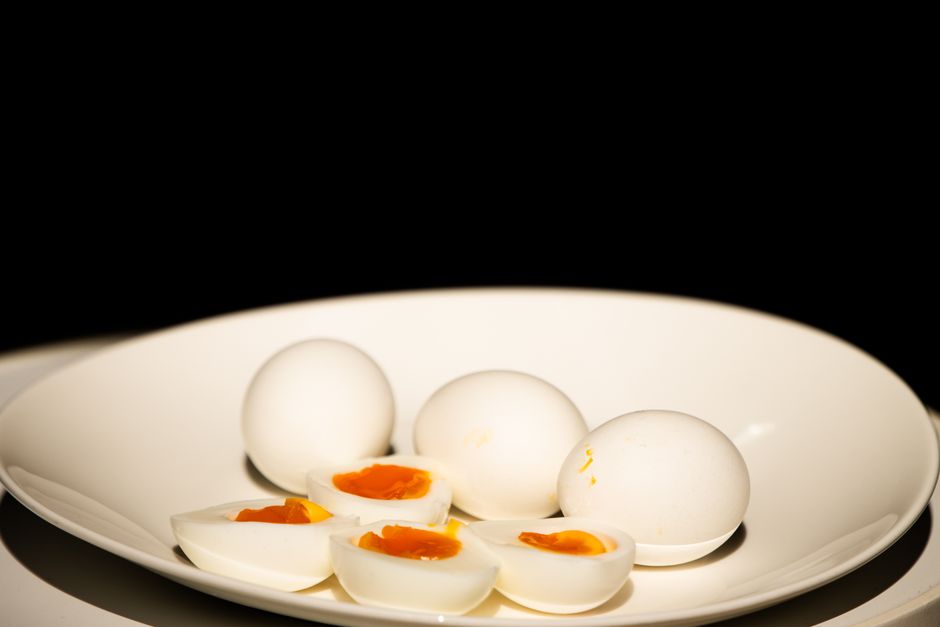
Boiled eggs stay fresh for about one week in the refrigerator, whether peeled or still in the shell. The single most important step is cooling them quickly after cooking and keeping them cold at 40°F (4°C) or below. How you store them — shell on or off, dry or damp — changes how long they last and how good they taste.
Most people get one thing wrong: they leave the eggs sitting out after boiling. That warm, moist window is exactly where bacteria grow fastest. Get them into cold storage promptly and you have solved most of the preservation problem.
How To Preserve Boiled Eggs So They Stay Fresh
Refrigeration is the foundation. The USDA and food safety guidance consistently recommend keeping perishable foods at 40°F (4°C) or colder, and hard-boiled eggs belong in that category.
Cool the eggs fast. After boiling, move them into ice water or cold running water for several minutes. This stops the cooking process and pulls the temperature down quickly, which limits the time the eggs spend in the warm range where bacteria multiply. Then dry them and refrigerate.
Keep them in the coldest part of the fridge, not the door. The door temperature swings every time it opens. A shelf toward the back stays steadier.
Leave the shell on if you can. The shell and its underlying membrane act as a barrier. A peeled egg loses that protection and its surface is exposed to air, moisture, and anything else in the fridge.
Store eggs in a covered container rather than loose on a shelf. This keeps them from absorbing odors from surrounding food and reduces the chance of cross-contamination. Hard-boiled eggs have a porous shell, and they will pick up strong smells from the fridge over a few days.
How Long Do Hard-Boiled Eggs Last in the Fridge?
Hard-boiled eggs in the shell keep for about one week in the refrigerator. That is the figure food safety authorities generally cite, and it is a reasonable planning window.
Peeled eggs are a different story. Once the shell is gone, the protective barrier is gone too. Peeled hard-boiled eggs are best eaten within a few days. Some guidance suggests using them within about two to three days for the best margin of safety.
These are general food safety windows, not a guarantee. If an egg has been out of the fridge for hours, or stored somewhere warmer than recommended, the clock runs faster. When in doubt, the safe choice is to discard it.
What about deviled eggs or egg salad?
Once you mash, season, or mix eggs with other ingredients, the storage rules tighten. Egg salad and deviled eggs should be kept cold and eaten within a few days. Anything with mayonnaise or dairy follows its own shorter timeline. Keep these dishes refrigerated until the moment they are served, and do not leave them out at room temperature for long stretches — especially at picnics or buffets.
Shell On or Peeled: Does It Really Matter?
Yes, and the difference is bigger than most people expect. The shell is not just packaging. Beneath it sits a thin membrane that helps block air and microorganisms. Remove both and you have exposed a moist, protein-rich surface that bacteria and mold find inviting.
If you peel eggs in advance, store them in a sealed container in the fridge and use them sooner. You can also keep peeled eggs submerged in a covered container of cold water to slow moisture loss and limit air exposure, changing the water daily. This is common practice, though it is not a substitute for eating them within a few days.
Here is the practical summary:
- In the shell, refrigerated: about one week
- Peeled, refrigerated: a few days — aim for two to three
- Egg salad or deviled eggs: a few days, kept cold
- Left at room temperature: discard after a couple of hours
One clarification worth knowing: the “float test” you may have heard about is not a reliable freshness test for boiled eggs. It was designed for raw eggs, and it tells you about the size of the air pocket, not whether the egg is safe to eat. For a boiled egg, smell and appearance are more useful — a spoiled egg will usually smell distinctly off.





Why Do Boiled Eggs Spoil Faster Than Raw Ones?
Boiling changes the egg’s natural defenses. A raw egg has a coating on the shell, called the bloom or cuticle, that helps seal it. Cooking washes that away. The heat also alters the proteins inside, and the egg’s own natural antimicrobial systems are no longer functioning the way they were.
On top of that, boiling can create tiny cracks in the shell. Those cracks let in moisture and bacteria. A boiled egg sitting in the fridge is, in a real sense, more vulnerable than a raw one.
This is why the storage advice for boiled eggs is stricter than for raw eggs. It is not overcautious. The food safety guidance reflects a genuine change in how well the egg protects itself.
Common Storage Mistakes That Shorten Shelf Life
Several habits quietly cut a boiled egg’s usable life short.
Leaving eggs out to cool on the counter for a long time is the biggest one. Cool them quickly in cold water instead. The goal is to get them out of the warm zone fast.
Storing them near strong-smelling foods is another. Eggs absorb odors through the shell. Keep them away from onions, garlic, and leftovers with heavy spices.
Cracking the shell and leaving it on is a subtle trap. Cracks invite contamination. If an egg is cracked, eat it first or discard it.
Keeping eggs past their window because they “look fine” is risky. Spoilage bacteria do not always announce themselves with obvious visible mold. A faint sulfur or sour smell is a warning sign — trust it.
Finally, reusing the cooking water or storing eggs in it at room temperature is not safe. Cold storage is not optional.
How to Tell If a Boiled Egg Has Gone Bad
Your senses are the most practical tool here. A spoiled boiled egg usually gives clear signals.
Smell is the strongest indicator. A fresh boiled egg has little odor. A bad one smells sour, sulfurous, or simply wrong. If the smell makes you hesitate, throw it out.
Look at the surface. Slimy texture, discoloration, or visible mold are all reasons to discard the egg. A peeled egg that looks dull or has taken on an odd sheen is suspect.
Texture matters too. A boiled egg that feels unusually soft, tacky, or broken down is past its prime.
When signals conflict or you are unsure, discard. The cost of one egg is nothing compared with a foodborne illness. This is one area where being cautious is genuinely the right call.
Does the Cooking Method Affect How Long Eggs Keep?
It can, mostly through how the egg is handled afterward. A hard-boiled egg cooked fully and cooled quickly tends to hold up better than a soft-boiled one, because a fully set yolk and white are less moist and less inviting to bacteria. Soft-boiled eggs, with a runny center, should be eaten promptly.
Adding a little salt or vinegar to the cooking water is a common trick to make peeling easier. It does not meaningfully extend storage life. Do not count on it for preservation.
The cooling step matters more than the boiling step. Eggs plunged into ice water right after cooking cool faster and are less likely to develop the gray-green ring around the yolk that comes from overcooking. That ring is harmless, but it signals the egg was cooked hard and cooled slowly.
Frequently Asked Questions
How long can you keep boiled eggs in the fridge?
Hard-boiled eggs in the shell keep for about one week when refrigerated at 40°F (4°C) or below. Peeled eggs should be eaten within a few days.
Can you eat a boiled egg that was left out overnight?
No. Perishable foods left at room temperature for more than a couple of hours should be discarded, and a boiled egg left out overnight is not safe to eat.
Should you store boiled eggs in water?
Peeled eggs can be kept in a covered container of cold water in the fridge to limit air exposure, changing the water daily. In-shell eggs store best dry in a covered container.
How do you know if a boiled egg is bad?
A spoiled boiled egg usually smells sour or sulfurous and may feel slimy or show discoloration. If you are unsure, discard it.
