
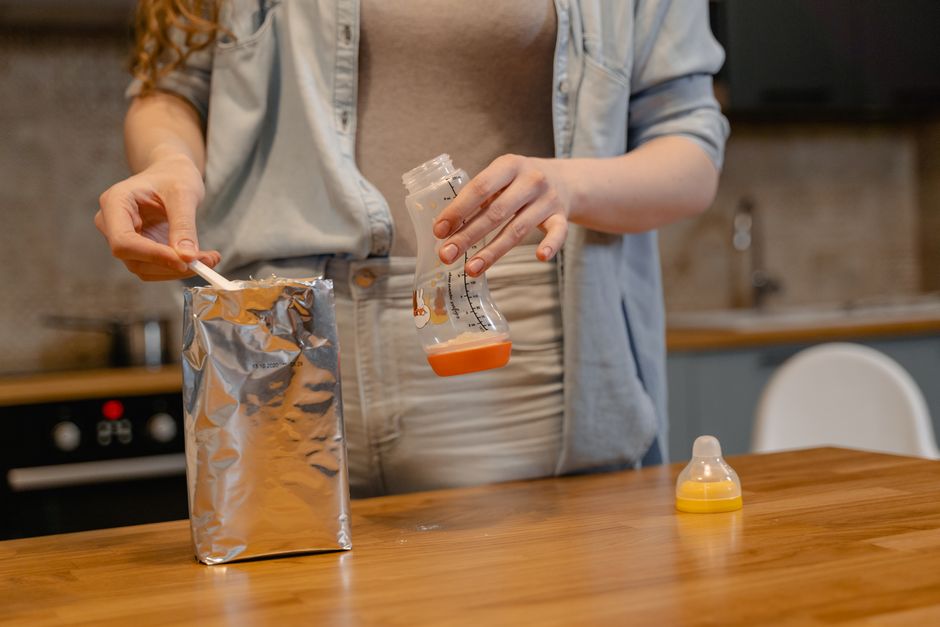
Freeze-drying turns liquid breast milk into a shelf-stable powder that can last months without refrigeration. The process removes water from the milk while preserving most of its nutrients, fats, and immune factors. While home freeze-drying is possible, commercial services and the FDA have raised important safety concerns that every parent should understand before trying it.
How Does Freeze Drying Breast Milk Work?
Freeze drying, also called lyophilization, uses three steps. The milk is first frozen solid. Then a vacuum chamber lowers the pressure around it. Finally, gentle heat causes the ice to turn directly into vapor without ever becoming liquid again. This is called sublimation.
The result is a dry powder that retains the original structure of the milk. When you add warm water, the powder rehydrates back into something close to liquid breast milk. Most of the fat, protein, carbohydrates, and antibodies survive the process.
Commercial freeze dryers used for breast milk are specialized machines. They are not the same as typical home freeze dryers used for camping food. Breast milk has high fat content and delicate immune components that require precise temperature control to preserve.
Is Freeze Dried Breast Milk Safe?
This is where the evidence gets complicated. The FDA has not approved freeze drying as a safe method for preserving breast milk for infant feeding. The agency has issued warnings about companies that sell freeze-dried breast milk products.
The core safety issue is contamination. Freeze drying does not kill bacteria, viruses, or fungi. It only removes water. If the milk had any contamination before freezing, those organisms survive the process and can multiply once the powder is rehydrated.
Breast milk is not sterile. It naturally contains bacteria from the mother’s skin and milk ducts. Most of these are harmless or even beneficial. But if harmful bacteria are present, freeze drying will not eliminate them.
Another concern is nutrient degradation. While most nutrients survive, some vitamins are sensitive to the freeze-drying process. Vitamin C levels drop significantly. Some immune factors, like immunoglobulin A (IgA), may also decrease depending on how the process is done.
What Are the Risks of Home Freeze Drying Breast Milk?
Home freeze drying carries additional risks that commercial operations can better control. Consumer-grade freeze dryers do not always reach the exact temperatures and pressures needed for breast milk. Inconsistent results mean you cannot be certain the powder is safe or nutritionally complete.
Cross-contamination is a real concern. If the same freeze dryer processes raw meat or other foods, bacteria can remain in the machine. Even thorough cleaning may not eliminate all traces from porous surfaces.
Powdered infant formula has been linked to bacterial infections in the past, specifically with Cronobacter. Powdered breast milk carries similar theoretical risks. The powder form concentrates any bacteria present in the original milk.
There are no established guidelines for home freeze drying breast milk. No clinical organization has published safe protocols for this process. Parents who attempt it are doing so without evidence-based guidance.





What Does the Research Say About Freeze Dried Breast Milk?
Research on freeze-dried breast milk is limited but growing. Some studies suggest that freeze drying preserves more nutrients than other preservation methods. The process appears to maintain fat content and most proteins better than freezing alone over long periods.
However, most research has been done on animal milk or small human milk samples. Large clinical trials on freeze-dried human milk for infant feeding have not been conducted. The evidence base is simply not strong enough to declare the process safe and effective for routine use.
Some research suggests that certain immune cells in breast milk do not survive freeze drying. These living cells provide protection against infection in the infant’s gut. Their loss means freeze-dried milk lacks some of the live immune benefits of fresh or properly thawed frozen milk.
Commercial freeze-dried breast milk products exist, but they are not regulated as infant formula. They are typically sold as dietary supplements or specialty products. This regulatory gap means quality control varies between companies.
How Does Freeze Drying Compare to Other Storage Methods?
Standard freezing is the most studied and recommended method for storing breast milk. The CDC and major medical organizations support freezing as safe for up to 6 months in a standard freezer and up to 12 months in a deep freezer.
Freeze drying offers advantages over freezing. The powder takes up much less space. It does not require continuous electricity. It can be stored at room temperature for extended periods. This makes it attractive for travel, emergency preparedness, or families with limited freezer space.
But freezing has decades of research behind it. The nutrient profile of frozen milk is well documented. The safety is established. Freeze drying cannot yet claim the same evidence base.
Fresh breast milk remains the gold standard. It has the most complete nutrient profile and the most active immune components. Every processing step, whether freezing or freeze drying, reduces some quality.
How To Powderize Breast Milk By Freeze Drying: Step by Step
If you decide to attempt freeze drying at home despite the lack of guidelines, you should understand the general process. First, express milk using proper hygiene. Wash hands thoroughly and use sterilized equipment. Store the milk in sterile containers designed for breast milk.
Freeze the milk completely before placing it in the freeze dryer. The milk should be frozen solid, ideally in thin layers that allow even drying. Shallow trays or ice cube trays work better than deep containers.
Place the frozen milk in the freeze dryer according to the manufacturer’s instructions. The machine will run a cycle that typically takes 24 to 48 hours. The exact time depends on the machine and the volume of milk.
Once the cycle completes, the milk should be a dry powder. Break up any clumps and store the powder in an airtight container. Moisture is the enemy of powdered milk. Any exposure to humidity can cause clumping and bacterial growth.
Rehydrate the powder by adding warm, clean water. The ratio depends on how much water was removed, which varies by batch. Start with equal parts powder and water, then adjust to reach the desired consistency. Never use boiling water, as it destroys nutrients and immune factors.
Use the rehydrated milk immediately. Do not store it. Refrigerated rehydrated milk should be used within 24 hours at most.
What Should Parents Consider Before Choosing Freeze Dried Breast Milk?
Talk to your pediatrician before using freeze-dried breast milk, especially for a premature or medically fragile infant. These babies have higher nutritional needs and weaker immune systems. The risks of contamination or nutrient loss are more serious for them.
If you use a commercial freeze-drying service, ask about their quality control measures. How do they test for contamination? What are their sanitation protocols? Can they provide documentation of their processes?
Consider whether the convenience justifies the risks. Freeze drying is expensive. Commercial services can cost hundreds of dollars per batch. Home freeze dryers cost thousands of dollars to purchase.
For most families, standard freezing remains the safest, most affordable, and most evidence-based option. Freeze drying is an emerging technology with real potential, but the evidence has not caught up to the marketing.
When Will We Know More About Freeze Dried Breast Milk?
Researchers are actively studying freeze-dried breast milk. The interest comes from both military applications and developing countries where refrigeration is not always available. These use cases drive funding for more rigorous research.
Clinical trials are needed to answer key questions. Does freeze-dried milk support normal infant growth? Does it provide adequate immune protection? What is the maximum safe storage time? Are certain infants at higher risk?
Until these studies are completed, the medical community cannot endorse freeze-dried breast milk as equivalent to fresh or frozen milk. The technology is promising, but promises are not evidence.
Frequently Asked Questions
Is freeze dried breast milk as nutritious as fresh breast milk?
No. Freeze drying preserves most nutrients, but some vitamins and immune cells are lost during processing. Fresh breast milk remains the most nutritionally complete option.
How long does freeze dried breast milk last?
Commercially produced freeze-dried breast milk can last 1 to 3 years when stored properly. Home freeze-dried milk has no established shelf life because no clinical guidelines exist for this process.
Can I use a regular home freeze dryer for breast milk?
Technically yes, but it is not recommended. Consumer freeze dryers lack the precise controls needed for breast milk, and there are no safety protocols for home use.
Does freeze drying kill bacteria in breast milk?
No. Freeze drying only removes water. Any bacteria present in the milk survive the process and can grow after rehydration.
