
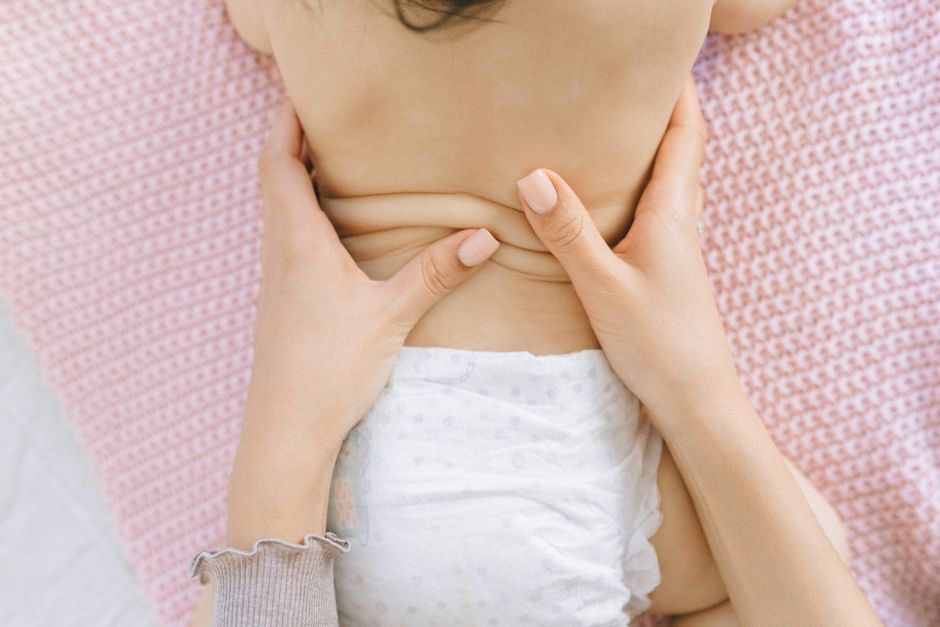
Placing your baby on their back for every sleep is the single most important thing you can do to reduce the risk of Sudden Infant Death Syndrome (SIDS). The head should be turned to either side naturally, and the sleep surface must be flat, firm, and free of any soft objects, pillows, or positioners. This is the only sleeping position recommended by the American Academy of Pediatrics and the CDC. No wedges, rolled blankets, or special pillows are needed to position your baby’s head safely. Your baby will naturally turn their head to the side when placed on their back.
What Is the Safest Way to Position a Baby’s Head for Sleep?
The safest head position for a sleeping baby is on their back with their face turned to either side. This allows them to breathe freely and keeps their airway open. Research published in Pediatrics shows that back sleeping reduces the risk of SIDS by over 50% compared to stomach sleeping.
You do not need to manually position your baby’s head in a specific angle. When placed on a firm mattress, your baby will naturally turn their head to one side. The key is that the entire sleep environment supports safe breathing. This means a flat, firm mattress with a fitted sheet and nothing else in the crib.
Some parents worry their baby will choke if they spit up while on their back. Studies have found that healthy babies automatically cough up or swallow fluids when on their backs. The airway anatomy actually protects better in this position than on the stomach.
Does How To Position Babys Head While Sleeping Safely Prevent Flat Head Syndrome?
This is where many parents get confused. The safe sleep position is back sleeping. But prolonged back sleeping can lead to positional plagiocephaly, or flat head syndrome. This is a cosmetic condition where a baby’s head develops a flat spot from lying in one position too long.
Here is the honest truth: flat head syndrome is not dangerous. It does not affect brain development or cause any health problems. The American Academy of Pediatrics states that back sleeping for SIDS prevention should never be compromised to prevent flat head. SIDS is a life-threatening risk. Flat head is a cosmetic issue that usually resolves on its own or with simple interventions.
You can reduce the risk of flat head without changing sleep position. During awake time, place your baby on their tummy for supervised play. Alternate which end of the crib you place your baby’s head at so they naturally look in different directions. Hold your baby upright more during the day. These steps are effective and do not interfere with safe sleep.
What Does Research on Baby Head Positioning During Sleep Show?
The evidence is remarkably consistent across decades of research. The CDC reports that the rate of SIDS dropped by more than 50% after the Back to Sleep campaign began in 1994. Before this campaign, many parents placed babies on their stomachs to sleep. That advice was based on outdated theories about choking.
Research published in JAMA Pediatrics has shown that using commercial sleep positioners, including wedges and rolled blankets meant to keep a baby’s head in a specific position, actually increases the risk of suffocation. The FDA has warned against these products. Between 2005 and 2015, the Consumer Product Safety Commission received dozens of reports of infant deaths linked to sleep positioners.
Some studies suggest that swaddling can help babies stay on their backs longer. But once a baby shows signs of rolling over, swaddling should stop. A swaddled baby who rolls onto their stomach cannot use their arms to reposition their head, which increases suffocation risk.
| Sleep Position | SIDS Risk | Flat Head Risk | Official Recommendation |
|---|---|---|---|
| Back sleeping | Lowest risk | Higher risk | Strongly recommended |
| Stomach sleeping | Highest risk | Lowest risk | Not recommended |
| Side sleeping | Higher risk | Moderate risk | Not recommended |





What Should You Avoid When Positioning Your Baby’s Head for Sleep?
Many products marketed to parents claim to help position a baby’s head safely. Avoid all of them. This includes sleep wedges, head positioners, rolled blankets, and special pillows. The FDA and the American Academy of Pediatrics both advise against using any positioning product in the crib.
Do not place your baby on their side to sleep. Side sleeping is unstable. A baby can easily roll onto their stomach from this position. Studies have found that side sleeping carries nearly the same SIDS risk as stomach sleeping.
Do not prop up the mattress or use a crib wedge to elevate your baby’s head. This is sometimes recommended for reflux, but the evidence does not support it for healthy babies. The American Academy of Pediatrics states that elevating the head of the crib has not been shown to reduce reflux symptoms and can cause a baby to slide down, potentially covering their face.
Some parents use car seats, bouncers, or swings for sleep. These should only be used for supervised naps. The angle of these seats can cause a baby’s head to fall forward, restricting their airway. A flat, firm crib mattress is the only safe sleep surface.
How Can You Help Your Baby Get Comfortable Sleeping on Their Back?
Many parents report that their baby seems to sleep better on their stomach. This is a common concern. Babies who are used to stomach sleeping may startle more easily on their backs. This typically resolves within a few weeks as the baby adjusts.
Swaddling can help. A firm swaddle keeps a baby’s arms contained, reducing the startle reflex that can wake them. The swaddle should be snug around the chest but loose around the hips to allow for healthy hip development. Stop swaddling as soon as your baby shows signs of rolling over, usually around 2-3 months.
Pacifier use at sleep time is also associated with a lower risk of SIDS. The American Academy of Pediatrics recommends offering a pacifier at naps and bedtime. If the pacifier falls out after the baby is asleep, do not put it back in. Do not attach the pacifier to a string or clip that could wrap around the baby’s head or neck.
What If Your Baby Rolls Over During Sleep?
This is a common question from parents. If your baby can roll from back to stomach and from stomach to back on their own, it is generally safe to let them sleep in the position they choose. The key word is “on their own.” If you place your baby on their back and they roll to their stomach during sleep, you do not need to flip them back.
However, you must ensure the crib is completely empty. No blankets, pillows, bumper pads, or stuffed animals. If a baby rolls onto their stomach and their face is near a soft object, they may not be able to lift or turn their head to breathe. A firm mattress with a tight fitted sheet is the only safe option.
Most babies develop the ability to roll over between 4 and 6 months. Until then, always place your baby on their back. If your baby is not yet rolling independently, you should still place them on their back even if they seem uncomfortable. The SIDS risk is highest between 1 and 4 months of age.
Common Misconceptions About Baby Head Positioning
One persistent myth is that babies need a pillow or head support to keep their airway open. This is false. A healthy baby’s airway is naturally structured to stay open when lying flat on their back. Pillows and positioners only add suffocation risk.
Another misconception is that you should alternate head positions manually every few hours. You do not need to do this. Your baby will naturally turn their head from side to side as they sleep. The only time you might notice a preference is if your baby always faces the same direction, which can contribute to flat head. In that case, alternate the end of the crib where you place your baby’s head during awake time only.
Some parents believe that using a home monitor or breathing sensor makes it safe to use positioners or let a baby sleep on their stomach. This is not true. No monitor has been proven to prevent SIDS. The only proven prevention is a safe sleep environment every time.
Finally, there is a widespread claim that “back is best” is outdated or that new research has changed the recommendation. This is completely false. The American Academy of Pediatrics reaffirms the back-sleeping recommendation regularly. The most recent update in 2022 confirmed that no changes to the basic guidance are needed. Any source claiming otherwise is not credible.
Frequently Asked Questions
Should I turn my baby’s head during the night?
No. Your baby will naturally move their head on their own. There is no need to reposition their head while they sleep.
Can I use a rolled blanket under my baby’s head?
No. Any soft object in the crib, including rolled blankets, increases the risk of suffocation and SIDS.
Is it safe for my baby to sleep on their side?
No. Side sleeping is unstable and carries nearly the same SIDS risk as stomach sleeping. Always place your baby on their back.
When can my baby sleep on their stomach?
Once your baby can consistently roll from back to stomach and back again on their own, it is safe to let them choose their sleep position.
