
That satisfying crack or pop in your lower back often brings instant relief. Many people do it without thinking. But doing it wrong can strain muscles or irritate joints. The safest way to pop your lower back involves slow, controlled movement. You want to use your body weight and natural motion rather than twisting sharply or pulling hard. If you feel sharp pain, stop immediately. This guide explains simple techniques and when you should leave your back alone entirely.
Why Does Your Lower Back Pop or Crack?
The popping sound you hear is usually gas. Your spinal joints are surrounded by a fluid that contains dissolved gases like nitrogen. When you stretch or twist, the joint capsule stretches. This creates a drop in pressure that lets those gases form a bubble and pop. This is the same process as cracking your knuckles.
Sometimes the sound comes from tendons or ligaments moving over bone. This is generally harmless too. The key point is that the pop itself is not the treatment. The relief comes from the joint movement and muscle relaxation that happens at the same time. You are not “putting something back into place.” Your spine is rarely out of place to begin with.
Is It Safe to Pop Your Own Lower Back?
For most healthy adults, self-manipulation of the lower back is low risk. The spine is strong and designed for movement. However, there is a clear line between gentle self-mobilization and aggressive cracking. Forceful twisting or yanking can strain ligaments or irritate the facet joints. In rare cases, it can aggravate a disc problem.
You should not attempt to pop your back if you have any of the following:
- Numbness or tingling in your legs or feet
- Weakness in your legs
- Loss of bladder or bowel control
- Recent trauma like a fall or car accident
- Known osteoporosis or spinal fractures
- Unexplained fever or weight loss
If any of these apply, see a healthcare provider before trying any self-treatment. These symptoms can indicate nerve involvement or a more serious condition that requires professional evaluation.
How To Pop Your Lower Back By Yourself Safely: Step-by-Step Techniques
These techniques use gravity and body weight. They are gentle and effective. Move slowly into each position. Stop if you feel sharp or shooting pain. A mild stretch sensation is normal. A pop may or may not happen — both outcomes are fine.
1. Knee-to-Chest Stretch
Lie on your back on a firm surface like a yoga mat or carpet. Bend both knees and place your feet flat on the floor. Slowly bring one knee toward your chest. Use your hands to hold the shin gently. Hold for 20 to 30 seconds. Breathe deeply. Release and switch sides. This stretches the lower back muscles and can create a natural pop as the joints open.
2. Seated Spinal Twist
Sit on the floor with both legs extended in front of you. Bend your right knee and place your right foot flat on the floor outside your left knee. Place your left elbow on the outside of your right knee. Gently twist your torso to the right. Look over your right shoulder. Hold for 20 to 30 seconds. Repeat on the other side. This rotation targets the facet joints in the lower back.
3. Child’s Pose with a Reach
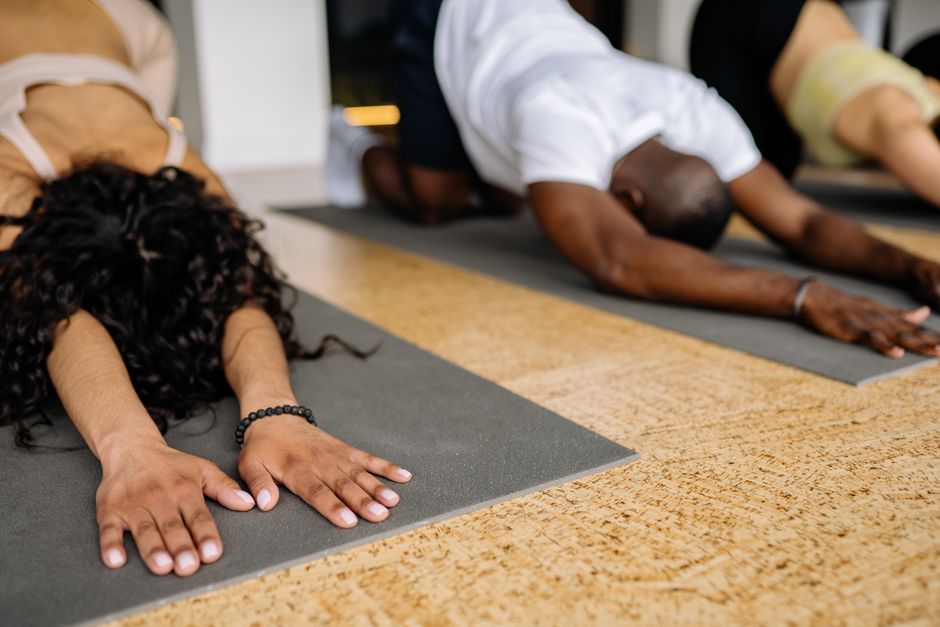
Start on your hands and knees. Sit your hips back toward your heels. Extend your arms forward on the floor. Let your chest drop toward the floor. Hold for 30 seconds. This decompresses the lumbar spine. It often produces a subtle pop without any twisting at all.
4. Standing Back Extension
Stand with your feet shoulder-width apart. Place your hands on your lower back with fingers pointing down. Gently lean backward, keeping your knees straight. Go only as far as comfortable. Hold for 5 to 10 seconds. Return to standing. Repeat a few times. This movement can relieve pressure from sitting all day.





What Actually Causes the Relief After a Pop?
The immediate relief you feel after popping your back is not fully understood. Research suggests it involves several factors. The joint capsule stretch stimulates mechanoreceptors. These are nerve endings that send signals to the brain about joint position and movement. This input can temporarily reduce pain perception.
There is also a muscle relaxation effect. When you stretch into a position that creates a pop, the surrounding muscles often relax afterward. This reduces the constant low-level tension that contributes to back stiffness. The effect is usually temporary. It lasts anywhere from minutes to hours depending on the individual and the underlying cause of the tightness.
It is important to understand that cracking your back does not fix the underlying problem. If your back feels tight because of weak core muscles or poor posture, the pop is a temporary bandage. The stiffness will return. Long-term relief requires addressing the root cause through strengthening and movement habits.
When Popping Your Back Becomes a Problem
Some people develop a habit of cracking their back multiple times a day. This is not necessarily harmful, but it can be a sign that the underlying issue is not being addressed. If you feel the need to pop your back constantly, your muscles or joints are likely under ongoing strain.
Frequent self-cracking can also lead to joint hypermobility in some people. This means the ligaments become overly loose. Loose ligaments provide less stability for the spine. This can paradoxically lead to more stiffness and pain over time. The joints move too much, so the surrounding muscles tighten up to compensate.
If you find yourself needing to pop your back every few hours, consider seeing a physical therapist. They can assess your movement patterns and prescribe specific exercises to strengthen your core and improve your posture. This is more effective than repeated self-manipulation.
Exercises to Reduce the Need to Pop Your Lower Back
Strengthening your core and hips can reduce the stiffness that makes you want to pop your back. The goal is to build endurance in the muscles that support your spine. Focus on exercises that train your body to maintain a neutral spine position under load.
Here are some evidence-informed exercises:
- Bird dog: Start on hands and knees. Extend your right arm forward and left leg backward simultaneously. Keep your hips level. Hold for 3 seconds. Alternate sides. Do 10 reps per side.
- Glute bridge: Lie on your back with knees bent. Press through your heels to lift your hips. Squeeze your glutes at the top. Lower slowly. Do 15 reps.
- Dead bug: Lie on your back with arms pointing up and knees bent at 90 degrees. Lower your right arm and left leg toward the floor simultaneously. Return to start. Alternate. Do 10 reps per side.
- Side plank: Lie on your side with your elbow under your shoulder. Lift your hips so your body forms a straight line. Hold for 20 to 30 seconds per side.
These exercises build the stability your spine needs. Over weeks, you should notice less daily stiffness. This reduces the urge to pop your back in the first place.
When To See a Professional Instead of Popping It Yourself
Self-manipulation has limits. A chiropractor or physical therapist can apply specific, controlled forces that you cannot replicate on yourself. They can also assess your spine and identify the exact source of your stiffness. This is valuable if your back pain persists despite regular stretching.
See a professional if your back pain lasts more than two weeks. Also seek help if the pain interferes with sleep, work, or daily activities. A healthcare provider can determine whether your issue is muscular, joint-related, or disc-related. This matters because treatment differs for each.
If you experience sudden severe back pain with no clear cause, do not try to pop it. Rest and consult a provider. Sudden pain can indicate a muscle spasm, a disc injury, or a stress fracture. Cracking the area will not help and may worsen the injury.
Frequently Asked Questions
Can popping your lower back cause damage?
In most healthy people, gentle self-manipulation is safe. However, aggressive twisting or popping through sharp pain can strain ligaments or irritate joints.
Why does my lower back feel like it needs to pop?
This sensation usually comes from joint stiffness or muscle tension from prolonged sitting or weak core muscles. The urge to pop is your body seeking movement and relief.
How often can I safely pop my lower back?
There is no established safe frequency limit. If you need to pop it more than a few times a day, that suggests an underlying issue that stretching and strengthening exercises would address better.
Is it better to see a chiropractor than pop my own back?
A chiropractor can apply specific forces to targeted joints and assess your overall spine health. This is appropriate if self-stretching does not relieve your stiffness or if you have persistent pain.
