
You cannot pop a herniated disc back into place by yourself. That is the honest starting point, and it matters because a lot of advice online implies otherwise. The disc does not slip out of a socket like a shoulder joint, and no stretch, crack, or maneuver pushes it back where it belongs. What actually happens is slower and less dramatic: the body often reabsorbs or shrinks the bulging material over weeks to months, and most people improve with time, activity modification, and targeted physical therapy. A small number of people need surgery. Understanding what is really going on inside your spine is the first step to doing the right thing for it.
What Does “Popping A Disc Back In Place” Actually Mean?
A disc is not a solid cushion that slides around. It is a tough outer ring (the annulus fibrosus) wrapped around a softer gel-like center (the nucleus pulposus). The whole structure sits between your vertebrae and acts as a shock absorber.
When people talk about a “slipped disc,” they usually mean a herniated disc. Part of the soft inner material pushes out through a tear in the outer ring. If it presses on a nerve root, you feel pain, numbness, or weakness that travels down an arm or leg.
Here is the part most people get wrong. The disc does not leave its position between the bones. It bulges or leaks, but it stays anchored. So there is nothing to “pop” back. The phrase survives because a chiropractic adjustment or a joint manipulation sometimes produces an audible crack. That sound comes from gas releasing in the facet joints of the spine, not from the disc moving. It can feel like relief. It does not mean the disc went back.
Can A Disc Really Go Back Into Place On Its Own?
Yes, and this is the most encouraging fact in the whole topic. The body can shrink or reabsorb herniated disc material without surgery. Research using repeat MRI scans has documented this happening in a meaningful share of cases, particularly with certain types of herniation.
The mechanism is partly immune. When disc material leaks out, the body recognizes it as foreign and sends cells to break it down. Over weeks and months, the extruded portion can shrink. This is not instant, and it does not happen for everyone. But it explains why so many people get better with conservative care.
The evidence is strongest for larger herniations in the lower back. It sounds backwards, but bigger extrusions sometimes shrink more than small contained bulges. The exact percentage varies widely across studies, so treat any single number you see online with caution. The general direction is well established: spontaneous improvement is common, not rare.
What Actually Helps A Herniated Disc Heal?
Time is the main treatment. Most people with a herniated disc improve within a few weeks to a few months without surgery. What you do during that time affects how comfortable you are and how well you function.
Stay active within reason. Bed rest beyond a day or two is not recommended. Prolonged lying down weakens muscles and slows recovery. Gentle movement, walking, and avoiding the specific positions that trigger your pain are usually better than total rest.
Physical therapy. A physical therapist can teach you exercises to strengthen the muscles that support your spine and improve your flexibility. This is one of the most consistently recommended approaches. The evidence for specific exercise protocols is mixed, but the overall benefit of guided movement and strengthening is well supported.
Pain management. Over-the-counter anti-inflammatory drugs like ibuprofen or naproxen can reduce pain and inflammation for some people. Acetaminophen may help pain but does not reduce inflammation. If pain is severe, a doctor may recommend prescription options, muscle relaxants, or a short course of oral steroids. Epidural steroid injections are sometimes used when pain is persistent and disabling. The evidence for injections is mixed — they can reduce pain in the short term for some patients, but they do not reliably change long-term outcomes.
Heat and cold. These can ease muscle tension and discomfort. They do not heal the disc itself.
Activity modification. Learning which movements aggravate your symptoms — often bending, lifting, or sitting for long periods — helps you avoid setbacks while the disc settles.





What About Chiropractic Adjustments And “Cracking” Your Back?
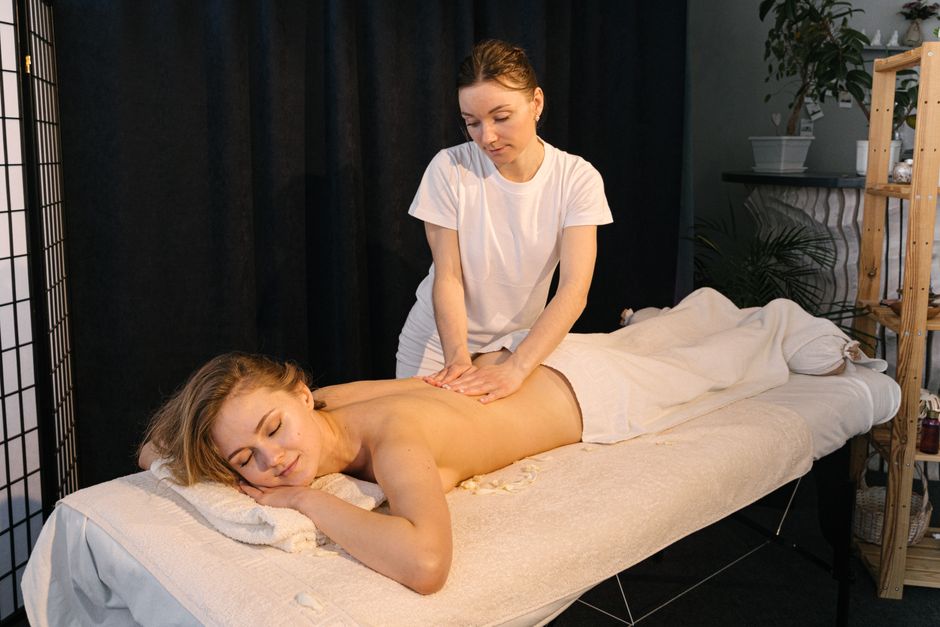
Spinal manipulation can reduce pain and improve mobility for some people with low back pain. That is a reasonable finding in the research. But it does not put a herniated disc back in place. The crack you hear is not the disc moving.
There is a real safety consideration here. Aggressive manipulation in the neck has been linked to rare but serious complications involving the vertebral arteries. For the lower back, the risks are lower but not zero, especially with certain conditions. If you have significant nerve symptoms — weakness, loss of reflexes, or changes in bowel or bladder control — manipulation is not appropriate and you need medical evaluation.
Some people feel better after an adjustment. That does not mean the disc changed position. It may mean muscles relaxed, pain signals were temporarily altered, or the natural course of recovery happened to align with the visit.
When Is Surgery Actually Necessary?
Surgery is not the first answer for most herniated discs. It becomes a serious consideration in specific situations:
- Severe or worsening weakness in a limb
- Loss of bowel or bladder control, or numbness in the saddle area (around the groin and inner thighs) — this is a medical emergency called cauda equina syndrome and requires immediate care
- Pain that remains disabling after several weeks to months of conservative treatment
When surgery is done, the most common procedure is a discectomy, where the surgeon removes the portion of disc pressing on the nerve. It can relieve leg pain faster than continued conservative care in the short term. Over the long term, outcomes between surgery and conservative treatment tend to converge for many patients. That is a general pattern from clinical research, and it varies by individual case.
Surgery does not “pop the disc back.” It removes the offending material. The disc itself is not restored to its original state.
What Makes Disc Symptoms Worse?
Certain positions and activities increase pressure on a herniated disc or compress the affected nerve.
- Sitting for long periods, especially with poor posture
- Bending forward or twisting
- Lifting with your back instead of your legs
- Coughing, sneezing, or straining
- Prolonged standing without support
Many people find that lying down, walking short distances, or changing position eases symptoms. This is why activity modification matters. It is not about avoiding all movement — it is about avoiding the movements that make things worse while your body does its slow repair work.
How Long Does Recovery Take?
Most people with a herniated disc see improvement within six weeks. Some take longer. A smaller group continues to have symptoms beyond three months and may need more intervention.
Recovery is not a straight line. Good days and bad days are normal. Flare-ups do not necessarily mean you reinjured the disc. They often reflect muscle guarding, inflammation, or a temporary increase in nerve sensitivity.
What you can control: staying reasonably active, following a physical therapy plan, managing pain so you can function, and knowing the warning signs that mean you need to see a doctor right away.
What Does Not Work — And What To Be Skeptical Of
A lot of products and techniques claim to “realign” or “decompress” your spine. Be careful with these.
Inversion tables. Some people report temporary relief from the gentle traction. There is no strong evidence that inversion therapy changes the position of a herniated disc or speeds healing. It may help some people feel better in the moment. It is not a cure.
Back-cracking devices. These can produce a satisfying pop. That pop is joint gas, not a disc returning to place.
Supplements marketed for disc repair. No supplement has been shown in clinical trials to heal a herniated disc. Claims about collagen, glucosamine, or herbal blends restoring disc tissue are not supported by evidence.
Aggressive stretching to “push the disc back.” This is not how discs work. Some stretches can actually aggravate nerve compression.
The honest summary: the body does most of the healing. The best things you can do are support that process with sensible activity, guided exercise, and appropriate medical care when needed.
Frequently Asked Questions
Can you pop a herniated disc back into place?
No. A herniated disc does not leave its position between the vertebrae, so there is nothing to pop back. The crack you hear from an adjustment comes from gas in the spinal joints, not from the disc moving.
How long does it take for a herniated disc to heal on its own?
Most people improve within six weeks, though some take several months. The body can gradually shrink or reabsorb the herniated material, and this process is well documented on repeat MRI scans.
Is walking good for a herniated disc?
For many people, gentle walking is helpful because it keeps the spine moving without the compression that comes from sitting or bending. If walking makes your leg pain worse, talk to a doctor or physical therapist about adjusting your activity.
When should I see a doctor for a herniated disc?
See a doctor promptly if you have weakness in a limb, numbness in the groin or inner thigh area, or any loss of bowel or bladder control. Those symptoms can signal a medical emergency that needs immediate treatment.
