
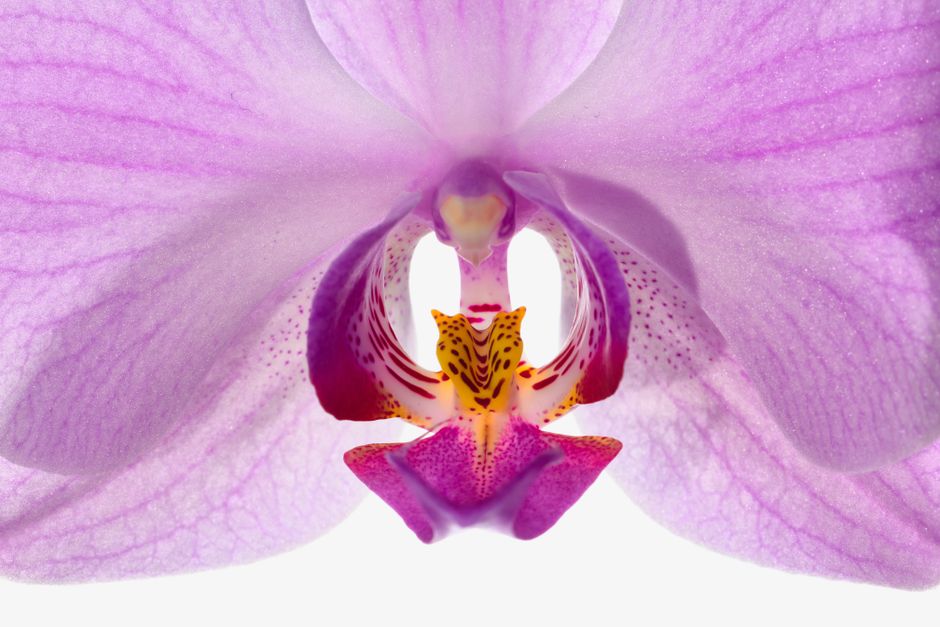
Vanilla is the only orchid grown commercially for food, and it cannot pollinate itself in most cultivated varieties. To pollinate a vanilla orchid by hand, you lift the flap of tissue that separates the male and female parts of the flower, press the pollen mass onto the stigma, and the bloom is pollinated in seconds. The technique is simple once you see it. Timing and a steady hand matter more than tools.
How To Pollinate A Vanilla Orchid Step By Step
Vanilla flowers open for a single morning. If you miss that window, the bloom wilts and drops without producing a pod.
Here is the full sequence, in order.
- Step 1 — Find a flower that opened today. It should be fully open, creamy white or pale yellow, and firm. Flowers from previous days are past the point of pollination.
- Step 2 — Locate the column. This is the small structure in the center of the flower where the male and female parts sit together. It looks like a tiny hood or cap over a small opening.
- Step 3 — Find the rostellum. This is a thin flap of tissue that acts like a curtain between the pollen and the stigma. It is the single biggest obstacle to self-pollination in vanilla.
- Step 4 — Lift the rostellum. Use a toothpick, a sliver of bamboo, or the tip of your fingernail. Gently push the flap upward and back to expose the stigma underneath.
- Step 5 — Remove the pollinia. The pollen in vanilla is not loose powder. It forms two waxy yellow masses called pollinia, tucked under a small cap above the rostellum. Lift the cap and take the pollinia on your tool.
- Step 6 — Press the pollinia onto the stigma. Place the pollen mass directly on the sticky surface you just exposed. Press gently so it sticks.
- Step 7 — Leave the flower alone. Do not water the bloom or move the plant roughly. If pollination worked, the base of the flower will begin to swell within a few days.
The whole process takes under a minute per flower. Most growers pollinate in the morning, when humidity is higher and the flower tissue is more pliable.
Why Vanilla Orchids Cannot Pollinate Themselves
Vanilla has a built-in block against self-pollination, and that block is the reason hand pollination exists at all.
Inside the flower, the rostellum sits between the pollen and the stigma like a physical wall. In its natural habitat in Mexico and Central America, a specific group of bees — most famously the orchid bee genus Melipona and related genera — is able to work around this barrier. The bee pushes past the rostellum while entering the flower, and in doing so transfers pollen from one bloom to another.
Outside that narrow geographic range, those bees do not exist. That means vanilla vines grown in Madagascar, Indonesia, Uganda, and everywhere else produce flowers but almost never set fruit on their own.
The hand-pollination method used today was developed in the 1840s on the island of Réunion by a plantation worker named Edmond Albius, who was twelve years old at the time. His technique — lifting the rostellum with a small tool and pressing the pollen onto the stigma — is essentially the same method used on commercial vanilla farms worldwide today. It is one of the few agricultural breakthroughs in history that has never been meaningfully improved upon.
What Time Of Day Should You Pollinate A Vanilla Flower?
Early morning is the right window. Vanilla flowers typically open before dawn and are most receptive in the first few hours after opening.
By midday, especially in hot climates, the flower tissue begins to dry and the stigma loses some of its stickiness. Pollination attempted in the afternoon often fails even when the technique is correct.
If you have multiple flowers opening on the same day, work through them in the order they opened. A flower that opened yesterday is almost always past its receptive window.



What Tools Do You Need To Hand Pollinate Vanilla?
You do not need specialized equipment. A toothpick, a bamboo skewer, a clean fingernail, or a small splinter of wood all work.
What matters more than the tool is that it is clean and thin enough to slip under the rostellum without crushing the flower. A thick or blunt object can tear the column, and a damaged column will not set fruit.
Some commercial growers use a small thorn from a citrus tree or a sliver of bamboo. The choice is practical, not technical. The precision of the lift and the placement of the pollen matter far more than the tool itself.
How Do You Know If Pollination Worked?
You will know within about a week. A successfully pollinated flower does not drop. Instead, the base of the flower — the part just behind the petals — starts to swell and elongate into what will become the vanilla pod.
An unpollinated flower wilts and falls off within a day or two of opening. There is no partial result and no ambiguity. Either the flower drops or it begins to form a pod.
From pollination to a mature, harvestable vanilla pod takes roughly eight to nine months, depending on the species and growing conditions. Vanilla planifolia, the most common commercial species, is typically harvested at around nine months. Vanilla tahitensis is often harvested slightly earlier.
Even with correct hand pollination, not every flower sets fruit. Some growers report that only a portion of pollinated flowers develop into mature pods, and the reasons are not fully understood. Plant health, nutrition, and environmental stress all appear to play a role.
Common Mistakes That Cause Hand Pollination To Fail
Most failures come down to a few repeatable errors.
- Pollinating too late in the day. The stigma is less receptive by afternoon.
- Pollinating a flower that opened yesterday. The receptive window is short and does not extend to the next day.
- Crushing the rostellum instead of lifting it. The flap needs to be moved aside, not broken.
- Using too much force. Vanilla flower tissue is delicate. Firm but light pressure is enough.
- Placing pollen beside the stigma instead of on it. The pollen mass needs direct contact with the sticky surface.
- Disturbing the flower afterward. Once pollinated, the bloom should be left alone.
One detail that surprises many first-time growers: the pollen in vanilla is not a powder. It is a solid, waxy mass. If you are looking for loose yellow dust the way you would on a lily or a hibiscus, you will not find it. The pollinia have to be physically lifted and transferred as a unit.
Do You Need To Hand Pollinate Every Flower?
No. In fact, pollinating every flower on a vine can weaken the plant.
A vanilla vine can only support a limited number of developing pods at once. Each pod draws significant resources over eight to nine months. Commercial growers typically pollinate only a fraction of the flowers on a given vine — often somewhere between five and ten per cluster, depending on vine health and size — to allow the plant to support the pods it produces.
For a home grower with a single vine, a reasonable approach is to pollinate a few flowers per cluster and watch how the plant responds. If the vine stays healthy and the pods develop well, you can pollinate slightly more the following season.
Over-pollinating a weak vine often results in pods that shrivel, drop, or fail to mature. The plant simply cannot carry them all.
Can You Pollinate A Vanilla Orchid With A Different Vanilla Species?
Yes, in some cases. Cross-pollination between vanilla species is possible and is how new commercial varieties have been developed.
Vanilla planifolia and Vanilla tahitensis can be crossed, and hybrids between V. planifolia and V. odorata have been produced.
However, cross-species pollination is not a simple home project. It requires healthy plants of two species flowering at the same time, and the resulting pods and seeds may or may not be viable. For most home growers, pollinating within the same species or the same vine is the practical approach.
Does Hand Pollination Affect The Quality Of The Vanilla Pod?
No. Hand pollination does not change the flavor or quality of the resulting vanilla.
The quality of a vanilla pod depends on the species, the growing conditions, how long the pod is left to mature on the vine, and how it is cured afterward. The pollination method itself — hand or bee — has no effect on the final product.
This is worth stating clearly because it is sometimes assumed that hand-pollinated vanilla is somehow inferior to bee-pollinated vanilla. It is not. Nearly all vanilla sold worldwide comes from hand-pollinated flowers, including the highest-grade pods.
Frequently Asked Questions
How long does it take for a vanilla flower to be pollinated?
The actual hand pollination takes under a minute per flower. The flower itself must be pollinated on the morning it opens, because the receptive window is short.
Can a vanilla orchid pollinate itself without help?
No. The rostellum, a flap of tissue inside the flower, blocks self-pollination. In the wild, specific bees in Mexico and Central America bypass this barrier, but outside that region vanilla vines almost never set fruit without hand pollination.
What happens if you pollinate a vanilla flower too late?
The flower will wilt and drop without forming a pod. Vanilla flowers are only receptive on the morning they open, and afternoon pollination usually fails.
How long does a vanilla pod take to grow after pollination?
Roughly eight to nine months from pollination to a mature, harvestable pod. Vanilla planifolia is typically harvested at around nine months.
