
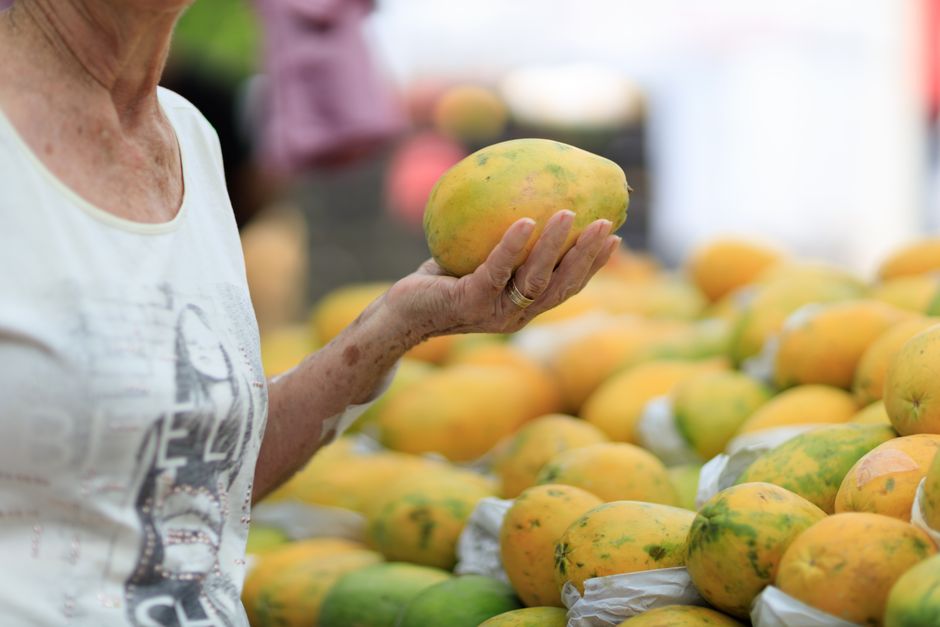
Choosing a cherimoya at the grocery store can feel like a gamble. The skin gives almost no visual clues, and the fruit can go from rock-hard to mushy in what seems like a day. The best way to pick a ripe cherimoya is to cup it in your palm and press gently. If it yields slightly under light pressure, like a ripe avocado or peach, it is ready to eat. If it feels hard and unyielding, it is firm and needs a few more days on your countertop at room temperature.
What Does a Ripe Cherimoya Feel Like?
The texture of the fruit is the single most reliable indicator of ripeness. A ripe cherimoya gives slightly when you press it with your thumb or the flat of your fingers. The flesh beneath the skin is soft but not mushy. Think of the give you feel in a ripe pear or a perfectly ripe avocado.
A firm cherimoya will feel like a green pear or an unripe peach. There is no give at all. The fruit is still developing its sugars and starches. It will not taste good yet. Eating a firm cherimoya is a disappointing experience — the flesh is chalky, astringent, and not sweet.
Do not squeeze the fruit hard. Cherimoyas bruise easily. The skin is thin and the flesh underneath is delicate. Use the same gentle pressure you would use to test a ripe tomato.
How To Tell If a Cherimoya Is Overripe
An overripe cherimoya is just as bad as an unripe one. When the fruit is too far gone, the skin will feel loose over the flesh. The fruit may feel hollow or watery inside when you press it. Sometimes the skin will split or weep at the stem end.
An overripe cherimoya smells strongly sweet, almost fermented. The flesh turns brown and develops an unpleasant, wine-like flavor. The texture becomes mushy and grainy. If you cut one open and see browning around the seeds or in the center, it is past its prime.
You can still use an overripe cherimoya for smoothies or baking if the flavor has not turned. But for eating fresh, it is not enjoyable. The window between perfectly ripe and overripe is narrow — often just a day or two.
Color and Skin Indicators — What They Actually Tell You
The color of cherimoya skin is not a reliable ripeness indicator. Some varieties stay green when fully ripe. Others develop a yellowish or brownish tint. A green cherimoya can be perfectly ripe, and a brown one can be underripe.
What the skin can tell you is freshness. Look for fruit with intact, unblemished skin. Avoid cherimoyas with deep cracks, dark sunken spots, or signs of mold. Minor surface blemishes and a slightly dull appearance are normal and do not affect the fruit inside.
The “scales” or raised segments on the skin should be well-defined and plump. If the scales look shriveled or flattened, the fruit may have been stored too long or at the wrong temperature. Some brownish patches on the skin are normal and do not mean the fruit is bad.





How To Ripen a Firm Cherimoya at Home
If you bought a firm cherimoya, leave it on your kitchen counter at room temperature. Do not put it in the refrigerator — cold stops the ripening process completely. The fruit will ripen in two to five days, depending on how firm it was when you bought it and the temperature of your kitchen.
To speed things up, place the cherimoya in a paper bag with a banana or an apple. These fruits release ethylene gas, which is a natural plant hormone that triggers ripening. This method can cut the ripening time roughly in half. Do not use a plastic bag — it traps moisture and encourages mold.
Check the fruit daily by pressing gently. Once it yields to light pressure, it is ready. Eat it the same day if you can. A ripe cherimoya does not keep well. If you cannot eat it right away, store it in the refrigerator for up to two days. The cold will slow further ripening, but the flavor and texture will start to decline.
How To Pick Cherimoya Ripe Vs Firm Explained — Step by Step
Here is the full process in order. When you are at the store, start by looking at the skin. Skip any fruit with deep cracks, mold, or wet spots. Minor blemishes are fine.
Next, pick up the fruit and feel its weight. A good cherimoya feels heavy for its size. That means it is full of juice. A light fruit may be dried out or past its peak.
Then test the firmness. Cup the fruit in your palm and press gently with your fingers. If it gives slightly, it is ripe. If it is hard, it is firm and needs ripening time. If it feels watery or the skin moves independently from the flesh, it is overripe.
Finally, smell the stem end. A ripe cherimoya has a sweet, floral, tropical aroma. A firm one has almost no smell. A strong fermented smell means it is overripe.
If you need the fruit today, pick one that gives slightly. If you are planning ahead, a firm one is fine — it will ripen on your counter.
What Does a Cherimoya Taste Like When Ripe?
A properly ripe cherimoya has a flavor that is hard to describe. Many people say it tastes like a blend of banana, pineapple, and strawberry, with a hint of vanilla. The texture is creamy and custard-like, which is why the fruit is sometimes called the “custard apple.”
The flesh is white or cream-colored, with large black seeds scattered throughout. You do not eat the seeds — they are toxic and must be removed. The easiest way to eat a ripe cherimoya is to cut it in half, scoop out the flesh with a spoon, and pick out the seeds as you go.
A firm cherimoya has none of this flavor. It tastes starchy and bland, with an unpleasant astringent quality that dries out your mouth. Ripeness is not a preference here — it is the difference between a delicious fruit and an inedible one.
Storage Tips After Cutting
Once you cut a cherimoya, it will not keep long. The exposed flesh browns quickly when exposed to air, just like an apple or avocado. Sprinkle the cut surface with a little lemon or lime juice to slow the browning.
Store cut cherimoya in an airtight container in the refrigerator. It will keep for one to two days. The texture will soften and the flavor will fade the longer it sits. For the best experience, eat the fruit the same day you cut it.
You can freeze ripe cherimoya flesh. Scoop it out, remove the seeds, and freeze it in a sealed container. Frozen cherimoya is good for smoothies and desserts, but the texture will be mushy when thawed. It is not ideal for eating fresh after freezing.
Frequently Asked Questions
How long does a firm cherimoya take to ripen?
A firm cherimoya typically ripens in two to five days at room temperature. Putting it in a paper bag with a banana or apple can speed this up.
Can you eat a cherimoya that is still firm?
You can eat it, but it will taste starchy and unpleasant. The fruit needs to soften to develop its sugars and creamy texture.
Should cherimoya be refrigerated?
Only refrigerate a cherimoya after it is fully ripe. Firm fruit should stay at room temperature until it softens.
What does a bad cherimoya look like inside?
The flesh will be brown, mushy, and may smell fermented. Fresh ripe cherimoya flesh is white or cream-colored with no browning.
