
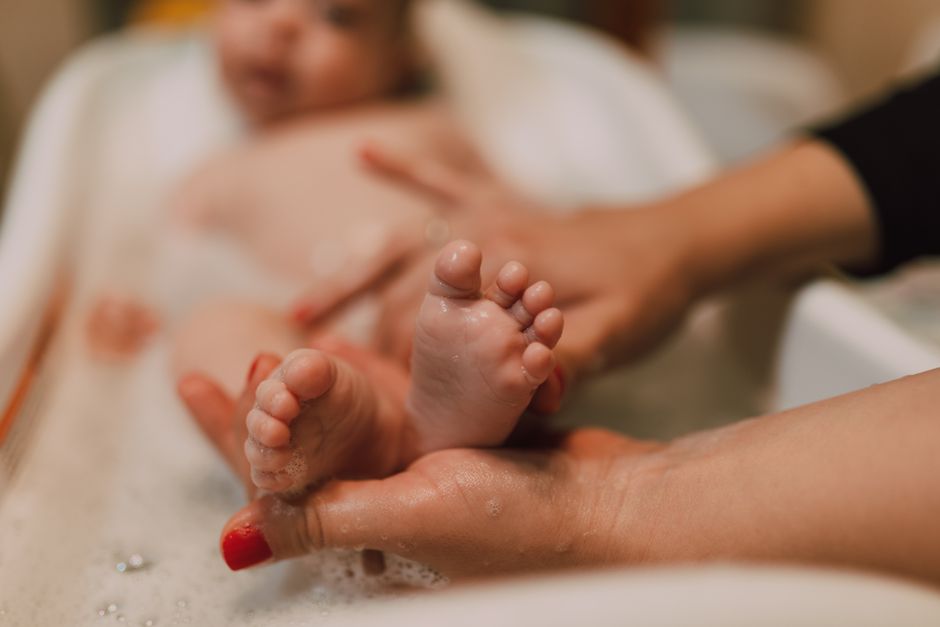
Giving a newborn their first bath can feel intimidating, but it is a simple skill any parent can learn. The key is preparation: gather everything you need before you start, keep the room warm, and never leave your baby unattended in the water. Sponge baths are recommended until the umbilical cord stump falls off, which usually happens within one to three weeks. After that, you can move to a small tub of warm water for a gentle immersion bath.
How Often Should You Bathe a Newborn?
Newborns do not need a daily bath. In fact, bathing them too often can dry out their sensitive skin. Two to three times per week is plenty for the first few months.
Between baths, you still need to keep your baby clean. Wipe the face, neck, hands, and diaper area daily with a warm, damp washcloth. This is often called a “top and tail” wash. It keeps your baby fresh without stripping natural oils from the skin.
How To Newborn Bath: Step-by-Step
Start by gathering all your supplies. You do not want to reach for a towel while holding a wet, slippery baby. Keep everything within arm’s reach.
You will need a baby bathtub or a clean plastic basin, two soft washcloths, a mild baby soap, a clean diaper, and a fresh outfit. Have a hooded towel ready to wrap your baby in immediately after the bath.
Fill the tub with about two to three inches of warm water. Test the temperature with your wrist or elbow. It should feel comfortably warm, not hot. The ideal water temperature is around 100°F (37.8°C) — comfortably warm to the touch but not hot.
Undress your baby and place them in the tub feet first. Keep one hand supporting their head and neck at all times. Use your free hand to gently wash them.
Wash the face first using just water and a clean washcloth. Then wash the rest of the body with a small amount of mild baby soap. Leave the genital area for last. Rinse the soap off with clean water from a cup or your hand, and lift your baby out immediately.
Sponge Baths Before the Cord Falls Off
Until the umbilical cord stump dries up and falls off, you should stick to sponge baths. Immersing the stump in water can slow healing and increase the risk of infection.
To give a sponge bath, lay your baby on a flat, safe surface like a changing table or a towel on the floor. Cover them with a warm blanket and uncover only one area at a time. Dip a washcloth in warm water, wring it out, and wipe your baby down. Pay special attention to skin folds, behind the ears, and under the chin.
Keep the cord stump clean and dry. If it gets dirty, clean it gently with a cotton swab dipped in rubbing alcohol or plain water, depending on what your pediatrician recommends. Let it air dry. Fold the diaper down below the stump so it can dry properly.





What Temperature Should the Room Be?
Newborns lose body heat quickly. They cannot shiver to warm themselves the way older children and adults can. A cold room can make bath time dangerous.
Warm the room to about 75°F (24°C) before you begin. Close windows and doors to avoid drafts. Keep the bath short — five to ten minutes is enough. A longer bath increases the risk of your baby getting cold.
After the bath, wrap your baby in a hooded towel immediately. Pat them dry gently. Do not rub, as a newborn’s skin is thin and easily irritated.
Choosing Safe Baby Bath Products
Plain warm water is the safest cleanser for a newborn. Soap is not strictly necessary in the first few weeks. If you do use soap, choose a mild, fragrance-free baby wash.
Fragrances and dyes can irritate newborn skin. Some babies develop rashes or dryness from scented products. If your baby has sensitive skin or eczema, talk to your pediatrician about which products are safest.
Avoid bubble baths entirely. They can irritate the urinary tract and cause discomfort. They also make the water slippery, increasing the risk of accidents.
Safety Rules You Should Never Skip
Never leave your baby alone in the bath. Not even for a second. Not even to answer the phone or grab a towel. Drowning can happen in as little as one inch of water and in seconds.
Always keep one hand on your baby while they are in the water. Newborns are slippery, and a moment of distraction is all it takes for them to slip under.
Do not run the water while your baby is in the tub. The water temperature can change suddenly, and the sound of running water is distracting. Fill the tub first, check the temperature, then put your baby in.
Never add hot water to the tub while your baby is in it. If you need to adjust the temperature, take your baby out first.
How to Handle a Baby Who Hates Bath Time
Some newborns love the water. Others cry through every bath. Both reactions are normal.
If your baby cries, check the basics first. Is the water too hot or too cold? Is the room too cold? Is your grip too tight or too loose? Sometimes simply moving the bathtub from a countertop to the floor makes a difference because the baby feels more secure.
Try bathing your baby when they are calm and alert. Avoid bath time when they are hungry or overly tired. A fed baby who has had time to settle is usually more cooperative.
Keep the bath routine consistent. The same time of day, the same steps, the same gentle voice. Babies find comfort in predictability. Most newborns adjust to bath time within a few weeks.
When to Skip the Bath
If your baby is unwell, skip the bath. A sick baby does not need the extra stress of being undressed and cooled. A quick sponge wash of the face and diaper area is enough.
Right after a feeding is also a bad time. Bathing a full baby can trigger spitting up or vomiting. Wait at least 30 minutes after a feed.
If your baby has just had a vaccination, you can bathe them the same day. The injection site can get wet. Just pat the area dry gently afterward. If you notice any redness, swelling, or fever after a vaccination, contact your pediatrician before bathing.
Frequently Asked Questions
How warm should newborn bath water be?
Aim for around 100°F (37.8°C). Test it with your wrist or elbow — it should feel comfortably warm, not hot.
Can you bathe a newborn every day?
Yes, but it is not necessary and can dry out their skin. Two to three times per week is sufficient for most newborns.
What if the umbilical cord stump falls off early?
Once the stump has fallen off and the area looks dry and healed, you can give your baby a tub bath. If you see any redness, discharge, or bleeding, contact your pediatrician first.
Is it safe to use soap on a newborn?
Plain water is safest for the first few weeks. If you use soap, choose a mild, fragrance-free baby wash and use it sparingly.
