
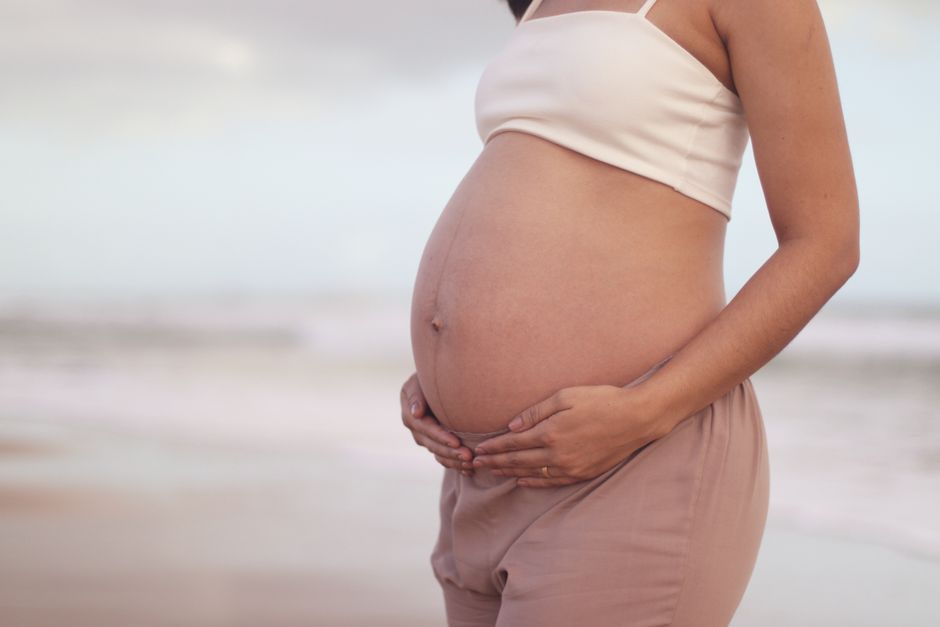
If you had a previous C-section and are planning a VBAC (vaginal birth after cesarean), you likely want labor to start on its own. The safest way to naturally induce labor for VBAC is to let your body decide when it is ready. Avoid any strong stimulation methods like castor oil or high-dose herbs because they can raise the risk of uterine rupture. Research shows that gentle, non-invasive methods like walking, nipple stimulation, and membrane sweeping (done by your provider) have the lowest risks for VBAC. Always talk to your obstetrician before trying anything, especially after a prior uterine scar.
Why Is Natural Induction Different for VBAC?
Your uterus has a scar from your previous C-section. That scar is strong, but it is not as strong as unscarred uterine muscle. The main risk with any induction method is that contractions could become too strong or too frequent. This can put extra pressure on the scar and, in rare cases, cause it to tear open. That is called uterine rupture, and it is a medical emergency.
Studies published in the American Journal of Obstetrics and Gynecology have found that the risk of uterine rupture during a VBAC is about 0.5% to 1% when labor starts on its own. That risk goes up when labor is medically induced with drugs like Pitocin. Natural methods that do not force the uterus into strong contractions have a much lower risk profile.
This does not mean natural methods are risk-free. It means the gentler the method, the safer it is for your scar. Your goal is to encourage your body to start labor on its own timeline, not to force it.
What Does Research on Natural Induction Methods for VBAC Show?
Research on natural induction for VBAC is limited because most studies focus on women with unscarred uteri. But the evidence we do have points to a few methods that are likely safe when used correctly.
Membrane sweeping is one of the best-studied methods. A 2020 Cochrane review found that membrane sweeping increases the chance of spontaneous labor within 48 hours. Your provider does this during a cervical exam by gently separating the amniotic sac from the cervix. It releases natural prostaglandins that can kickstart labor. For VBAC, this is considered low risk because it does not involve drugs.
Nipple stimulation works by triggering the release of oxytocin, the same hormone that causes contractions. A small study in the Journal of Perinatal Education found that women who used gentle nipple stimulation for 15 minutes three times a day were more likely to go into labor within 72 hours. But the key word is gentle. Too much stimulation can cause contractions that are too long or too strong. For VBAC, limit stimulation to light, intermittent touch and stop if contractions come more than three times in 10 minutes.
Walking and upright positions do not have strong evidence that they induce labor. But they do help the baby descend into the pelvis and may make contractions more effective once labor starts. There is no known risk to walking during a VBAC as long as you feel well.
| Method | Evidence Level | Safety for VBAC |
|---|---|---|
| Membrane sweeping | Strong (Cochrane review) | Low risk when done by provider |
| Nipple stimulation | Moderate (small studies) | Low risk if gentle and monitored |
| Walking | Weak (no direct induction evidence) | Safe |
| Castor oil | Weak (anecdotal, no VBAC studies) | Not recommended for VBAC |
| Herbal remedies | None (no clinical evidence) | Unknown risk, avoid |
What Methods Should You Avoid With a VBAC?
Some natural induction methods that are popular online carry real risks for women with a uterine scar. Avoid these entirely.
Castor oil is one of the most common DIY induction methods. It works by irritating your intestines, which can trigger uterine contractions. But the contractions it causes can be strong and unpredictable. There is no research on castor oil safety for VBAC. The American College of Obstetricians and Gynecologists (ACOG) advises against it for any pregnancy due to the risk of dehydration, nausea, and fetal distress.
High-dose herbs like blue cohosh, black cohosh, and red raspberry leaf are often sold as “labor teas” or tinctures. Blue cohosh has been linked to heart problems in newborns and can cause overly strong contractions. Black cohosh may affect blood pressure. As of 2026, there is no clinical evidence that any herbal blend safely induces labor for VBAC. The risk of causing contractions that stress your scar is not worth it.
Sexual activity is often recommended because semen contains prostaglandins, which can soften the cervix. But the amount of prostaglandin in semen is very small. There is no evidence that sex reliably induces labor. It is generally safe for VBAC as long as your water has not broken and your provider has not advised against it. But do not rely on it as a method.
Acupuncture and acupressure have some evidence for labor preparation. A 2017 meta-analysis in BMJ Open found that acupuncture may help ripen the cervix. But the effect on actually starting labor is small. For VBAC, these are low risk when done by a trained practitioner. Just do not expect them to work overnight.
- Castor oil: strong, unpredictable contractions — avoid
- Blue cohosh/black cohosh: no VBAC safety data — avoid
- Sex: safe but not effective for induction
- Acupuncture: low risk, weak evidence for induction




How Can You Prepare Your Body for a Natural VBAC Labor?
Preparation is not the same as induction. You cannot force your body into labor, but you can create conditions that make spontaneous labor more likely.
Optimal fetal positioning matters. If your baby is in a posterior position (back against your spine), labor can be longer and more painful. Spend time on your hands and knees, sit on a birthing ball, and avoid reclining in chairs. The goal is to help the baby rotate into an anterior position, which puts pressure on your cervix more effectively.
Eating dates has some evidence behind it. A 2020 study in the Journal of Obstetrics and Gynaecology found that women who ate six dates per day starting at 36 weeks had higher cervical dilation at admission and were more likely to go into spontaneous labor. Dates are safe for VBAC. They do not cause contractions. They seem to help the cervix ripen naturally.
Staying hydrated and rested is underrated. Exhaustion can stall early labor. If you are tired, your body may not release oxytocin effectively. Rest when you can, especially in the days before your due date. Dehydration can also cause Braxton Hicks contractions that feel real but do not progress labor.
Evening primrose oil is sometimes inserted vaginally to soften the cervix. A few small studies suggest it may help with cervical ripening. But other studies found no effect. There is no VBAC-specific safety data. If you try it, use the lowest dose and stop if you notice any cramping. Some providers recommend against it because of uncertain quality control in supplements.
What Should You Discuss With Your Provider Before Trying Natural Induction?
Your provider needs to know your full history. The safety of natural induction for VBAC depends on why you had a C-section in the first place. If your previous C-section was for a reason that could happen again — like placental abruption or a true failure to progress — your provider may advise against any induction, even natural methods.
Ask your provider these specific questions:
- Is my scar considered low-risk for a VBAC?
- What is my Bishop score (a measure of cervical readiness)?
- Are there any natural methods you support for my situation?
- At what point should I stop a natural method and come to the hospital?
Your provider can also do a membrane sweep in the office if your cervix is favorable. That is one of the safest natural interventions because it is controlled and monitored. Some providers will not do membrane sweeps for VBAC because of theoretical risk of infection or accidental water breaking. But the evidence shows it is low risk when done after 39 weeks.
If your provider is uncomfortable with any natural method, ask why. Some concerns are based on real risk. Others are based on lack of data. A good provider will explain the difference. If you feel dismissed, a second opinion is reasonable. But never go behind your provider’s back and try something they advised against.
What Are the Warning Signs That a Natural Method Is Going Wrong?
You need to know when to stop. Some signs mean you should call your provider or go to the hospital immediately.
Contractions that last longer than 90 seconds or come more often than every two minutes are a red flag. This is called tachysystole. It can reduce blood flow to the baby and put stress on your uterine scar. If you are using nipple stimulation and this happens, stop immediately. If it does not settle down within 10 minutes, call your provider.
Sudden sharp pain in your lower abdomen, especially if it does not go away between contractions, could be a sign of uterine rupture. Other signs include pain in your shoulder, vaginal bleeding, or a change in the baby’s movement. Rupture is rare — about 0.5% of VBACs — but it is serious.
Your water breaks and the fluid is green or brown. That is meconium, which can mean the baby is stressed. If your water breaks and you are not having contractions, your provider will likely want you to come in for monitoring. Do not try natural induction after your water breaks without medical guidance. The risk of infection goes up.
Trust your instincts. If something feels wrong, it probably is. You are not bothering your provider by calling. They would rather hear from you and say everything is fine than have you wait too long.
Frequently Asked Questions
Can I use a breast pump to induce labor with a VBAC?
Yes, but only with your provider’s approval and at low suction. Use it for 15 minutes at a time and stop if contractions come more than three times in 10 minutes.
Is walking enough to start labor with a VBAC?
Walking does not have strong evidence for starting labor, but it helps the baby descend and may make contractions more effective once labor begins.
When should I stop natural induction methods for VBAC?
Stop if contractions last longer than 90 seconds, come more often than every two minutes, or if you feel sudden sharp pain in your lower abdomen.
Can I eat dates to induce labor with a VBAC?
Eating six dates per day starting at 36 weeks may help ripen the cervix and increase the chance of spontaneous labor. Dates are safe for VBAC.
