
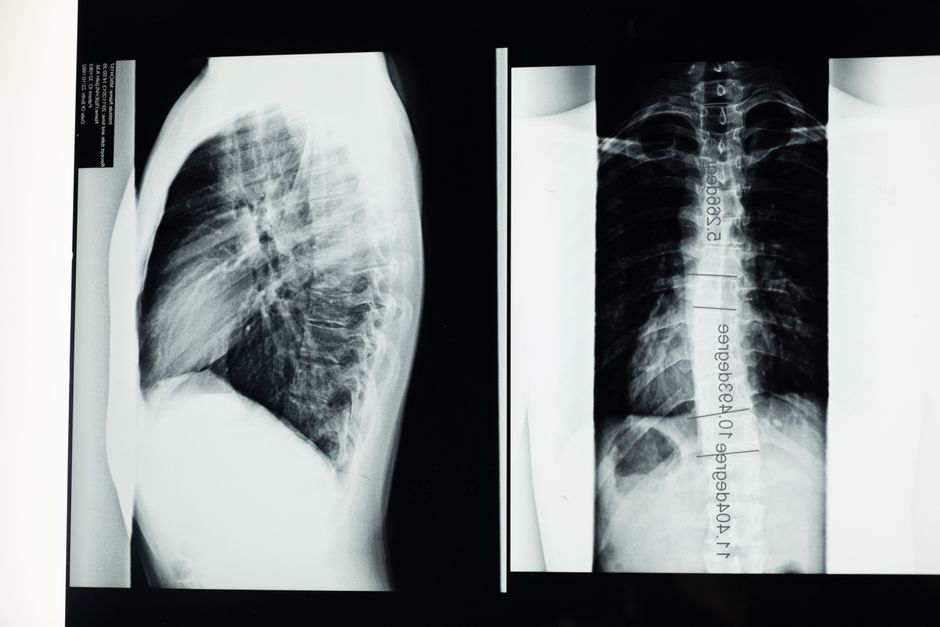
If you or your child has been diagnosed with scoliosis, you may have heard terms like “right thoracic curve” or “double major curve.” Healthcare providers follow a clear process to name a scoliosis curve. First, they measure the Cobb angle on an X-ray. Second, they identify the location of the curve’s apex. Third, they note the direction the curve bends (convexity). Fourth, they classify the curve pattern and decide if it is structural or compensatory. This step-by-step method gives each curve a precise name that guides treatment decisions.
Why Naming a Scoliosis Curve Matters
The way a curve is named tells doctors and patients what is happening in the spine. A single label like “right thoracic curve” describes the location, the side of the bend, and often the direction of vertebral rotation. This information helps predict curve progression, choose between bracing and surgery, and track changes over time.
Without a standardized naming system, comparing X‑rays from different visits or between different doctors would be confusing. The naming system also helps researchers study how different curve patterns respond to treatment. For patients, understanding the name of your curve can make conversations with your care team clearer.
Step 1: Measure the Cobb Angle
Every scoliosis curve is first measured using the Cobb method. This is the gold‑standard way to diagnose and grade scoliosis. The Cobb angle is the angle between the most tilted vertebrae at the top and bottom of the curve.
If the Cobb angle measures 10 degrees or more, the curve is diagnosed as scoliosis. Curves under 10 degrees are not considered scoliosis. The size of the Cobb angle also determines whether the curve is mild (10–25 degrees), moderate (25–45 degrees), or severe (over 45 degrees).
The measurement is made on a standing X‑ray. A line is drawn along the top endplate of the uppermost tilted vertebra and the bottom endplate of the lowest tilted vertebra. The angle where these lines intersect is the Cobb angle. This number is the first component of the curve’s name.
Step 2: Identify the Curve Apex and Location
The apex of a curve is the vertebra or disc that is farthest from the midline. It is the most rotated and most displaced part of the curve. To name a curve, you first locate the apex on the X‑ray.
The curve is then named by the region of the spine where the apex lies:
- Cervical curve – apex in the neck (C1–C6). These are rare.
- Cervicothoracic curve – apex at C7 or T1.
- Thoracic curve – apex between T2 and T11. This is the most common location.
- Thoracolumbar curve – apex at T12 or L1.
- Lumbar curve – apex between L2 and L4.
- Lumbosacral curve – apex at L5 or S1 (rare).
The apex is the key landmark. A curve whose apex is in the thoracic spine is called a thoracic curve, even if the curve extends into the lumbar area. The region where the apex sits decides the first part of the name.





Step 3: Determine the Curve Direction (Convexity)
Every curve bends to either the right or the left. The direction is named by the side of the convexity – the side of the spine that bulges outward. A right thoracic curve means the spine bows to the right when viewed from behind.
In most people, thoracic curves bend to the right (about 85–90% of cases). Lumbar curves more often bend to the left. This pattern is so consistent that a left‑sided thoracic curve sometimes prompts a doctor to look for other causes, such as a spinal cord issue. But it is not always abnormal.
The direction is always included in the full name. For example, “right thoracic curve” or “left lumbar curve.”
How To Name A Scoliosis Curve Step By Step: Putting It All Together
Here is the complete process using a real example. Suppose an X‑ray shows a curve with a Cobb angle of 35 degrees, an apex at T7, and the bend goes to the right. The name would be: 35‑degree right thoracic curve.
If this is the only curve in the spine, it is often called a single major right thoracic curve. If there is also a smaller curve in the lumbar spine that bends left to balance the thoracic curve, the second curve is called a compensatory curve, not a major curve. The naming process always identifies the largest (major) curve first.
To summarize the steps:
- Measure the Cobb angle to determine curve severity.
- Find the apex to decide the curve location (thoracic, lumbar, etc.).
- Note the convex side (right or left).
- Check if other curves are present and classify the pattern (single, double, or triple major; structural vs. compensatory).
The final name gives a complete picture of the spinal alignment.
Common Curve Types and What They Mean
Several curve patterns are seen so often that they have standard names. Knowing these helps patients and families understand what to expect.
- Single thoracic curve – A right‑sided curve between T2 and T11. This is the most common pattern, especially in adolescent idiopathic scoliosis. The risk of progression is highest for thoracic curves larger than 25 degrees.
- Single lumbar or thoracolumbar curve – Usually a left‑sided curve. These curves may cause less visible rib hump but can lead to lower back pain and imbalance.
- Double major curve – Two curves, typically a right thoracic and a left lumbar curve, both large enough to be considered structural. This pattern often balances the shoulders and hips, so it may be less noticeable cosmetically but can still require treatment.
- Double thoracic curve – A left upper thoracic curve and a right lower thoracic curve. This pattern can cause shoulder asymmetry and is sometimes missed on initial exam.
- Triple curve – Uncommon. Involves one curve in each major spinal region (thoracic, lumbar, thoracolumbar).
Some patterns are associated with a higher risk of progression. Double major curves tend to progress more slowly than single thoracic curves, but every case is individual.
Understanding Structural vs. Compensatory Curves
Not every curve in the spine is a true scoliosis. Some curves develop as the body tries to keep the head centered over the pelvis. These are called compensatory or non‑structural curves. They are flexible – meaning they straighten out when the person bends to the side or lies down.
Structural curves, on the other hand, are fixed. They do not fully straighten with bending. On an X‑ray, a structural curve has rotational deformity. The vertebrae in a structural curve also show wedging and rotation when viewed from the side.
The naming process separates these two types. A curve is considered structural if it does not correct on a side‑bending X‑ray. Compensatory curves are not given the same weight in the diagnosis. A patient with a 40‑degree right thoracic scoliosis may also have a 20‑degree left lumbar curve that is not structural. The lumbar curve is not named as a separate scoliosis – it is simply a compensatory curve.
Knowing which curves are structural helps decide treatment. Bracing or surgery typically targets only the structural curves, because correcting a compensatory curve on its own can worsen balance.
When the Curve Does Not Fit Standard Patterns
Some curves are atypical. For example, a left thoracic curve in a teenager without a known cause may raise concern for a spinal cord abnormality, such as syringomyelia or a tethered cord. In these cases, doctors often order an MRI. Atypical curves may also occur in neuromuscular scoliosis (from conditions like cerebral palsy or muscular dystrophy) or congenital scoliosis (from a vertebral malformation present at birth).
The naming process remains the same – Cobb angle, apex, direction – but the underlying cause influences the treatment plan. For neuromuscular curves, the curve may be long and C‑shaped, involving much of the spine. Congenital curves often have sharp angles and short segments. The standard naming method still applies, but the context changes.
Frequently Asked Questions
What does a right thoracic scoliosis curve mean?
It means the spine bends to the right in the upper back (thoracic region), with the apex between T2 and T11.
How is the apex of a scoliosis curve determined?
The apex is the vertebra or disc that is farthest from the midline on the X‑ray and is the most rotated part of the curve.
Can a scoliosis curve change its name over time?
Yes, the name changes if the Cobb angle, apex location, or curve pattern shifts significantly, though location and direction usually remain stable.
What is a double major scoliosis curve?
A double major curve means two structural curves exist, typically a right thoracic and a left lumbar curve, each requiring separate measurement and treatment consideration.
