
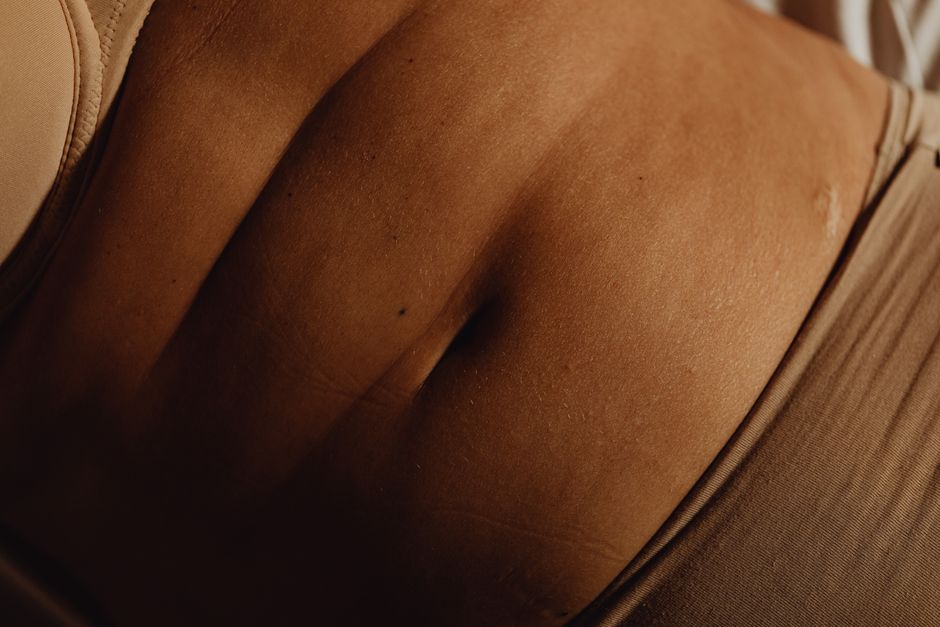
You cannot move fat from your belly to your buttocks. Fat is stored and burned as a whole-body system, not spot by spot. What you can do is lower overall body fat through a calorie deficit, then build the gluteal muscles with targeted strength training so your rear looks fuller and firmer as the fat comes off. That combination — losing fat everywhere plus growing muscle in one specific place — is the only thing that genuinely changes the shape you are asking about.
Why You Cannot Spot-Reduce Belly Fat
Your body does not decide where to burn fat based on which muscle you are working. It releases fat through hormones that travel in the bloodstream and reach fat cells all over the body at once. Where that fat comes off first is mostly genetic and hormonal, and you do not get to pick the order.
This is one of the most studied questions in exercise science. Research going back decades has tested whether training a muscle burns the fat sitting on top of it. It does not. Studies that trained one arm or one leg while leaving the other side untrained found fat loss spread evenly, not concentrated over the working muscle.
So crunches will not flatten your belly any faster than any other exercise that burns the same number of calories. And glute exercises will not pull fat off your waist and deposit it on your rear. Fat cells do not migrate. They shrink and grow in place.
What spot training can do is build the muscle underneath. That changes shape and firmness, not the location of your fat.
How To Move Belly Fat To Buttocks What Really Works
Two things working together: a calorie deficit to reduce total body fat, and progressive resistance training to build the glutes. Neither one alone gets you the result.
Here is why both matter. If you only diet, you lose fat from your belly and your buttocks at the same time. Your rear can end up flatter, not fuller. If you only train glutes without addressing overall fat, new muscle can sit under a layer of fat that hides the shape you built.
The order of operations that makes sense:
- Eat in a modest calorie deficit so you lose fat steadily rather than rapidly.
- Train the glutes with resistance two to three times per week.
- Eat enough protein to support muscle retention while you lose fat.
- Be patient. Visible change takes months, not weeks.
A modest deficit matters more than an aggressive one. When you cut calories hard, a larger share of the weight you lose comes from muscle, including the glutes you are trying to build. Slow fat loss with adequate protein and resistance training protects muscle much better.
Which Exercises Actually Build The Glutes
Muscle grows when it is challenged against resistance and then recovers. For glutes, the exercises with the strongest support are the ones that load the hip extension and hip abduction movements the glutes are built to perform.
Well-established choices include:
- Hip thrusts — load the glutes heavily through hip extension.
- Squats — train glutes along with the quads and other leg muscles.
- Romanian deadlifts — emphasize the glutes and hamstrings.
- Step-ups and lunges — single-leg work that challenges each side.
- Hip abduction — targets the gluteus medius on the outer hip.
The detail that matters most is progressive overload. That means gradually adding weight, reps, or difficulty over time. Doing the same routine at the same weight for months stops producing change. Your muscles adapt and then stop responding.
Glute training two to three times per week gives most people enough stimulus with enough recovery. More is not automatically better.





What To Eat While You Reshape
Protein is the nutrient with the clearest role here. It supports muscle building and helps preserve muscle while you are in a calorie deficit. General guidance for active adults who train with resistance tends to fall in a range well above the typical American intake, though individual needs vary with body size and training load.
Beyond protein, the practical points are simple:
- Keep the deficit modest so you lose fat without stripping muscle.
- Spread protein across meals rather than loading it all at dinner.
- Do not cut carbohydrates so low that your training quality drops.
- Prioritize whole foods, but total calories and protein matter most.
No food, supplement, or tea moves fat from your waist to your rear. Any product claiming to do that is making a claim that has no supporting evidence.
Why Belly Fat Comes Off Last For Many People
Belly fat is often the most stubborn, and there is a physiological reason. Visceral fat — the fat packed around your internal organs — behaves differently from the fat just under your skin. It is more metabolically active and responds to hormones and overall energy balance rather than to exercise aimed at the midsection.
For many people, especially men, the midsection is simply where fat is stored first and released last. That is largely determined by genetics and hormones, not by effort or discipline.
This is worth sitting with, because it explains a lot of frustration. Someone can be doing everything right and still see their waist change more slowly than their arms, face, or legs. That is not failure. It is the normal pattern of fat distribution.
What Does Not Work
A long list of popular approaches does not do what people hope.
Waist trainers and shapewear do not redistribute fat. They compress tissue while worn and change nothing once removed.
Fat-burning creams and patches have no evidence of moving or meaningfully reducing fat in a targeted area.
Extreme fasting or crash diets can produce fast scale movement, but a large share of that loss can be muscle and water rather than fat, which works against the shape you want.
Passive methods like vibration plates or electrical stimulation marketed for spot reduction have not been shown to reduce fat in the treated area.
None of this is meant to discourage you. It is meant to save you money and time on things that cannot work, so you can put that effort into the two things that do.
How Long Does It Take To See A Difference
Fat loss and muscle growth are both slow processes. Noticeable change in body shape typically takes several months of consistent effort, not weeks. This is one of the areas where honest expectations matter more than motivation.
Early on, strength gains come faster than visible muscle growth. Much of the first few weeks of progress is your nervous system getting better at the movements, not new muscle. Visible glute growth generally takes longer than that.
Progress also depends on where you are starting. Someone with more fat to lose may see the overall shape change sooner because fat loss is more visible. Someone already lean may need to focus almost entirely on building muscle.
Track more than the scale. Measurements, how clothes fit, and progress photos taken in the same light tell you more about shape change than weight alone.
When To Talk To A Professional
If you have tried for a long time without change, or if you have other symptoms alongside stubborn weight — fatigue, unusual hair growth, irregular periods, or unexplained weight gain — it is worth talking to a doctor. Some hormonal and metabolic conditions affect where the body stores fat and how easily it comes off.
A doctor or registered dietitian can also help if you have a health condition that affects how you should approach diet and exercise. This article is general information, not medical advice for your specific situation.
Frequently Asked Questions
Can you actually move fat from your belly to your buttocks?
No. Fat cannot be relocated from one part of the body to another through diet or exercise. What changes your shape is losing fat overall while building glute muscle.
Do glute exercises burn belly fat?
They burn calories like any resistance exercise, but they do not target belly fat specifically. Spot reduction has not held up in research.
How long until I see a change in my shape?
Visible change usually takes several months of consistent training and a steady calorie deficit. Muscle growth in particular is a slow process.
What is the fastest way to build a fuller butt?
Train the glutes with progressive resistance two to three times per week and eat enough protein. There is no fast method — consistency over months is what produces results.
