
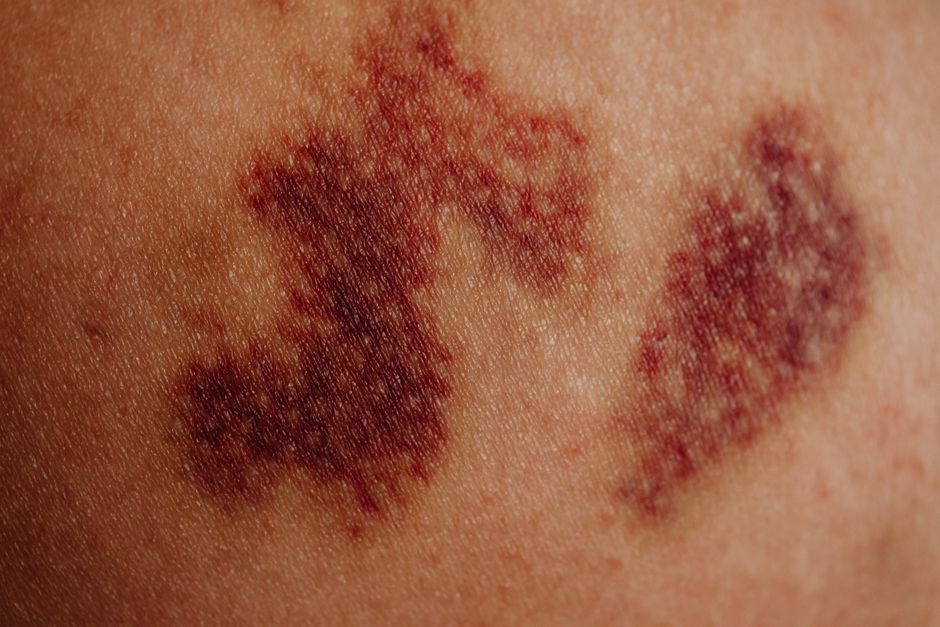
Bruises happen when small blood vessels under your skin break and leak blood into the surrounding tissue. The blood pools, and you see that familiar black-and-blue mark. While you cannot always prevent a bruise, you can reduce how large it gets and how long it lasts. The most effective steps are simple: act fast with cold, then switch to warmth, elevate the area, and protect it from further injury. Here is the step-by-step process that works.
What Exactly Happens When You Bruise?
A bruise forms after an impact that is hard enough to rupture tiny blood vessels called capillaries. Blood leaks into the tissue beneath your skin, which causes the discoloration you see. The body then has to break down that pooled blood and clear it away, which is why bruises change color over several days.
The size of a bruise depends on how much blood leaks out. It also depends on where the injury happened. Areas with loose skin, like the arms and legs, tend to bruise more easily than areas with firm tissue underneath. The depth of the blood pooling determines whether you see a deep purple mark or a more superficial red one.
Your body’s healing process is consistent. White blood cells move in to clean up the area, and enzymes break down the hemoglobin in the blood. That breakdown is what causes the color shift from red to purple to green to yellow before the bruise fades completely.
Step 1: Apply Cold Immediately
Cold is the single most important step for minimizing a bruise. It works by constricting the blood vessels, which reduces the amount of blood that leaks into the tissue. The faster you apply cold after an injury, the smaller the bruise will be.
Use an ice pack, a bag of frozen vegetables, or a cold gel pack. Wrap it in a thin cloth or towel so it does not touch your skin directly. Apply it to the area for 15 to 20 minutes at a time. You can repeat this every couple of hours during the first 24 to 48 hours after the injury.
Do not leave ice on for longer than 20 minutes at a stretch. Prolonged cold exposure can damage the skin and underlying tissue. If the area becomes numb or the skin looks very pale, remove the ice immediately and let the area warm back up.
Step 2: Elevate the Injured Area
Elevation works alongside cold to reduce bruising. When you raise the injured area above the level of your heart, gravity helps drain fluid away from the site. This reduces swelling and limits the amount of blood that pools around the injury.
If you bruised your leg, prop it up on pillows while you sit or lie down. If you bruised your arm, rest it on a stack of pillows or a chair arm. Keep the area elevated as much as you can during the first 24 hours. This is especially important for injuries on the lower body, where gravity pulls blood downward.
Elevation does not stop the initial bleeding, but it does reduce the pressure in the area. Less pressure means less blood escapes from the damaged vessels. The combination of cold and elevation is significantly more effective than either one alone.




Step 3: Switch to Heat After 48 Hours
After the first two days, the bleeding has stopped. At this point, cold no longer helps. Heat is now the right tool because it increases blood flow to the area, which helps your body clear away the pooled blood faster.
Use a warm compress, a heating pad on a low setting, or a warm towel. Apply it for 15 to 20 minutes a few times a day. The warmth dilates the blood vessels, which encourages circulation and speeds up the cleanup process.
Do not use heat during the first 48 hours. Applying heat too early can increase bleeding and make the bruise larger. The switch from cold to heat at the two-day mark is a critical timing detail that many people get wrong.
Step 4: Protect the Area and Use Gentle Compression
Once the bruise has formed, you want to avoid hitting the same spot again. A second impact on the same area can cause significantly more damage and a much larger bruise. Be careful when moving, dressing, or exercising.
Gentle compression can help in some cases. An elastic bandage wrapped snugly but not tightly around the area can reduce blood flow to the surface and limit swelling. Do not wrap it so tight that it cuts off circulation or causes numbness. If you feel tingling or the area turns blue, loosen the wrap immediately.
Compression is most useful for bruises on the limbs. It is not practical or helpful for bruises on the torso or face. For those areas, focus on cold, elevation, and protection.
Step 5: Consider Over-the-Counter Options Carefully
Arnica gel and cream are popular for bruising. Some research suggests they may help reduce the appearance of bruises, but the evidence is not strong. A few small studies have shown modest effects, while others found no benefit. If you try arnica, follow the product instructions and stop if you have any skin irritation.
Vitamin K cream is another option that some dermatologists recommend. Vitamin K plays a role in blood clotting, and topical forms have shown some promise in reducing bruising after cosmetic procedures. However, the evidence is limited, and results vary widely between individuals.
Oral supplements like bromelain, which comes from pineapple stems, are sometimes marketed for bruising. Some studies suggest it may have anti-inflammatory effects, but no large clinical trials have confirmed that it reduces bruising in everyday injuries. The evidence here is genuinely limited.
What Makes Some People Bruise More Easily?
Age is a major factor. As you get older, your skin becomes thinner and the fat layer beneath it shrinks. That means less cushioning around your blood vessels, so they break more easily with less force. Older adults often bruise from minor bumps that would not have left a mark in younger years.
Certain medications increase bruising. Blood thinners like warfarin, apixaban, and aspirin make it easier for blood to leak from damaged vessels. Even over-the-counter pain relievers like ibuprofen and naproxen can increase bruising because they interfere with platelet function. If you take any of these, you may notice more frequent or larger bruises.
Vitamin deficiencies can also play a role. Vitamin C is needed for collagen production, which helps keep blood vessel walls strong. Vitamin K is essential for proper blood clotting. Severe deficiencies in either can lead to easier bruising, though this is uncommon in people who eat a varied diet.
When Should You See a Doctor About a Bruise?
Most bruises are harmless and fade within two weeks. But some situations warrant medical attention. If a bruise does not improve after two weeks, or if it continues to grow larger after the first few days, see a doctor.
Seek medical care if you have a bruise that is extremely painful, causes significant swelling, or makes it difficult to move a joint. A bruise on your head, especially if accompanied by confusion, vomiting, or severe headache, requires immediate medical evaluation. Bruising that appears without any known injury, especially if it happens frequently, may signal an underlying bleeding disorder and should be evaluated.
If you are taking blood thinners and experience a hard blow to the head or torso, get medical attention even if the bruise looks small. Internal bleeding can be more serious than the surface bruise suggests.
How To Minimize Bruising During Recovery
Once a bruise is healing, gentle movement can help. Light stretching or walking encourages circulation without putting stress on the injured area. Avoid vigorous exercise that could re-injure the spot until the bruise has faded significantly.
Eating a balanced diet supports the healing process. Your body needs protein for tissue repair and vitamin C for collagen production. Staying hydrated helps maintain healthy blood flow. These are general health measures, not specific bruise treatments, but they support faster recovery.
Be patient. A bruise takes time to clear because your body has to physically break down and remove the pooled blood. You cannot speed this up dramatically, but you can avoid making it worse.
Frequently Asked Questions
Does ice really stop a bruise from forming?
Yes, applying ice within the first 24 hours constricts blood vessels and reduces the amount of blood that leaks into the tissue. The faster you apply it, the smaller the bruise is likely to be.
How long does a bruise take to heal?
Most bruises fade within one to two weeks. Larger bruises or those on the legs can take longer because gravity slows the cleanup process.
Can you make a bruise go away faster?
Heat after the first 48 hours can speed up the body’s cleanup process by increasing blood flow to the area. No treatment makes a bruise disappear overnight.
When should a bruise worry you?
See a doctor if a bruise grows larger after the first few days, does not improve after two weeks, or appears without any known injury. Bruises on the head with confusion or vomiting require immediate medical care.
