
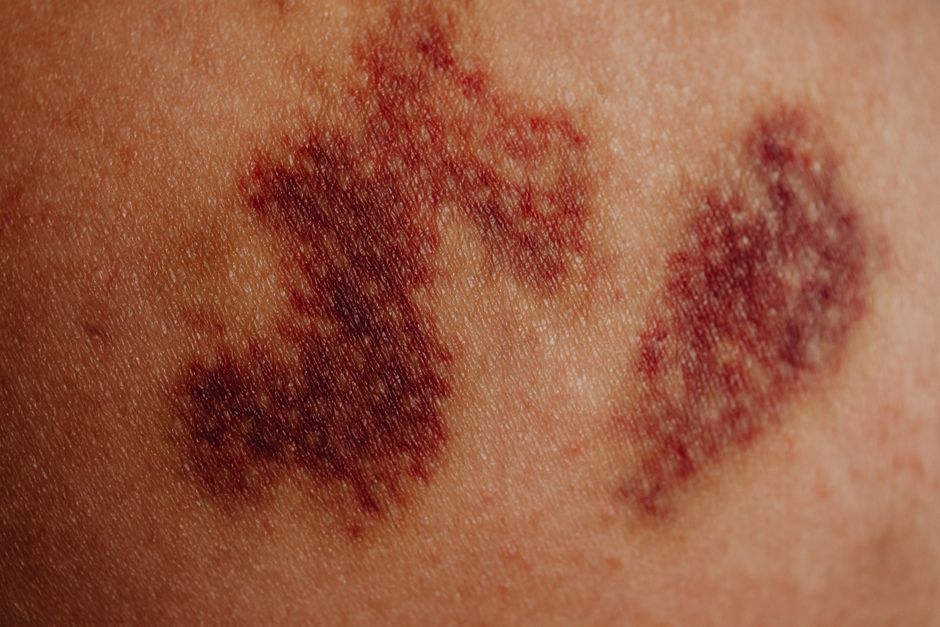
A bruise appears when tiny blood vessels under your skin break and leak blood into the surrounding tissue. For most people, the first visible color change shows up within 1 to 2 hours after the injury. The bruise typically becomes fully visible and reaches its darkest color within 24 to 48 hours. This timeline is consistent for most healthy adults, though individual factors like skin tone, injury severity, and medications can shift it slightly.
What Happens in Your Body When a Bruise Forms
A bruise is a collection of blood that has escaped from damaged capillaries. Capillaries are the smallest blood vessels in your body, and they sit very close to the surface of your skin. When you bump into something, the impact can tear these fragile vessels open.
Blood leaks into the tissue beneath your skin almost immediately after the injury. At first, the area may look red or pink because oxygen-rich blood is sitting close to the surface. Within a few hours, the blood begins to lose oxygen and the bruise takes on a darker, bluish or purple appearance.
Your body then starts cleaning up the leaked blood. White blood cells move into the area to break down the blood cells, and the body reabsorbs the fluid over the following days. This cleanup process is what causes the bruise to change colors as it heals.
How Long Does It Take For Bruising To Appear After an Injury?
In most cases, you will see the first sign of a bruise within 1 to 2 hours. The discoloration starts as a reddish mark that gradually darkens. By the 24-hour mark, the bruise usually reaches its full size and deepest color.
Some bruises appear faster than others. A hard impact that tears many capillaries can produce visible discoloration in as little as 15 to 30 minutes. A lighter bump may not show any color for several hours. If you have a bleeding disorder or take blood-thinning medication, bruising can appear much faster and spread more widely.
The speed of bruising also depends on where the injury occurred. Areas with thin skin and many blood vessels, like the eyelids or forearms, tend to bruise visibly faster. Areas with thicker skin and more fat, like the thighs or buttocks, may take longer for the color to show through.
What Determines How Fast and How Dark a Bruise Gets
Several factors influence how quickly a bruise appears and how severe it looks. Understanding these can help you know what to expect after an injury.
- Force of impact: Harder impacts break more blood vessels, leading to faster and larger bruises.
- Skin tone: People with lighter skin show bruise colors more quickly and vividly. On darker skin, bruises may appear as deep purple, brown, or dark patches that can be harder to see at first.
- Age: Skin thins and blood vessels become more fragile as you age. Older adults often bruise faster and more easily.
- Medications: Blood thinners like aspirin, warfarin, and newer anticoagulants increase bleeding under the skin. Bruises can appear within minutes and spread significantly.
- Location on the body: Areas with little fat padding, like the shins and elbows, bruise faster than padded areas.
- Underlying health conditions: Bleeding disorders, liver disease, and certain vitamin deficiencies can make bruising faster and more extensive.
Your body’s natural response to injury also plays a role. Inflammation brings extra blood flow to the area, which can make the bruise appear more prominent in the first few hours before the body begins clearing the blood.




How Bruise Colors Change Over Time
Bruises follow a predictable color pattern as the body breaks down and reabsorbs the leaked blood. This color progression can help you estimate how old a bruise is.
In the first 1 to 2 days, the bruise is typically red, purple, or blue. This is the color of fresh blood that has lost oxygen. Between days 2 and 5, the bruise often turns darker purple or black as the blood clots and begins to break down.
Around days 5 to 10, the bruise shifts to green. This color comes from biliverdin, a green pigment produced when the body breaks down hemoglobin, the oxygen-carrying protein in red blood cells. Over the next week, the bruise turns yellow or brown as bilirubin, another breakdown product, forms.
Most bruises fade completely within 1 to 2 weeks. Larger bruises or those from severe injuries can take 3 to 4 weeks to fully disappear. A bruise that remains painful, keeps growing, or does not change color over time should be evaluated by a healthcare provider.
When a Bruise Is Not Just a Bruise
Most bruises are harmless and heal on their own. But some require medical attention. You should see a doctor if a bruise appears without any known injury, especially if you have several unexplained bruises at once.
Seek medical care if a bruise is unusually large, continues to expand after the first day, or is accompanied by severe pain and swelling. A bruise over a joint that makes movement difficult could indicate a deeper injury like a fracture or ligament damage.
Bruising that occurs with frequent nosebleeds, bleeding gums, or blood in your stool or urine may signal a bleeding disorder. If you take blood thinners and develop a bruise after a fall or head injury, get medical evaluation even if the bruise looks small. Internal bleeding can occur without a visible surface bruise.
Some people mistake other conditions for bruises. A sudden dark patch that appears without injury could be a hematoma, which is a larger collection of blood that forms a lump. Certain skin infections, allergic reactions, and vascular conditions can also mimic bruising. If you are unsure what caused a mark on your skin, have a healthcare professional look at it.
Can You Make a Bruise Appear Faster or Slower
You cannot significantly speed up the initial appearance of a bruise. The blood leaks into the tissue at the moment of injury, and the color shows as that blood becomes visible through the skin. No treatment changes this timing.
You can, however, influence how large and dark the bruise becomes. Applying ice to the area within the first 24 hours constricts blood vessels and reduces the amount of blood that leaks out. A cold pack wrapped in a thin cloth, applied for 15 to 20 minutes at a time, can limit bruise size. Do not apply ice directly to the skin, as this can cause frostbite.
Elevating the injured area above heart level also reduces blood flow to the site and can limit bruising. This works best for injuries to the arms or legs. Over-the-counter pain relievers like acetaminophen are generally safer than ibuprofen or aspirin after a bruise, since those drugs can increase bleeding.
After the first 48 hours, gentle heat can help speed healing by increasing blood flow to the area. This helps the body clear the leaked blood more efficiently. Some evidence suggests that creams containing vitamin K or arnica may help bruises fade faster, but results from studies are mixed and these products are not a substitute for standard care.
How To Tell If a Bruise Is Healing Normally
A normal bruise follows the color changes described above and gradually shrinks in size. The area may feel tender for the first few days, but pain should steadily decrease. Swelling usually peaks within the first 24 hours and then subsides.
You should be concerned if a bruise becomes increasingly painful after the first day, feels hard or has a lump that grows, or if the skin over the bruise breaks open. Redness spreading outward from the bruise, warmth in the area, or fever can indicate an infection and requires prompt medical attention.
Bruises that do not change color for more than a week, or that remain present for more than three weeks without improvement, should be checked by a doctor. While most bruises resolve without treatment, persistent ones can occasionally signal an underlying problem with blood clotting or circulation.
Frequently Asked Questions
How quickly does a bruise show up after bumping yourself?
A bruise typically becomes visible within 1 to 2 hours after the injury. It reaches its darkest color within 24 to 48 hours.
Why did my bruise appear instantly?
Hard impacts that break many blood vessels can produce visible bruising within minutes. Areas with thin skin and many capillaries, like the eyelids, also show bruising faster.
Can a bruise take days to appear?
Yes, lighter injuries or bruises in areas with thick skin and fat padding can take several hours or up to a day to become visible. This is normal and does not indicate a problem.
How can I tell if a bruise is serious?
See a doctor if a bruise keeps growing after 24 hours, is extremely painful, or appears without any known injury. Bruising with frequent nosebleeds or bleeding gums also warrants medical evaluation.
