
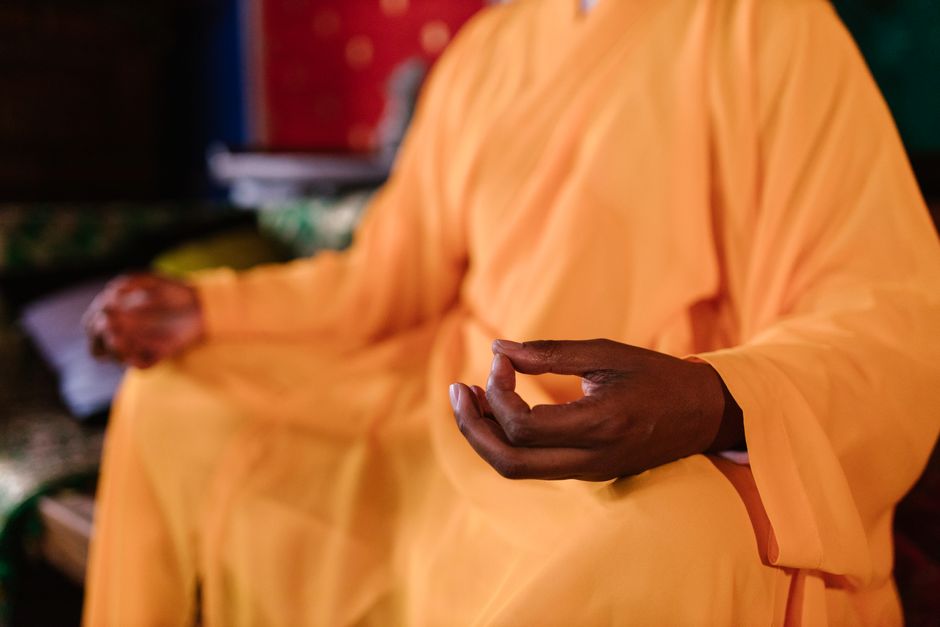
Monks meditate to train attention and see the mind clearly, not to reach a blissful state. The core method is simple: sit in a stable posture, place attention on one anchor like the breath, and gently return attention every time it wanders. The challenge is not learning the technique. It is repeating it thousands of times without expecting a result.
What Does It Actually Mean To Meditate Like A Monk?
Monastic meditation is a training discipline. The goal is not relaxation, though relaxation often happens. The goal is to observe the mind closely enough to understand how it works.
Different traditions use different techniques, but most share the same architecture. You stabilize attention on a single object. You notice when attention leaves. You bring it back without judgment. That cycle is the entire practice.
What separates monastic practice from a ten-minute app session is not secret technique. It is repetition, structure, and time. Monks in contemplative traditions often practice for hours daily, sometimes across decades. That volume changes what the practice does.
One clarification worth making: monks are not trying to stop thoughts. Trying to suppress thought generally backfires. The practice is noticing thoughts without being pulled into them.
How To Meditate Like A Monk From Posture To Practice?
Start with the body, then the attention, then the return. Each part matters, and skipping the posture is the most common mistake beginners make.
Posture
The classic monastic postures are seated cross-legged on a cushion, kneeling on a bench, or sitting in a chair. Full lotus is traditional but not required, and forcing it can injure knees and hips. Comfort and stability matter more than flexibility.
A workable posture has three features:
- Hips slightly higher than knees, which tilts the pelvis forward and lets the spine stack naturally
- Spine upright but not rigid, chin slightly tucked
- Hands resting on the thighs or in the lap, shoulders relaxed
Eyes can be closed or softly open, gazing downward a few feet ahead. Many monastic traditions keep the eyes slightly open to reduce drowsiness. If sitting is not possible, lying down is used in some traditions, though it makes sleep more likely.
Attention
Choose one anchor. The breath is the most common. You do not control the breath. You notice it. Sensation at the nostrils, the rise and fall of the chest, or the movement of the abdomen are all valid.
Other traditional anchors include a repeated phrase, a visual object, or open awareness of whatever arises. Pick one and stay with it. Switching anchors every session slows progress.
The Return
Attention will leave. This is not failure. It is the practice. The moment you notice the mind has wandered is the moment of training. You return to the anchor without commentary.
If you add a story about how bad you are at meditating, you have wandered again. Return. That is the whole instruction.
Duration And Frequency
Short daily sessions build the habit more reliably than occasional long ones. Consistency matters more than length in the early months. No clinical guideline specifies an ideal duration for meditation, so any specific number presented as a recommendation should be treated with skepticism.
What Happens In The Brain During Meditation?
Meditation engages attention networks and changes how they interact over time. This is one of the better-studied areas in contemplative science.
During focused attention practice, brain regions involved in sustained attention and in detecting conflict or distraction tend to show increased activity. Regions tied to the default mode network, which is active during mind-wandering and self-referential thinking, tend to quiet down in experienced meditators.
Longer-term structural findings are more debated. Some studies have reported differences in cortical thickness and gray matter density in long-term meditators. The evidence is mixed, sample sizes are often small, and researchers disagree about how much of the effect comes from meditation itself versus pre-existing traits or lifestyle factors.
What the research does support reasonably well is that meditation can improve performance on attention tasks and reduce self-reported mind-wandering. What it does not support is the idea that meditation produces a permanently altered brain in a fixed number of weeks.





How Long Does It Take To See Results?
Some effects show up quickly. People often report feeling calmer or more focused within the first few sessions. Those early changes are real but usually short-lived and partly reflect expectation.
Durable changes in attention and emotional reactivity generally take weeks to months of consistent practice. Research on mindfulness-based programs typically measures outcomes after eight weeks, and effects in those studies are modest on average, not dramatic.
Monastic-level training involves far more hours than most lay practitioners will ever accumulate. It is honest to say that the deeper states described in contemplative literature are associated with years of practice, and that the timeline varies widely between individuals. Anyone promising a specific transformation on a specific schedule is guessing.
Common Mistakes That Slow Progress
Most beginners make the same handful of errors. Recognizing them early saves months.
- Chasing a feeling. Trying to recreate a calm state turns meditation into a performance. The state is a byproduct, not the target.
- Judging the wandering mind. Self-criticism is just more thinking. Notice and return.
- Forcing the breath. Controlled breathing is a different practice. Let the breath be natural.
- Practicing only when motivated. Monks sit on schedule, not on inspiration. Habit carries the practice through flat periods.
- Expecting thoughts to stop. They will not. The skill is in the relationship to thoughts, not their absence.
Can Anyone Meditate, And Are There Risks?
Meditation is generally considered low-risk, and it is widely used in clinical settings as a complementary practice. That said, it is not risk-free for everyone.
Some people, particularly those with a history of trauma or certain psychiatric conditions, report increased anxiety, intrusive memories, or distress during meditation. This is documented in the research literature and is sometimes called a meditation-related adverse effect. It is not common, but it is real.
If meditation consistently increases distress, stopping or working with a qualified teacher or clinician is reasonable. Meditation is not a substitute for treatment of a mental health condition. Some clinicians recommend it as an adjunct to therapy, not a replacement.
People with physical limitations should adapt posture rather than force a traditional position. Chair sitting is a legitimate monastic-adjacent posture, not a lesser one.
Do You Need A Teacher Or Retreat?
You can begin without either. Basic instructions are widely available and sufficient to start a simple breath-focused practice.
A teacher becomes more useful as practice deepens. They can correct posture, clarify instructions, and help interpret experiences that are hard to make sense of alone. In monastic settings, the teacher-student relationship is central for exactly this reason.
Retreats compress practice into concentrated blocks. Many practitioners report that a multi-day retreat shifts their understanding of the practice in ways daily sitting does not. Retreats are also where difficult experiences are more likely to surface, which is one reason experienced guidance matters there.
None of this is required to begin. The practice starts with sitting down and paying attention to the breath.
Frequently Asked Questions
How long should I meditate each day?
No clinical guideline sets a required duration, but consistency matters more than length for beginners. A short daily session is generally easier to sustain than occasional long ones.
Do I have to sit cross-legged to meditate like a monk?
No. Chair sitting and kneeling are accepted alternatives in many traditions. The goal is a stable, upright posture, not flexibility.
Can meditation replace therapy or medication?
No. Meditation is sometimes used alongside treatment, but it is not a substitute for professional mental health care.
What should I do when my mind keeps wandering?
Notice that it wandered and return attention to your anchor without judgment. The moment of noticing is the practice itself.
