
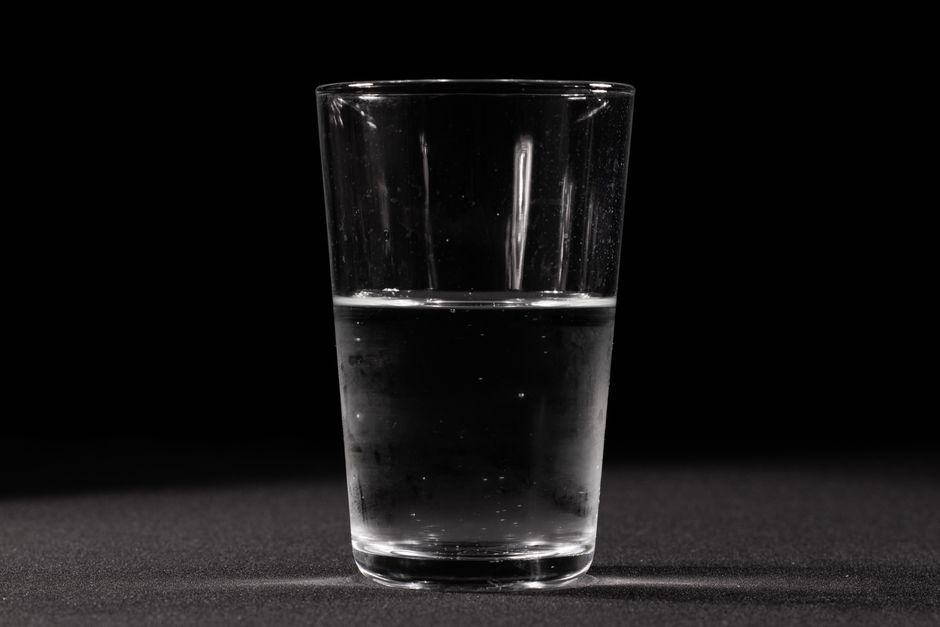
Transparency in water isn’t one single measurement. It’s a family of related tests, and each one answers a slightly different question. If you want to know how clear water is, you measure how far light travels through it, how much suspended material is in it, and how much light-scattering material it contains. Those three things are related but not identical, and confusing them is one of the most common mistakes in water testing.
For drinking water, the standard measure is turbidity, reported in nephelometric turbidity units (NTU). For lakes, rivers, and oceans, scientists often use a Secchi disk to measure clarity in meters or feet. For treated drinking water in the US, the regulatory limit is generally 1 NTU at the point of entry to the distribution system, and 5 NTU in any single sample under the Surface Water Treatment Rule. That number is not a measure of health risk by itself. It is a measure of how well the treatment process is working.
How To Measure Transparency In Water Materials And More?
Transparency is measured by passing light through a water sample and detecting how much of it scatters or gets blocked. The most common method is nephelometry, which shines a light beam into the sample and measures the light scattered at a 90-degree angle. More scattered light means more suspended particles, which means higher turbidity.
The instrument is called a nephelometer or turbidimeter. It is calibrated against a primary standard called formazin, or against a stabilized formazin equivalent. Results are reported in NTU. A reading of 0.1 NTU is very clear water. A reading of 50 NTU is visibly cloudy, like milk diluted in water. A reading above 1,000 NTU is essentially opaque mud.
Three other methods measure transparency in different ways:
- Secchi disk depth. A white-and-black disk is lowered into the water until it disappears from view. The depth at which it vanishes is the Secchi depth. This is a field method, not a lab method, and it is used mostly for lakes, reservoirs, and coastal waters.
- Transmissometry. A beam of light passes across a fixed path length and a detector measures how much light arrives at the other end. This gives a percent transmission value. It works well for very high turbidity where nephelometry saturates.
- Gravimetric analysis. Water is filtered through a pre-weighed filter, dried, and weighed again. The result is total suspended solids (TSS) in milligrams per liter. This is the most direct measure of mass, but it takes hours and does not distinguish between particles that scatter light differently.
Each method answers a different question. Nephelometry tells you how much light is being scattered. Gravimetric analysis tells you how much solid material is present. Secchi depth tells you how deep a human eye can see. They correlate, but they are not interchangeable.
What Does Turbidity Actually Tell You About Water Quality?
Turbidity is a proxy, not a direct health measure. It tells you that particles are present. It does not tell you what those particles are.
Those particles can be clay, silt, algae, bacteria, viruses, or organic matter. They can also be harmless mineral precipitates. A turbidity reading of 2 NTU from a spring snowmelt is a very different situation from 2 NTU downstream of a wastewater discharge.
What turbidity does tell you reliably is that disinfection may be compromised. Particles can shield microorganisms from chlorine or ultraviolet light. This is why turbidity is used as a treatment performance indicator, not a standalone safety test. The EPA’s Surface Water Treatment Rule requires systems that filter surface water to keep turbidity low specifically because low turbidity correlates with effective pathogen removal.
For private well owners, there is no federal turbidity standard. A sudden change in clarity in a well is a signal to test, not a diagnosis. It could mean sediment intrusion, a failing well casing, or surface water entering the system.
How Do You Measure Water Clarity In Lakes And Rivers?
Secchi disk depth is the standard field method for natural water bodies. It is simple, cheap, and has been used since the 1860s. A trained observer lowers the disk on a calibrated line and records the depth at which it disappears, then raises it and records the depth at which it reappears. The average of those two depths is the Secchi depth.
Secchi depth is affected by several things at once. Suspended sediment, algae, dissolved color from tannins or humic acids, and even sky conditions can change the reading. Two observers on the same lake on the same day can differ by 10 to 20 percent. That is why long-term monitoring programs use the same observer and the same method every time.
For rivers, transparency is harder to standardize because flow, depth, and sediment load change constantly. Researchers often pair Secchi readings with turbidity meters and TSS samples to get a fuller picture.




What Is The Difference Between Turbidity And Total Suspended Solids?
Turbidity and total suspended solids (TSS) measure different things and can move in opposite directions. Turbidity measures light scattering. TSS measures mass.
A water sample can have high turbidity and low TSS if the particles are very small and scatter light efficiently. It can have low turbidity and high TSS if the particles are large, dense, and settle quickly or absorb light rather than scatter it. Dark particles like coal dust or black organic matter scatter less light than their mass would suggest.
This is why regulators and treatment operators use both. Turbidity is fast, continuous, and useful for real-time process control. TSS is slower, more precise about mass, and useful for reporting and compliance under the Clean Water Act for wastewater discharges.
If you see a lab report that lists only one of these, ask which one. The two numbers are not convertible without knowing the particle size distribution and composition of the sample.
Can You Measure Water Transparency At Home?
Yes, within limits. You can get a rough sense of clarity, but you cannot get a regulatory-grade turbidity reading without a calibrated instrument.
The cheapest home method is a clear glass container against a printed target. Fill the container with sample water and look through it at a high-contrast mark. If the mark is sharp, the water is relatively clear. If it is blurred or invisible, particles are present. This is a qualitative test only.
Portable turbidity meters for home use exist and range widely in quality. A meter that costs under $100 is unlikely to hold calibration against formazin standards and may drift with temperature or battery voltage. If you want a number you can trust, send a sample to a certified lab. In the US, labs certified by state drinking water programs or by the National Environmental Laboratory Accreditation Program can report turbidity, TSS, and related parameters.
For well owners, the CDC recommends testing for bacteria, nitrates, and other contaminants on a schedule, and testing any time water changes in appearance, taste, or smell. Turbidity alone is not a substitute for a full panel.
What Affects The Accuracy Of Transparency Measurements?
Several factors can throw off a transparency reading even with good equipment.
- Particle size. Smaller particles scatter light more efficiently per unit mass than larger ones. A sample with fine clay can read higher than a sample with the same mass of coarse sand.
- Particle color. Dark particles absorb light instead of scattering it, which lowers the nephelometric reading.
- Dissolved color. Tea-colored water from tannins or iron does not scatter light but can affect Secchi depth and some optical methods.
- Temperature. Some instruments are temperature-sensitive, and calibration standards should be brought to the same temperature as the sample.
- Bubbles. Air bubbles in a sample scatter light and inflate turbidity readings. Samples should be degassed or allowed to stand before measurement.
- Instrument geometry. Nephelometers measure at specific angles. A 90-degree reading and a 180-degree reading on the same sample can differ substantially.
This is why turbidity is reported with the method used. A number without a method is not a complete result.
Why Does Transparency Matter Beyond Aesthetics?
Clear water is not automatically safe water, and cloudy water is not automatically dangerous. The two are separate questions.
Transparency matters because it affects how light penetrates water, which in turn affects algae growth, aquatic plant life, and the temperature profile of lakes and rivers. In drinking water treatment, it affects how well disinfectants work. In wastewater, it is a compliance parameter.
For a homeowner on a private well, a change in clarity is a signal to test, not a reason to panic. For a public water system, turbidity is a daily operational number that must stay within regulatory limits. For a lake or river, Secchi depth is a long-term trend indicator that tells scientists whether a body of water is getting clearer or murkier over years and decades.
The most useful thing you can do with any transparency measurement is to compare it to a baseline. A single number tells you very little. A number that has changed tells you a lot.
Frequently Asked Questions
What is the normal turbidity of drinking water?
US drinking water regulations generally require turbidity below 1 NTU at the point of entry to the distribution system, and no single sample above 5 NTU. Most well-run systems produce water well below 0.3 NTU.
Can I measure water transparency without a meter?
You can get a rough qualitative sense using a clear container and a printed target, but you cannot get a calibrated turbidity value without an instrument. For a number you can rely on, use a certified lab.
Is clear water always safe to drink?
No. Water can be perfectly clear and still contain bacteria, viruses, nitrates, arsenic, or other contaminants that do not affect appearance. Transparency and safety are separate questions.
What is the difference between NTU and TSS?
NTU measures light scattering from suspended particles, while TSS measures the mass of suspended solids in milligrams per liter. They correlate loosely but are not interchangeable and cannot be converted without knowing particle size and composition.
