
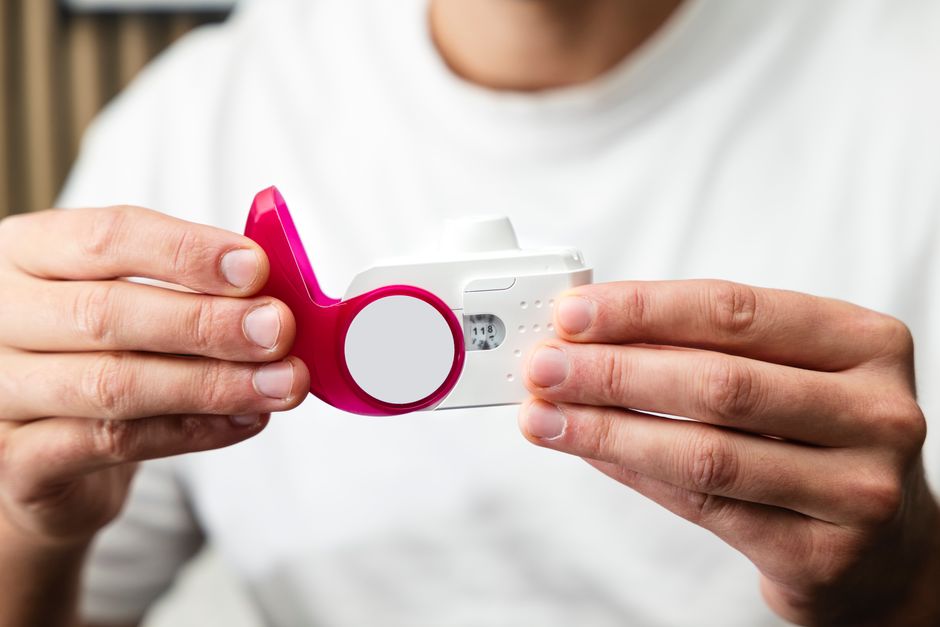
Your lungs can be measured in two main ways. At home, you use a small handheld device called a peak flow meter to track how fast you can push air out. In a clinic, you use a spirometer, which measures how much air you can blow out and how quickly. Both give numbers that show how well your lungs are working.
Lung function testing is one of the most useful tools in medicine. It helps diagnose asthma, COPD, and other breathing conditions. It also tracks whether treatment is working over time.
The tricky part is that results depend heavily on how you do the test. A weak effort or a leaky seal around the mouthpiece can produce misleading numbers. So technique matters as much as the device.
What Does “Lung Function” Actually Mean?
Lung function refers to how well your lungs move air in and out and how efficiently they transfer oxygen into your blood. Two measurements capture most of this.
The first is how much air you can hold and exhale. The second is how fast you can move that air. A third measure looks at how well oxygen crosses into your bloodstream.
Different tests capture different pieces of this picture. No single test tells the whole story, which is why clinics sometimes run several.
- Volume — how much air your lungs can hold
- Flow — how quickly air moves through your airways
- Gas exchange — how well oxygen enters your blood
Obstructive conditions like asthma and COPD mainly affect flow. Restrictive conditions, such as pulmonary fibrosis, mainly affect volume. That distinction shapes which test a doctor orders.
How To Measure Lung Function At Home And In A Clinic: The Core Difference
Home testing is simple and cheap. Clinic testing is detailed and diagnostic. They are not interchangeable.
A peak flow meter measures one thing: peak expiratory flow, or PEF. That is the fastest speed at which you can force air out of your lungs. It is measured in liters per minute.
A spirometer measures several things at once. The most important are forced vital capacity (FVC) and forced expiratory volume in one second (FEV1). FVC is the total amount of air you can blow out after a full breath in. FEV1 is how much you can blow out in that first second.
The ratio of FEV1 to FVC helps doctors tell obstructive from restrictive patterns. A peak flow meter cannot do this. That is the main reason home devices cannot replace a clinic visit for diagnosis.
How Do You Use a Peak Flow Meter at Home?
A peak flow meter is a tube you blow into as hard and fast as you can. A small marker slides along a numbered scale and stops at your peak flow number.
Technique is everything. Here is the standard approach:
- Stand up straight. Sitting slightly hunched can reduce your numbers.
- Slide the marker to the bottom of the scale.
- Take a deep breath in, as full as you can.
- Seal your lips tightly around the mouthpiece. No air should escape around the sides.
- Blow out as hard and fast as you can in one single burst. Do not stop partway.
- Write down the number.
- Repeat two more times. Record the highest of the three.
Do this at the same time each day, usually morning and evening. Consistency matters more than any single reading.
Your personal best is the highest number you reach over a two-week period when you are feeling well. Doctors use that as your baseline. A drop of 20 percent or more from your personal best can signal that your airways are tightening, sometimes before you feel symptoms. This is why some asthma action plans use peak flow zones to guide when to adjust medication.
One clarification worth knowing: peak flow measures effort as much as it measures your lungs. If you are tired, distracted, or not blowing hard enough, the number drops. A single low reading is not proof of anything. A pattern over several days is what matters.



What Happens During a Spirometry Test in a Clinic?
Spirometry is the standard lung function test in clinical settings. It takes about 15 to 30 minutes and is not painful.
You sit upright and breathe through a mouthpiece connected to the spirometer. A soft clip goes on your nose to make sure all air goes through your mouth. The technician guides you through several breathing maneuvers.
The key maneuver is the forced vital capacity test. You take the deepest breath you can, then blow out as hard and as long as possible until your lungs feel empty. You repeat this at least three times. The machine takes the best effort.
Sometimes the technician gives you a bronchodilator — a medication that opens your airways — and you repeat the test. If your numbers improve significantly, that suggests your airways were narrowed and are responsive to treatment. This is called a bronchodilator response test and is often used to help diagnose asthma.
Results are compared to predicted values based on your age, height, sex, and ethnicity. Your numbers are reported as a percentage of what is expected for someone like you.
How Do Home and Clinic Results Compare?
| Feature | Peak Flow Meter (Home) | Spirometer (Clinic) |
|---|---|---|
| What it measures | Peak expiratory flow only | FVC, FEV1, FEV1/FVC ratio, and more |
| Where it is used | Home monitoring | Clinic or hospital |
| Cost | Low | Higher; often covered by insurance |
| Can diagnose asthma or COPD | No | Yes, with clinical context |
| Best use | Tracking day-to-day changes | Diagnosis and treatment decisions |
| Effort dependent | Highly | Yes, but technician coaching helps |
Neither test replaces the other. Home monitoring catches trends between visits. Clinic testing provides the detailed picture needed to diagnose and manage conditions.
When Should You Track Lung Function at Home?
Home monitoring is most useful for people with a known breathing condition, particularly asthma. It helps you and your doctor see whether treatment is controlling your symptoms or whether things are drifting.
Your doctor may ask you to track peak flow if:
- You have asthma and your symptoms fluctuate
- You are starting or changing a medication and need to see if it helps
- You have trouble noticing when your breathing gets worse
- You want objective data to share at your next appointment
Some people with COPD also track peak flow, though the evidence for its usefulness in COPD is weaker than in asthma. Peak flow tends to be less reliable in COPD because the disease affects lung structure differently.
If you do not have a diagnosed lung condition, routine home peak flow monitoring has limited value. It can create anxiety without providing useful information. Talk to your doctor before starting.
What Can Go Wrong With These Tests?
Both tests depend on your effort and technique. Common problems include:
- Not sealing your lips around the mouthpiece, letting air escape
- Not blowing hard enough or long enough
- Stopping the breath too early during spirometry
- Using a device that is dirty or damaged
- Testing when you have a cold or chest infection, which temporarily lowers your numbers
Spirometry also has specific contraindications. It involves forceful breathing that raises pressure inside your chest. This can be risky if you recently had a heart attack, chest surgery, or have certain eye conditions. Your doctor will screen for these before testing.
Peak flow meters are low risk. The main issue is inaccurate readings from poor technique, not harm.
What Other Tests Measure Lung Function?
Spirometry and peak flow are the most common, but they are not the only options. When doctors need more detail, they may order other tests.
Lung volume measurement uses a sealed chamber or a gas dilution technique to measure total lung capacity and residual volume — the air left in your lungs after you exhale fully. This helps distinguish restrictive from obstructive disease more precisely than spirometry alone.
Diffusing capacity measures how well oxygen passes from your lungs into your blood. It is useful in conditions that affect the lung’s air sacs, such as emphysema or pulmonary fibrosis.
Pulse oximetry is a small clip on your finger that estimates oxygen saturation in your blood. It does not measure lung function directly, but it gives a quick picture of whether your lungs are getting enough oxygen into your bloodstream. Normal resting oxygen saturation is generally between 95 and 100 percent at sea level.
Six-minute walk test measures how far you can walk in six minutes while your oxygen level and heart rate are monitored. It reflects how your lungs perform during everyday activity rather than under lab conditions.
Fractional exhaled nitric oxide (FeNO) measures inflammation in your airways. It is sometimes used to help manage asthma, though its role in routine care is still being studied.
Each test answers a different question. No single number defines your lung health.
Frequently Asked Questions
Can I diagnose asthma with a home peak flow meter?
No. A peak flow meter can show that your airflow is reduced, but it cannot confirm asthma or distinguish it from other conditions. Diagnosis requires spirometry and a clinical evaluation by a doctor.
How often should I use a peak flow meter?
Your doctor will tell you how often based on your condition, but twice daily — morning and evening — is common for people monitoring asthma. Follow your personal asthma action plan if you have one.
What is a normal peak flow reading?
Normal peak flow depends on your age, height, and sex, so there is no single number. Your personal best, measured when you are well, is the most useful reference for tracking changes.
Is spirometry painful?
No. Spirometry is not painful, but it requires forceful breathing that can feel tiring or cause temporary lightheadedness. Most people complete the test without problems.
