
Knowing your fuel tank’s true capacity matters more than you might think. It helps you plan trips, avoid running dry in remote areas, and understand why your gauge behaves the way it does. The good news is you do not need special tools or a mechanic to get an accurate number. Here are the three reliable methods to measure fuel tank capacity, from the simplest to the most precise.
Method 1: The Manufacturer’s Stated Capacity
The easiest way to find your fuel tank capacity is to look it up. Your owner’s manual lists the tank size in gallons or liters. You can also find this information on the manufacturer’s website or on a sticker inside the driver’s side door jamb.
This method is fast and free. But there is a catch. The stated capacity is not always the same as what you can actually pump into the tank. Most modern cars have a reserve volume built into the design. The gauge reads empty while a few gallons remain in the tank. This is intentional. It protects the fuel pump from overheating and prevents you from sucking up sediment from the bottom of the tank.
So the manufacturer’s number is a good starting point. It tells you the designed volume. It does not tell you exactly how many gallons you can add after the low fuel light comes on.
Method 2: The Fill-Up Calculation
This method uses your fuel gauge and a full tank to calculate capacity. It is the most practical approach for most drivers. You do not need any tools beyond a full tank of gas and a notepad.
Here is how it works. Fill your tank completely until the pump clicks off. Note your odometer reading or reset your trip meter. Drive normally until your tank is nearly empty. When the low fuel light comes on, go to the gas station and fill the tank again until the pump clicks off. Write down the number of gallons or liters shown on the pump.
That number is the usable capacity from the point you started. It tells you how much fuel your tank actually holds between a full tank and the moment the pump clicks off.
This method is accurate for practical purposes. It gives you the real-world capacity you can rely on. It does not account for the reserve volume below the empty reading. But for trip planning and understanding your range, this is the number that matters.
Method 3: Measuring the Physical Tank Dimensions
This is the most precise method, but it requires access to the tank. It is usually done when the tank is removed from the vehicle or when you are replacing it. If your tank is in place and full, skip this method. It is not worth the effort or risk.
First, drain the tank completely. Then measure its length, width, and height in inches. Multiply those three numbers together to get the volume in cubic inches. Divide that number by 231 to convert to US gallons. One US gallon equals 231 cubic inches.
For example, a tank that is 30 inches long, 18 inches wide, and 12 inches high has a volume of 6,480 cubic inches. Divide that by 231 and you get approximately 28 gallons.
This method works well for rectangular or box-shaped tanks. Most vehicle fuel tanks are not simple rectangles. They are shaped to fit around axles, exhaust systems, and frame rails. For irregular shapes, you will need to break the tank into smaller geometric sections and calculate each one separately. This is tedious and prone to error.
A more practical version of this method is the water fill test. With the tank removed and completely empty, seal all openings except one. Fill the tank with water using a measured container, such as a one-gallon jug. Count how many gallons it takes to fill the tank to the brim. This gives you the exact physical capacity without any math.
This method is the only one that gives you the true maximum volume of the tank itself. It is rarely necessary for everyday driving. But if you are building a custom vehicle, replacing a tank, or just curious about the exact number, this is how you get it.





Why the Stated Capacity and Actual Fill-Up Differ
You might notice that your owner’s manual says your tank holds 18 gallons, but you only managed to pump 15 gallons when the gauge read empty. This is normal. It is not a malfunction.
The difference comes from the reserve volume. Manufacturers design tanks with a buffer below the empty mark. This keeps the fuel pump submerged in fuel, which cools it and prevents it from pulling in air. The reserve also protects you from running completely dry on the highway.
Another factor is the fuel filler neck. The pump’s automatic shutoff nozzle stops when fuel backs up in the filler neck. This can happen before the tank is completely full, especially if the tank has complex venting or a narrow filler neck. So the pump’s click-off point is not always the absolute full point.
Temperature also plays a role. Fuel expands as it warms and contracts as it cools. A tank filled on a hot day holds slightly less fuel by weight than the same tank filled on a cold day. This difference is small and rarely matters for daily driving. But it explains why your mileage calculations can vary slightly between fill-ups.
How To Measure Fuel Tank Capacity 3 Methods: Which One Should You Use?
Your choice depends on why you need the number. If you just want to know your tank size for general knowledge, use the manufacturer’s rating. It is printed in your manual and takes ten seconds to find.
If you are planning a long trip and need to know how far you can go on a tank, use the fill-up calculation. That number reflects your real-world driving conditions, your vehicle’s fuel economy, and the actual usable capacity of your tank.
If you are replacing the tank or building a custom setup, use the physical measurement method. It is the only way to get the exact volume of the tank itself.
None of these methods requires special equipment. None of them costs money. The fill-up method is the most useful for everyday drivers. The physical method is the most accurate but is overkill for most situations.
Understanding Your Fuel Gauge and Reserve
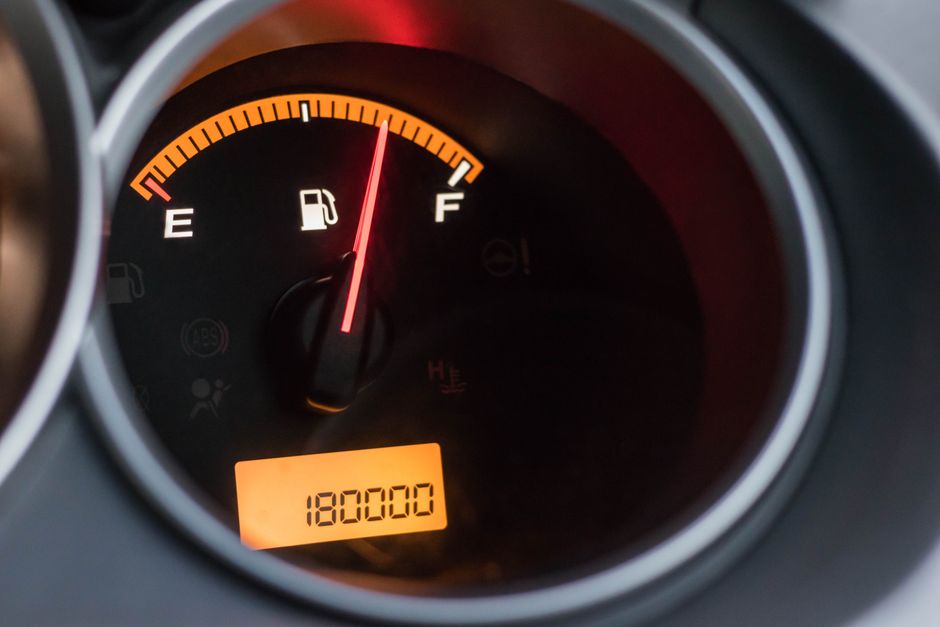
Your fuel gauge does not show the full capacity of your tank. It shows the level relative to the sender unit’s range. The sender unit is a float that moves with the fuel level. It sends a signal to the gauge on your dashboard.
Most senders are calibrated so that the gauge reads empty when a certain amount of fuel remains. That amount varies by vehicle. It can be as little as one gallon or as much as three or four gallons in larger trucks and SUVs.
This means when your gauge hits empty, you still have fuel in the tank. You are not about to stall. You have a buffer. But you should not rely on it. Running the tank to empty regularly can shorten the life of your fuel pump because it runs hotter and may draw in air.
Knowing your tank’s usable capacity helps you avoid this. If you know your tank holds 16 usable gallons and your fuel economy is 25 miles per gallon, you can expect roughly 400 miles of range from a full tank. This is a planning tool, not a challenge to see how close you can get to zero.
Frequently Asked Questions
How do I find my fuel tank capacity without the owner’s manual?
Search your vehicle’s make, model, and year online or check the manufacturer’s website. You can also use the fill-up method by filling the tank completely and noting how many gallons you add when the tank is near empty.
Why can I never pump the full stated capacity into my tank?
Most tanks have a reserve volume below the empty reading, and the pump’s automatic shutoff stops before the tank is completely full. The stated capacity is the total design volume, not the usable volume between empty and full.
Is it bad to run my fuel tank to empty?
Running the tank to empty regularly can overheat the fuel pump and pull sediment into the fuel system. It is safer to refill when the gauge reaches a quarter tank.
Does the fuel tank capacity include the reserve?
Yes, the manufacturer’s stated capacity includes the reserve volume. The reserve is part of the total tank volume, but it is not usable for normal driving because the gauge reads empty before you reach it.
