
Measuring flaccid length the right way means using a rigid ruler pressed against the pubic bone, with the penis held straight out at a right angle to the body, and the measurement taken from the bone to the tip of the glans. The room should be warm, since cold causes the tissue to contract and shortens the reading. Take the measurement more than once, on different days, and record the longest result rather than an average.
That is the short version. The rest of this article explains why each of those steps matters, what to do about a fat pad that hides part of the shaft, how a flaccid measurement compares to an erect one, and why the number most men get is not the number they expected.
Why Does Flaccid Length Change So Much?
Flaccid size is not a fixed physical property. It is a moving state, and it moves for ordinary reasons.
The penis contains two parallel cylinders of spongy tissue called the corpora cavernosa, plus a third cylinder called the corpus spongiosum that surrounds the urethra. In the flaccid state, the smooth muscle inside those cylinders is partly contracted, which pulls the tissue inward. Blood flow through the organ at rest is relatively low. When the smooth muscle relaxes, the same tissue can hold far more blood and expand.
Temperature is the most obvious variable. Cold triggers the same kind of vasoconstriction that affects fingers and toes, and the penis pulls closer to the body. A measurement taken in a cold room, right after a swim, or in the middle of winter can be noticeably shorter than one taken in a warm room.
Other everyday factors matter too. Recent ejaculation, time of day, stress, caffeine, alcohol, and even how long you have been sitting or standing can shift the reading. This is normal physiology, not a sign of anything wrong.
One clarification worth knowing: the visible length of the penis is not the same as its actual length. Part of the shaft sits inside the body, and part can be hidden by the fat pad over the pubic bone. That hidden portion is exactly why the measurement method matters so much.
How To Measure Flaccid Length The Right Method Step By Step
Each step below exists to remove a specific source of error. Skip one and the number loses meaning.
Step 1: Use a rigid ruler, not a tape measure
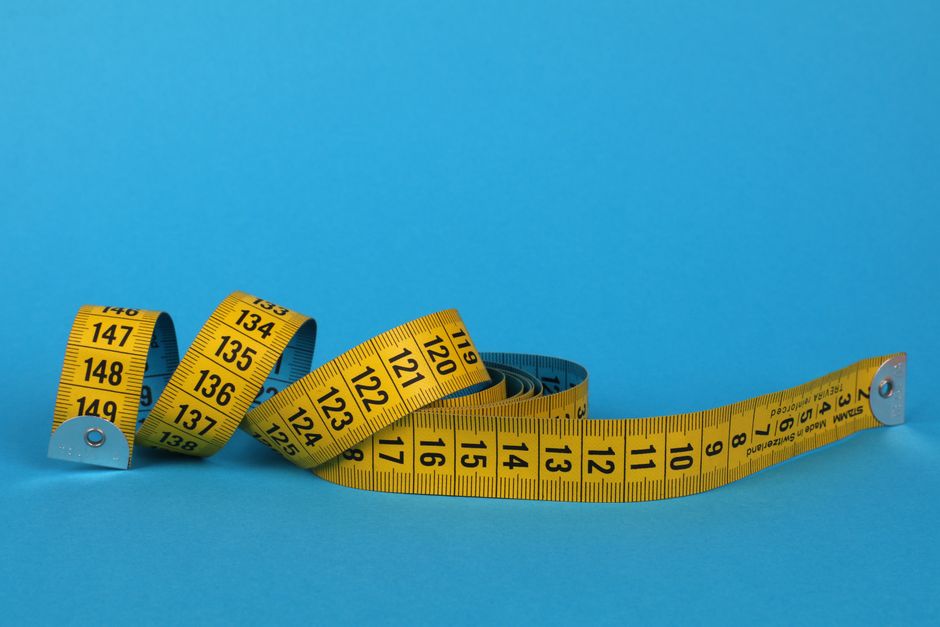
A flexible tape measure follows the curve of the penis and overstates the length. A stiff ruler gives a straight line from bone to tip. A wooden or plastic ruler works. A cloth tailor’s tape does not.
Step 2: Warm the room first
Aim for a comfortably warm room. Give yourself a few minutes to adjust to the temperature before measuring. If you have just come in from the cold, wait.
Step 3: Get an erection-free, relaxed state
You want a fully flaccid penis, not a partial erection and not a state of extreme shrinkage. If you have recently ejaculated, wait a while. If you are anxious, that alone can cause retraction.
Step 4: Stand up
Standing gives the most consistent and reproducible position. Lying down changes how the fat pad sits and how gravity acts on the tissue.
Step 5: Press the ruler against the pubic bone
This is the step most people get wrong. Press the end of the ruler firmly into the pubic bone at the base of the penis. You are pressing through the fat pad, not resting on top of it. The ruler should touch bone. This is sometimes called a bone-pressed measurement, and it is the standard used in clinical research.
Pressing firmly may feel slightly uncomfortable but should not hurt. If you are measuring only the visible shaft and stopping at the skin, you are measuring a different thing — and a smaller number.
Step 6: Hold the penis straight out
Point the penis directly away from your body, parallel to the floor. Do not angle it up or down. Do not stretch it. Do not pull it toward you. Tension changes the reading, and stretching is a separate measurement with different reference values.
Step 7: Read to the tip of the glans
Measure to the very tip of the head, not to the base of the head and not to the end of the shaft. Read the number at eye level to avoid parallax error.
Step 8: Repeat on separate days
Take the measurement at least two or three times, on different days, under similar conditions. Record each result. The largest consistent number is the most useful figure, because random short readings are usually caused by cold, stress, or recent activity rather than by real change.
Should You Press Into the Pubic Bone?
Yes, if you want a number you can compare to anything else.
The fat pad over the pubic bone, sometimes called the suprapubic fat pad, varies a great deal between individuals. In a man with a thicker pad, a non-pressed measurement can understate the actual length of the organ by a meaningful margin. That is not a judgment about body weight — it is a geometric fact about where the base of the penis sits relative to the skin surface.
Bone-pressed measurement is what clinical studies generally use, because it removes the fat pad as a variable. When you see published averages for flaccid or erect length, they are typically bone-pressed figures. Comparing your non-pressed number to a published bone-pressed average is an apples-to-oranges comparison, and it will make you look shorter than you are.
Weight changes shift the fat pad, and therefore shift the non-pressed number, without changing the underlying anatomy at all. This is one reason a man who loses weight may notice an apparent increase in visible length.




Flaccid vs. Erect: Why the Ranking Changes
Flaccid length is a poor predictor of erect length. This surprises people, but the reason is straightforward.
The difference between flaccid and erect size depends on how much the tissue expands, not on how large it starts. A penis that appears small when flaccid can gain a large amount of length during erection. A penis that appears long when flaccid may gain relatively little. Researchers have described this pattern for decades, and it means that ranking men by flaccid size produces a different order than ranking them by erect size.
For this reason, flaccid measurement is generally not used to assess whether size is within a typical range. If that is your question, an erect measurement is the more meaningful one, and a clinician is the right person to interpret it.
Common Measurement Mistakes
Most inflated or deflated numbers come from a short list of errors.
- Using a flexible tape. It curves and adds length that is not there.
- Measuring from the skin, not the bone. This understates length, sometimes substantially.
- Measuring in a cold room. Cold causes retraction and shortens the reading.
- Stretching the penis. Pulling adds length that does not reflect the resting state.
- Measuring after ejaculation. The tissue is temporarily shorter and less full.
- Taking one measurement and treating it as final. A single reading captures a moment, not a baseline.
- Measuring to the base of the glans. The glans is part of the penis and counts.
- Reading from an angle. Looking down at the ruler instead of straight at it shifts the number.
What Is a Typical Flaccid Length?
Published averages cluster in a fairly narrow band. A frequently cited review of measurements from multiple studies reported an average flaccid length of roughly 3.6 inches, or about 9 centimeters, using bone-pressed technique. Average erect length in the same review was roughly 5.2 inches, or about 13 centimeters.
Those are averages, not targets. Individual variation around them is wide, and a large share of men fall above or below the average without any medical issue being present. The distribution is a continuum, not a set of categories.
It is also worth knowing that self-reported measurements tend to run longer than measurements taken by a clinician. That gap is not dishonesty so much as technique — people measure in ways that add length without realizing it.
When a Measurement Is Worth Discussing With a Doctor
A number by itself is rarely the reason to see a clinician. A change is more informative than a size.
If you notice that flaccid length has decreased noticeably and stayed that way, or if the penis feels firmer than usual when flaccid, or if erections have become painful or curved, those are reasons to get evaluated. A persistent firmness or a new curvature can point to conditions that affect the tissue itself, and those are best assessed in person rather than measured at home.
Concerns about size are also a legitimate reason for a visit. A clinician can take a proper measurement, explain where you actually fall, and address whether anything needs attention. That conversation is usually more useful than another measurement at home.
Frequently Asked Questions
Where do you measure from when measuring flaccid length?
Measure from the pubic bone, pressing the ruler firmly through the fat pad at the base of the penis. This bone-pressed method is the standard used in clinical research and gives a number you can compare to published averages.
Does flaccid length predict erect length?
No, flaccid size is a poor predictor of erect size. How much a penis grows from flaccid to erect varies a great deal between individuals, so the two measurements rank men differently.
Why is my flaccid length different every time I measure?
Temperature, stress, recent ejaculation, time of day, and other everyday factors all change flaccid size. Take several measurements on different days in a warm room and use the longest consistent result.
What is the average flaccid penis length?
A commonly cited review of multiple studies reported an average bone-pressed flaccid length of about 3.6 inches, or roughly 9 centimeters. Individual variation around that average is wide and does not by itself indicate a problem.
